History of World Day for Safety and Health at Work
Since 2003, the International Labour Organization (ILO) decided to dedicate every 28 April to World Day for Safety and Health at Work. This International Day was created to honour and help prevent the 6500 deaths that happen daily due to work-related accidents or illnesses. Approximately 2.4 million workers die yearly because of occupational accidents or illnesses. Sounds like a lot, don’t you think?
While last year’s theme was Participation and Social Dialogue, the 2023 theme is Safe and Healthy Working Environment as a Fundamental Principle and Right at Work. In link with this sentence from ILO website: At its 110th Session in June 2022, the International Labour Conference decided to amend paragraph 2 of the ILO Declaration on Fundamental Principles and Rights at Work (1998) to include “a safe and healthy working environment” as a fundamental principle and right at work, and to make consequential amendments to the ILO Declaration on Social Justice for a Fair Globalization (2008) and the Global Jobs Pact (2009).
At the Resilience Institute, we decided to spotlight how asafe and healthy working environment can help you and your organization achieve performance with care.
To do so, here are a few extracts from the book Performance-Bienveillance, Osez le Care-Isme, Editions Management & Société, 2021, written by Philippe Courrèges, Head of Safety, Health and Environment at a Global Food Company and Delphine Caprez, one of our Senior Associate Consultants at the Resilience Institute:
According to European Community surveys on working conditions, nearly 30% of workers feel that their work activity puts their health at risk, mainly through back pain, joint pain linked to repetitive movements or painful physical postures (European Agency for Safety and Health at Work, 2019).
What is true for the physical consequences of occupational exposure is even more true for psychological disorders. Psychosocial risks have exploded in recent years, not only because the subject has only recently been finally addressed.
Psychological risks have also exploded because of the loss of meaning at and of work, fragmentation, and uberization. Especially since many studies have shown the close link between MSDs (musculoskeletal disorder) and psychological risks, and MSDs and the quality of interpersonal relations within organizations. Hopefully, one day, MSDs will have to be recognized for what they are, i.e., more a marker of psychological discomfort than a simple consequence of physical constraints.
Add to that the acceleration of our lives in a VUCA context, in a post-pandemic and war atmosphere, and everything is set to go wrong.
Bore-out, burn-out, and brown-out, many pathologies show how work can heavily impact health and resilience. As a result, organizations in most sectors of activity are beginning to address (or starting to address) psychosocial risks.
How can we explain that, despite the progress made, we still lament that every year so many men and women are affected in their bodies and their mental equilibrium by work-related accidents, occupational illnesses, stress, exhaustion, etc?
Ways of Managing Safety and Health at Work
1. Start by (really!) integrating the topics into the functioning of your organization and the overall business strategy.
Why do so many organizations still have to assert and reaffirm that health and safety are their priority with slogans like “Safety first” or “the health of our employees is our first priority”?
Without going so far as to consider those as mantras or catchphrases that are waved to protect us from bad luck, it often hides the fact that the reality is different and the maturity insufficient, which can question the place of health and safety within the organization.
2. Then it’s time for a cultural revolution that would involve the development (and the use!) of proper risk management indicators. Don’t focus on counting the number of accidents or work-related illnesses, as it’s counterproductive as past performance is not always indicative of future performance. Do you drive your car looking only at the rear mirror? Measure instead:
Health and Safety Feedback, given and received, as well as their quality and relevance.
Resilience Ratio, using the resilience diagnostic we use at the Resilience Institute, you can track and measure the positive evolution of the overall resilience ratio.
Improved employee perception of their working conditions – Research shows that it is not so much corporate health & well-being programs that improve employee health and productivity, but rather employee perception of them. It is important that employees perceive that their employer truly cares and wants to take care of their health and well-being. Never forget: my perception is my reality!
3. Challenge the attachment of the function where it should sit. Whether in HR, Engineering, Production, Operations, Quality, Inclusion & Diversity, or Finance, as we’ve seen it done, rest assured, no matter where it sits, it will be the wrong decision! However, what is important is at what level in the organization chart, as that is what will demonstrate the importance you bring to the subject. And as you can imagine, the higher in the org chart, the more impact it will have.
4. And finally, question the profile of your health and safety professionals. It’s about thinking about what you want to do and not limiting your ambitions because you’ve always done it that way. Ask yourself what type of occupational health and safety specialists you need concerning your organization’s culture: fatalistic, professional, managerial, or integrated culture. These profiles refer to different skills, aspirations, and roles. Because today there is too often confusion of roles. This confusion is reinforced by the recent evolution of organizations, working methods, management styles and employee aspirations. We find ourselves asking strategists or consultants to control or auditors to do strategy. To paraphrase Clémenceau, a French Maréchal from WWI: “war is a too serious matter to entrust to the military!”
Would you achieve performance with care once you’ve addressed the above elements? Maybe, maybe not. To ensure Safe and Healthy working environment will help you and your organization achieve performance with care, make a roadmap answering the questions: from where I started, where I want to go, and how I want to get there.
For that, you need to:
Collect as much health and safety data as possible and analyze them properly (“Without data, you are just another person without an opinion”, W. Edwards Deming)
Listen, listen and listen, and then speak with your leaders, line managers, employees, first aiders, and people in charge of safety and health (nurse, psychologist and occupational physician, coaches, etc).
Do not do more, do better
Choose your battles carefully. The aim of the actions decided is to prevent the most severe risks. For the rest, accept the little scratches. First, because little scratches are formative and not to discredit your approach. Preventing paper cuts is good, but preventing burnouts – if necessary, by removing toxic managers – is definitively what employees really want (and need) from their organization.
Accompany your managers and group leaders towards care-ism so they can show compassion, vulnerability, and courage while trusting.
Reaffirm employees’ individual and collective responsibility, whatever the hierarchical level.
And last but not least, evaluate, measure, track, and adjust what needs to be done and changed, often and appropriately.
Are you often exhausted when you get home after work?
If your answer is yes, you may need a reframe.
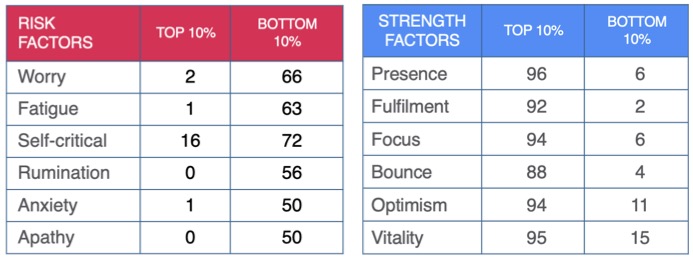
Research Highlight: of the most successful 10% of people, only 2% scored “I am exhausted when I get home/after work” with ‘very often’ or ‘nearly always’. In other words they experience little fatigue.
Question: What is your relationship with fatigue
Condition: Control, own and master your energy
Discipline: Actively and skilfully combat the experience of fatigue
Caution: Prioritise your sleep, recovery and relaxation
Life isVUCA (volatile, uncertain, complex and ambiguous). We are juggling far too much information and far too many tasks. Most of us do not rest, recover and sleep like professionals. The consequence that most clearly differentiates success and failure is fatigue.
54% of the least resilient people answer that they are exhausted when they get home “very often” or “nearly always”. Unfortunately they often tell others how tired they are.
Reframing Fatigue
Our super-skill series examined what the most successful people do. Reframing targets the top five habits that can undermine you. Fatigue is the first.
A CEO had been up all night organising a recognition of 2000 people’s excellent work. A colleague said: “you must be tired?” His answer: “I don’t do tired. It has been a great night.” Unsurprisingly, his resilience score was very high.
You may be thinking ‘what a jerk, he should be more honest.’ Our data shows that successful people do not indulge in the experience of fatigue. They find more skilful ways to reframe the situation. What if the response is: “Sure, it has been a long night but what fun. I will sleep well tonight.”
True fatigue is a very real and important signal that you need rest, recovery and sleep. Successful people know that life is demanding so they prioritise rejuvenation. There will be times when you have to work hard. When you tell others you are tired, can you really expect them to trust and respect you?
To reframe fatigue, think deeply on your relationship with fatigue. Do you experience it frequently? Do you advertise it to others? Do you take immediate action to remedy the signal?
Reframe skills for fatigue
Be alert for the fatigue signal. Check your body, emotions and thoughts. Assess it carefully and identify the level of risk. Act deliberately to remedy the situation.
If you are truly exhausted, take time out for recovery and sleep. If your life and job are important to you this is your priority. Learn the lesson and establish excellent recovery disciplines. Few do this well.
If you must work through fatigue here is a reframe:
Lengthen your posture and lift your chin
Breathe diaphragmatically and slow through the nose
Concentrate on the energy and life force in your being
Focus your mind and work in short, engaged bursts
Never think or say: “I am tired/exhausted/fatigued/wiped out”
*Research from our sample of 21,000, click for full report.
It is 7 am. The alarm goes off, and I still feel tired. My mind wanders off to issues unsolved, it is foggy in my head. I hit the snooze button, I don’t want to get up yet. I roll over, hoping to fall asleep again, but there is an uncomfortable feeling in my body. 9 minutes go by, and I hear the irritating sound of my alarm clock again. With a slap of my hand, I hit the snooze button. I wish I could sleep again, but all those thoughts in my head don’t go away. I don’t feel the strength to get up. I allow myself another 9 minutes. Bang, I push the button again. Slowly, I get out of bed feeling grumpy, hoping my kids will be asleep for a little while so that I can wake up. I drag myself to the kitchen to make a cup of coffee. It will be alright, I tell myself.
Can you relate to this? Then don’t stop reading. I found a way out. I call it My Miracle Morning. I believe having systems in place to live our lives is very important. One of the systems (little habits) that has been life-changing for me is what I call My Miracle Morning. Miracle, because it did wonders to me, plus that hour of the day is miraculous. What hour? For me, just before 6am.
Table of Contents
What is Miracle Morning?
I have to tell you a secret, the name The Miracle Morning comes originally from the book by the same name written by Hal Elrod. Hal has taken the ‘best practices’—developed over centuries of human consciousness development—and condensed the ‘best of the best’ into a daily morning ritual. A ritual that is now part of my day and thousands of others.
The Miracle Morning Consists of 6 Steps: S.A.V.E.R.S.
S – Silence (meditation, breathing, prayer, whatever you need to quiet your mind) A – Affirmations (the juicy stuff that brings you into a good state of mind, the way you want to live your day) V – Visualization (visualize your day, the way you want to live, the way you do your tasks to accomplish your goals) E – Exercise (get some blood flowing and air in your lungs by doing yoga, fitness, etc.) R – Reading (commit to reading 10 pages each morning, and you will read roughly 18 books each year) S – Scribing (take a few moments to write down your thoughts, insights of this morning or the things you are grateful for)
When I read this book, I could feel it in my bones; I needed morning practice to enhance my life. It took me a while to figure out the best rhythm for myself. I adjusted habits here and there, but now I love it, and I love to share it. It is a 7-step process for me.
My Little Habits
My Miracle Morning starts with my first item on my STOP-DOING LIST: saying YES to life by not hitting the snooze button at 5:45 am. Putting it on my stop-doing list made it much easier for me to commit myself to it.
In comfortable clothes, enjoying the silence in the house, I make myself a glass of warm lemon water, knowing it aids my digestive system and even 15 more health benefits.
I get my yoga mat and decide where to practise. If the weather is nice, I prefer to do it outside. Practising yoga for around 30 minutes while feeling the breeze in your hair and listening to the birds chirping is magical. Inside, I often light a candle and some incense to make it my sacred space. By doing the same practice almost daily, I become conscious of how my body is doing and where it needs attention or support.
The yoga flows into silence, a very logical step. Connecting first with the earth and the universe, I sit in silence for about 15 minutes. Sometimes I put on a guided meditation to help me quiet my mind more easily.
Feeling calm and relaxed, I check in with myself with the help of the 5 min journal app. It is my secret weapon to focus on the good in my life. Practising gratitude shifted my mindset and the way I show up in the world. The more I invite gratefulness into my heart, the more things show up in my life to be grateful for.
I am short on time but big on learning. So the next step for me is reading. It is a huge change, fueled by a small commitment. By reading at least 10 pages every morning, I push my personal growth and keep learning. I see personal development as a way of living, so it is worth the time.
We’re almost there. The creative me, the writer, is coming out. I commit myself to let the words flow out of me, whatever feels important to put down. It is a process of the heart, and I am amazed at what wants to be expressed. It is a practice, a habit. It opens pathways of awareness, it brings joy. I close my writing by taking control of my day. Fluid my mind with the person I want to be. I look at my weekly goals and what actions I need to attend to. Pull them to TODAY. I write down the three most important ones, so I do not forget them that day. In that way, I keep the main thing, the main thing today.
My Miracle Morning profoundly improved my quality of life and that of my family. It has built my resilience tremendously. I feel more vital, joyful and fulfilled and allow myself to see the magic of life. I am more connected to the divine energy of love and dedicated to shining my light into the world. Getting up before your kids is incredibly calming and centering, bringing peace and love to the breakfast table.
I don’t recommend my ritual, but I recommend finding your ritual, your little habits and developing one that supports the things you love the most. If you win the morning, you will win the day.
“Self care, I’m treatin’ me right” — Mac Miller, “Self Care”
“You should go and love yourself” — Justin Bieber, “Love Yourself”
When it comes to matters of love, music is a great communicator. The lines above from two of the most talented artists of the 21st Century reflect different angles of self-love. Mac Miller’s line in “Self Care” reflects how prioritizing your personal well-being can help you be more resilient in the face of adversity and better handle yourself in a healthy way.
Bieber’s line in “Love Yourself” is advice to a once significant other who often puts their partner down in order to feel better about themselves. Bieber sees the behavior as negative — perhaps toxic — and instead prescribes self-love.
Miller’s perspective shows how important it is to have a healthy internal dialogue and to treat yourself with respect, while Bieber shows the significance of finding good feelings from within one’s self instead of externalizing bad feelings onto others.
If you’re wondering what self-love really is and how to practice it so that you can reap the numerous health benefits that can come from it, keep reading our guide to self-love.
Table of Contents
Is Self-Love Selfish?
You might think that self-love is a conceited or narcissistic pursuit. Rather than building a grandiose sense of self, loving yourself is a state of mind that you can build through certain mindsets, actions, and habits. But before you can truly love and accept yourself (i.e., who you really are at your core), you have to know yourself — which is easier said than done.
Knowing yourself centers around discovering your true identity: the beliefs, traits, and qualities that make a person who they are. But did you know that much of who you are can often center around other people?
You, as a person, do not exist in a vacuum because people are social creatures. Your identity is formed based on how you see yourself, how others see you, and how you act based on those perceptions that other people form.
There’s ample scientific and anecdotal evidence of this phenomenon. For starters, consider how you might act in front of your friends on a Friday night versus in front of your boss on a Monday morning. The results could be completely different.
The Science of Self and Identity
UCLA neuroscientist Matthew Lieberman conducted a breakthrough functional MRI study that demonstrated how people tend to use different parts of the prefrontal cortex to think about themselves compared to when they think about others. This evidence shows how dynamic identity can be. When we engage in self-talk, we use internal dialogue to explore our egos. This is related to Mac Miller’s concept of self-love and how we think about ourselves.
On the other hand, when we engage with others we may use a different set of social rules to connect. This push and pull of thinking about ourselves and others can often lead to people trying to find affirmation from others in order to feel good about themselves. This relates to Bieber’s concept of self-love and how people can often externalize their well-being by placing it into contingencies with other people, for better or worse.
Sigal Barsade’s idea of emotional contagion demonstrates how others’ emotions can influence your mood and behavior. If the people around you are happy, then that happiness may also rub off on you. The same goes for negative emotions, which helps explain why Bieber’s protagonist in the song could no longer sustain the negative relationship with their partner. Emotional contagion gives weight to the idiom “you are who you surround yourself with.”
Headspace (the popular meditation application) says that putting your well-being solely into the hands of others can lead to negative consequences. That’s why practicing self-love is a beneficial practice for building happiness and resilience in spite of challenges.
What Is Self-Love?
A simple way to conceptualize self-love is to identify how you act towards yourself, how you feel about yourself, and how you think about yourself. When it comes to self-love, the successful person will not only feel and think gently and kindly about themselves, but they will also take actions that support their growth and health of themselves.
PsychCentral notes that people who truly love themselves garner an overall positive view of the self. Of course, there will be times when you struggle, but generally, a good self-lover finds the positive side of things over the negative side.
For example, you might make an error at work that makes you upset, but you can still tell yourself positive thoughts at the end of the day and give yourself a break instead of beating yourself up — everyone makes mistakes. The above example contains another key feature of self-love: it is not only the lack of negative thoughts, it is also actively working towards creating a positive perspective that aligns with your personal goals and happiness.
There’s more to self-love than simply the good and the bad. It is also about being honest with yourself so that you can reach your goals; rewarding your progress towards those goals; setting boundaries and being proactive to protect them; placing your well-being at the top of your values; making good choices that will promote your health; and letting go of critical thoughts about any flaws you think you have.
But that does not mean that you cannot take a look in the mirror and be honest with yourself or that you do not hold yourself accountable for reaching your goals. Self-love is all about doing what’s best for you and not sacrificing that to fall into negative personal habits or to appease others.
Again let’s return to the musical examples. Mac Miller’s song shows how — despite hardships — you can take the time to be kind to yourself by having some alone time to do things that help you heal. But you can also hold yourself accountable for your behavior and honestly check yourself to make sure that you’re acting in a healthy way and not falling into bad habits. On the other hand, Bieber’s song shows how self-love can help you create boundaries from negative influences from others and even help you stop devaluing your personal needs and wants.
Keep reading to discover some of the more actionable parts of creating good self-love habits and learn about the benefits of it.
Benefits of Self-Love
According to Medical News Today, people who do not showcase self-love can often be hypercritical of themselves. This sort of perfectionism is associated with many negative health outcomes like increased risk for developing physical and mental illnesses like irritable bowel syndrome, depression, and perfectionists may even have a shorter life span.
On the other hand, medical writer Dr. Andleeb Asghar writes that self-love may give you a variety of benefits, like boosted mental health, improved sleep, lower anxiety, higher self-awareness, motivation, and even more self-acceptance. You might wonder how self-love can do so much good for you.
One of the main ways that self-love boosts your health is by lowering stress. When you love yourself there’s a certain level of calm that accompanies it even when things do not go right. Lower stress levels accompany better sleep, mental health, and lower anxiety.
Recall that self-love also enables you to hold yourself accountable to your goals. By knowing your goals and honestly assessing your progress, not only do you gain more self-awareness, you also can become more motivated to work hard and find the dedication to achieve them.
While self-love has many benefits, it is not always an easy thing to do.
What Are the Biggest Struggles With Loving Yourself?
Loving yourself is not always an easy thing to do because we often make compromises to fit better into the world around us. You might take on extra work and stay late in order to try and get a promotion. You might cover for a friend and do them another favor even though you are already too busy and know you will get less sleep because of it. Even worse, you might talk negatively to yourself because you’ve been burning the candle at both ends, and you are seeing the results that you want in your life.
At face value, it might sound like you are doing the right thing — the prescription for success in our society. However, spreading yourself thin — so thin that you start to lose sleep, gain stress, and worsen your mental health — is not a long-term recipe for success. By helping others to the point that you hurt yourself, you actually end up being able to do less for others over time.
On the other hand, the more perplexing trap that people easily fall into is negative self-talk. It is easy and unrealistic to tell someone that they should eliminate negative self-talk habits. But you cannot get rid of all the negative thoughts in your life. Therefore at some point, negative self-talk will creep back into your life.
The key is to break the cycle of negative talk with something positive. 2022 research shows that a type of self-talk — whether positive or negative — tends to create a self-reinforcing cycle. For example, negative self-talk can lead to anxiety, which leads to more bad self-talk. The cycle produces poorer performance, which again can lead to more negative self-talk.
Instead of falling into the negative side of the cycle, learn how to love yourself with more positive habits.
How to Love Yourself?
Loving yourself starts with the practices that you build today. It could be something as simple as treating yourself to a much needed massage or even just unplugging from the digital world for a night. Here are a few actions that promote self-love and examples of how to implement them in your life.
For starters, one of the biggest self-love promoting actions is creating firm boundaries. One place where many lack boundaries is between their work and home life. Instead of checking work emails while you are home, turn off your notifications and do something that benefits your well-being, like catching up on a personal hobby. Personally, I love to build things like birdhouses or surfboards.
Mindfulness and taking time to clear your headspace are other cornerstones of self-love. In short, mindfulness is a state of awareness that centers you on the current moment and lets perceptions come and go freely — without judgment. You can achieve this state through practices like breathing exercises, meditation, and even doing a body scan, where you try to pay attention to your senses and what you are feeling.
Self-Compassion vs Self-Love: Is There a Difference?
Depending on where you look, you might see the terms self-compassion and self-love used interchangeably or defined as distinct concepts. Some researchers have defined self-compassion as one’s ability to love themselves, among other factors.
According to the American Psychological Association (APA), self-compassion centers around not being self-critical about personal failures, which can promote well-being. The APA defines self-love as a self-regard for one’s well-being. So self-compassion is an essential aspect of the overarching idea of self-love.
If you dig into the various habits that characterize self-compassion and self-love, you’ll find more than enough overlap. Advice on practicing self-compassion involves loving yourself — and tips on practicing self-love involve being compassionate to yourself.
Medical News Today even notes that self-compassion and self-love are often used interchangeably in the literature. So there’s really no need to sweat the difference between the two because you’ll likely be doing both if you are truly caring for yourself. But if you need to remember the differences between the two, remember that self-compassion has more to do with forgiving yourself, while self-love is a larger idea of habits that promote your well-being.
How Self-Love Increases Resilience?
Resilience is a learnable capability that enables you to adapt to challenges and difficulties flexibly. People who are resilient not only recover better from adversity, but they also feel more engaged, inspired and even improve their performance through flow.
Self-love boosts resilience by enabling people to reframe situations into opportunities. Imagine that you make a mistake, whether at work or in a relationship. If you practice self-love, then the internal dialogue you have with yourself builds resilience.
We all make mistakes, but it is how we recover from those mistakes that defines us. If you can avoid negative self-talk and instead forgive yourself, you are on the road to self-love. A great self-lover would take things a step further and add in some positive self-talk in order to build resilience and foster a can-do attitude. Instead of focusing on the mistake, look at how far you have come and how much closer to your goals you are. You can even reframe a mistake by telling yourself that sometimes a step backwards can actually help you progress beyond a plateau.
Here at the Resilience Institute, we want to remind you that a little bit of self-love goes a long way in maintaining your well-being and building resilience. By taking the time to be kind to yourself and set personal boundaries — all the while still holding yourself accountable for your own goals and rewarding your progress — you can develop healthy habits that ensure you can overcome any obstacle in life.
So whether you are with someone, alone, or away from a significant other on Valentine’s day, remember to take a little time out of your day for some self care and to love yourself.
Many people think resilience simply means enduring difficult times. In reality it is far more powerful.
Most organisations try to solve complex workplace challenges with isolated solutions. Stress programmes, productivity workshops, leadership courses and wellbeing initiatives often run separately. The result is fragmented effort and limited impact, unlike the resilience training.
Resilience offers a more integrated approach, bringing business impact.
Table of Contents
An Integral Approach to Resilience
Resilience connects the capabilities that support both wellbeing and performance. Instead of addressing problems in isolation, it strengthens the physical, emotional and cognitive skills people need to perform under pressure.
When these capabilities work together they create a strong foundation that protects people from distress and supports sustained productivity.
For organisations this integrated approach makes practical sense. Modern workplaces move fast and complexity is high. Multiple disconnected initiatives create cost, confusion and compliance fatigue.
A resilience framework simplifies this landscape. It aligns wellbeing, leadership and performance into one coherent system that strengthens people and culture at the same time.
The result is higher impact from every investment in people development.
Return on Resilience
Resilience training improves both human wellbeing and organisational performance. When people learn to regulate stress, protect focus and recover energy, the benefits spread across the entire organisation.
This approach is known as performance with care. It supports high performance while protecting the long term health of employees.
Research and programme outcomes show measurable improvements across several critical factors.
Mental Distress
For every dollar invested in mental health interventions, organisations see an estimated four dollar return. Resilience training has been shown to significantly reduce symptoms of stress and distress.
Our results show a 30 percent reduction in mental distress.
Flow
People achieve 5 times more productivity when operating in a state of flow (McKinsey, 2013).
Our programmes show a 33 percent improvement in flow states.
Focus
Improving attention and concentration increases workplace productivity and decision quality. 20% increase in focus could increase productivity by 10% in the workplace (Davidson, Goleman, 2017).
Our results show a 21 percent improvement in focus.
Well-being
Investment in employee wellbeing consistently produces strong financial returns. The ROI of well-being in the workplace is $3 for every $1 spent (Forbes, 2018).
Our programmes deliver a 47 percent improvement in overall wellbeing.
Overload
Where overload reduces productivity in the workplace by 50% (Bank of England, 2017), resilience delivers a significant improvement, and shortens the time it takes to enter a state of flow (deep focus) after a break.
Our results show a 26 percent reduction in overload.
Hostility & Conflict
Many workplace conflicts arise from unmanaged stress and poor emotional regulation. Where anger and failure of empathy sits behind most conflict and suffering in our world (J Attali, 2018).
Our programmes show a 22 percent reduction in hostility and conflict behaviours.
Anxiety
Anxiety affects millions of working adults and directly impacts performance. Anxiety affects 18% of adults (ADDA, 2017).
Resilience training leads to a 32 percent reduction in anxiety levels.
Sleep
Poor sleep reduces productivity and costs organisations significant economic loss each year. Poor sleep compromises productivity at the cost of $1,400 per person each year (Harvard, 2017).
Our results show a 25 percent improvement in sleep quality.
Emotional Intelligence
Leaders with strong emotional intelligence create more effective teams and stronger relationships. Adds $21,600 of value per executive. (IHHP, 2017).
Resilience training improves emotional intelligence by 25 percent.
Fitness
A healthier workforce improves productivity and reduces long term healthcare costs. The National Institute of Health projects that a fit workforce would save the economy US $51.5 billion and increase productivity gains by US $69 billion.
Our programmes deliver a 28 percent improvement in fitness related behaviours.
Relaxation & Recovery
Effective relaxation allows the nervous system to recover from stress and maintain clarity under pressure. The ROI of relaxation in the workplace is equivalent to one third of an executive salary.
Participants show a 26 percent improvement in relaxation practices.
Safety and Workplace accidents
Workplace accidents remain a major global challenge, costing trillions of dollars each year and affecting millions of workers. Cost $2.99 trillion (3.94% of GDP) and kill 2.4 million workers per year (Safety & Health, 2017).
Resilience training improves alertness, focus and decision making. These capabilities contribute to safer workplaces and better operational awareness.
Reducing Presenteeism
Presenteeism occurs when employees attend work but perform below their potential due to stress, fatigue or illness. Presenteeism costs the US economy $225 billion, the UK economy £15.1 billion and the Australian economy $6.1 billion per year (PwC workplace report 2014, Inc 2016, Centre for Mental Health 2011).
This hidden cost affects productivity across many organisations.
Resilient workplaces reduce presenteeism because employees are more engaged, motivated and able to communicate openly when challenges arise.
Reducing Absenteeism
Absenteeism costs the US economy $1,600 per person, the UK economy £8.4 billion and Australian economy $4.7 billion per year respectively (PwC workplace report 2014, Inc. 2016, Centre for Mental Health 2011).
Resilient workplaces experience lower levels of absenteeism on the whole, therefore helping to reduce this cost.
Leaders who invest in their own resilience are more focused, efficient, productive and less likely to experience distress and worry. They are confident and skilful in adversity.
A leader who models resilience paves the way for others in the organisation to follow suit. Creating a resilient organisation of safe, resilient and productive people takes focus and commitment from leaders.
The Leadership Multiplier
Resilience begins with leadership.
Leaders who invest in their own resilience demonstrate greater focus, emotional stability and decision clarity. They remain calm in adversity and guide others through uncertainty with confidence.
When leaders model resilience the behaviour spreads through the organisation. Teams learn to manage pressure, communicate openly and support one another during challenging periods.
Building a resilient organisation requires commitment from leadership. When leaders champion resilience the result is a workforce that is safer, healthier and more productive.
Great jazz gets your feet tapping and head bobbing. We call it swing—a topic addressed in Science News on 7 October 2022. Good swing comes from a 30-millisecond delay between the rhythm section and the soloist.
Rhythm is an ancient foundation of the cosmos, our planet and life. Planetary cycles create seasons, daylight, moonlight, and darkness. We feel the seasons, rain, sunlight, winds and waves on earth. Living creatures move, feed, reproduce, sleep and hibernate. In our physiology, thousands of rhythms dance with temperature, activity, hormones, digestion, activity, rest and recovery.
Throughout evolution, life was compelled by rhythm. Species found their niche by specialising in working within the confines of these rhythms. They had to find a way to survive and reproduce within the rhythms of nature. The miracle of biodiversity blossomed.
Then we came. Bursting with self-importance and innovation, we broke our dependence on rhythm. Light is continuous, heat counters cold and cold counters heat. Noise and vibration overwhelm ecosystems. Sleep, movement, hunting, gathering and reproduction are optional. We live, work and produce as we wish.
Yet, our rhythms are built into our genetic code. Circadian, sleep and ultradian rhythms become chaotic. Our well-being—activity, sleep, digestion, rest and breath—has collapsed. Mental illness, diabetes, obesity, heart disease, cancers, dementia, and inflammatory disease flourish when our rhythms are disrupted.
A recent study in JAMA Psychiatry demonstrates how an early activity rhythm significantly reduces depression and improves cognitive function. We face choices. Do we simply drive forward and disrespect human rhythms in the name of economic growth? Are we prepared to pay the price in sickness? Do we regulate human activity triggering revolution? Try telling patrons in a bar to go home at 7 pm or telling your teenager to get off devices.
In our work, we see individuals taking responsibility for establishing rhythms that work. Successful people take deliberate action to identify, establish and master rhythm. If you want to create your dance of success and joy, there are four steps—drills, rhythm, cadence and momentum:
Table of Contents
Define your drills
Whilst our research identifies the drills that top performers follow most consistently, the first rule is to identify what works for you. Evolution creates diversity. The basics are consistent, but the specifics can be individualised. Dancers, musicians, athletes and great teams practice these drills diligently long before a performance. These drills usually include sleep, flow, bounce, relaxation, focus and exercise. They are your basic inputs. Alone they are meaningless.
Establish a daily rhythm and execute proficiently
Rhythm is difficult to establish in modern life. With the pressures of work, family and our digital onslaught, it is hard to find the space and time to execute a rhythm. This is where the study above is useful. Get up early and get moving. A rhythmic sequence of drills is achievable early in the day. By evening clutter and cognitive fatigue will overcome you.
Establish a basic rhythm that protects your sleep, rest, fitness and digestion. This survival rhythm must be as secure as cleaning your teeth. There are three key chunks:
Your wake up routine that may include a stretch, exercise, meditation and breakfast.
The periodic rests you take through the day to protect your cognitive function and get outside.
You cool down routine to disengage from work and screens so that you are prepared for timely, quality sleep.
Regulate your cadence
Cadence drives the rhythm. Sometimes you are slow and quiet. At other times you drive up the intensity. We experience this when enjoying music, dance or sport. It is exactly the same in life and work. There are times to drive forward with our routines—executing your fitness or a work project with vigour and intensity. At other times we must soften and allow for rest, celebration and reflection. Most of us rarely activate a slower cadence enough.
Cadence creates the opportunity for flow. In the pause, we refresh, prepare and plan. When it is time to enter the flow state, you focus on the goal and raise the intensity. Aim to execute a flowing rhythm for at least ninety minutes at work and sixty minutes in your personal life.
Master momentum
When your rhythm is established, and you feel the rise and fall of cadence, you will experience momentum. Goals are achieved. Flow states are enjoyed every day. Rest is disciplined and timely. Your life and your work gather forward momentum. This is the holy grail of competitive sport. That is why athletes are so focused on drills, rhythms, cadence and finding momentum.
In life, momentum generates purpose, meaning and fulfilment. It is the signal of a good life. At work, momentum develops innovation, agility and transformation. It is hard to compete with a team with momentum, and working in such a team is wonderful.
Momentum can only be sustained when drills are practiced, rhythms upheld, and cadence regulated. This is a key role of leadership—both in your life and in your team or business.
Conscious people are learning this lesson. Yes, it is critical to align with the rhythms of nature. That is not enough. We must create and establish the rhythm of our own personal lives and that of work.
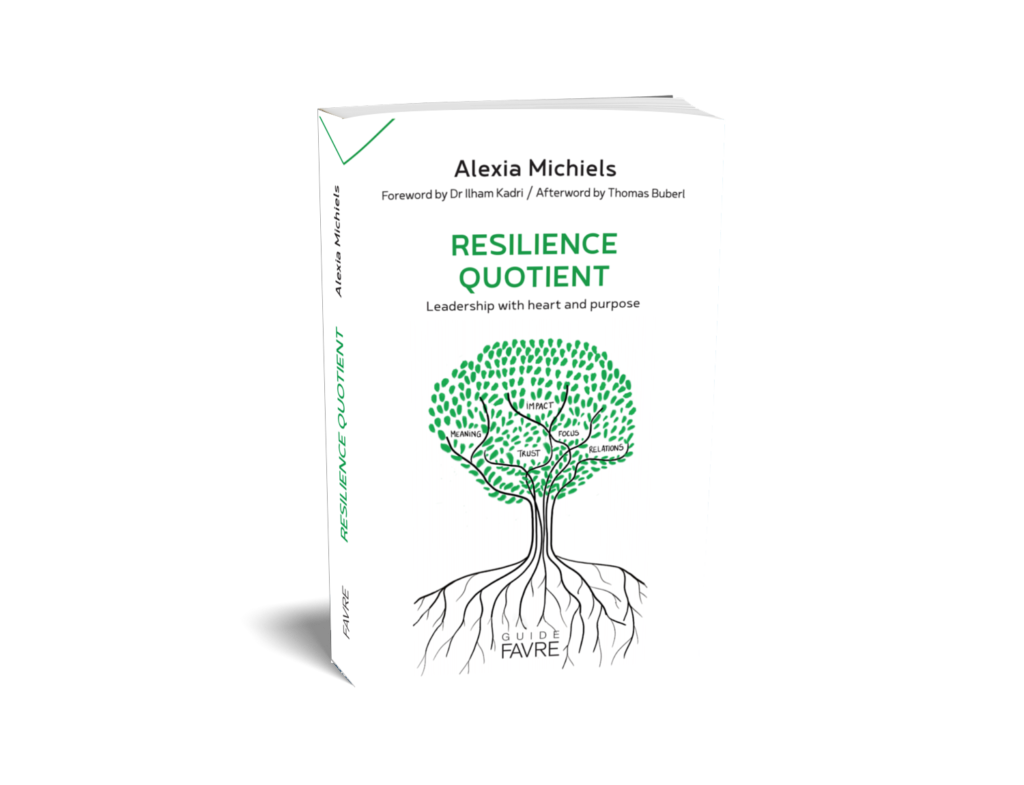
Excerpt from: “Resilience Quotient” by Alexia Michiels
There are only two ways to live your life. One is as though nothing is a miracle. The other is as though everything is a miracle. – Albert Einstein
How can we not marvel at a sunset, the blue of the ocean, a lush forest, a cherry blossom tree in spring, the majesty of the mountains, the birth of a baby calf, sunflowers turning toward the light, the colors of a hummingbird, the phosphorescent light of fireflies, the ingenuity of ants or the beauty of a butterfly?
We sometimes overlook nature’s miracles, as we are so taken by our modern existence. Preoccupied with our agenda, train schedules, telephone, computer, and sales targets, we tend to forget how extraordinary planet Earth is.
Many astronauts have testified that seeing the Earth from space for the first time made them instantaneously realize just how small, fragile and precious our planet is. They called this experience the overview effect35 – a cognitive shock, a sudden state of mental clarity, that renders the need to protect this little blue dot36 clear and imperative.
In 2017, a few days before the end of the Proxima mission that took him to the International Space Station for six months, the French astronaut Thomas Pesquet shared his thoughts on the subject: “We need all this technology to get here and understand the simplicity of things: the Earth, the cosmos, life as a whole. It’s hard to understand borders, wars and hatred.”
What if we paused to reflect on the relationship we cultivate with nature as a leader, living on earth?
The resilient leader is aware of the world’s challenges and makes choices with all stakeholders in mind – employees, customers, shareholders and… the environment. How about becoming a change agent? In this chapter, I put forward a state of play so that you can take an informed look at the solutions emerging in the private sector, and I give some examples of companies that are placing environmental issues at the heart of their strategy.
As I researched and wrote this chapter, I felt hope and confidence grow. Better understanding a situation, no matter how troubling, allows for a lucid approach. The resulting clarity allows us to find the courage to make sometimes difficult choices. The many climate initiatives underway fuel my realistic optimism (as described in Chapter 3), and I hope yours as well.
Table of Contents
What is nature?
Asking this question is not neutral. The Western worldview distinguishes between human beings and human works on the one hand, and nature on the other. In some cultures, the first peoples for example, this concept is inexistent because plants, animals and humans are included in a global sphere37. This perspective is far removed from the interpretations of classical Judeo-Christian thought, for which our species, created by God, has no place in nature but above it. Pope Francis’ Encyclical Letter, Laudato Si’38, addressed in June 2015, reconnects with the original biblical message of respect for nature39. Dedicated to environmental and social issues, and in general to the safeguarding of what he calls our Common Home, the text is based on a systemic vision of the world and calls for the reader to rethink the interactions between human beings, society and the environment. In this encyclical, Pope Francis emphasizes the interdependence between all species and the planet Earth. It is worth noting that St. Francis of Assisi (1181-1226), the inspiration for the name chosen by the Pope, is often considered the patron saint of ecologists, defender of nature and friend of animals. This is a pope whose courage and boldness – in a 2000-year-old institution not prone to innovation – is remarkable!
One surmises that in the Neolithic Age, about 10,000 years ago, when people began to settle down to farm the land, the relationship of humans with nature changed profoundly40. The hunter-gatherers, our Paleolithic ancestors, lived by hunting, fishing, and gathering. The corollary of nomadism, following herds in their migrations, was a form of asceticism. There was no incentive in accumulating excessive goods or provisions; the criterion of portability was essential. We can therefore assume that Paleolithic societies lived in a respectful relationship with other species and adaptated to their environment. This hypothesis is evidently far remote from the reality of modern society, whose foundations are based on extraction and exploitation, for the benefit of mankind.
This evolutionary vision of the Man-Nature relation includes the word nature in its external meaning (everything that is not human and/or human production). It goes without saying that our inner nature, the human nature, is part of this reflection.
Your relation to your inner nature, your personal ecosystem, influences the relationship you entertain with the outer nature.
This is why the chapters on relationship to oneself and relationship to others precede this one. In short, cultivating a healthy relationship with your inner nature tends to promote a healthier relationship with outer nature. And vice versa. Cultivating a relationship with outer nature nurtures a sense of humility, responsibility and gratitude. It’s even beneficial to your health. A fascinating study41 of the medical records of prisoners in a Michigan penitentiary in the 1970s proved that visual contact with nature was enough to provide positive effects: those who, by coincidence, were locked in a cell with a view of a natural landscape had a 24% lower risk of suffering health problems than those whose window faced a brick wall. Recent scientific advances clearly demonstrate that contact with nature is necessary for our mental health. The Japanese encourage the practice of shinrin-yoku (forest bathing), scientifically recognized for its therapeutic effects. We unconsciously find in nature what has allowed our species to survive and evolve for thousands of years. This link with nature is at the origin of the concept of biophilia “(from the Greek bio meaning “life” and philia meaning “who loves”), designating the visceral love of humans for the living.
Has our society’s evolution disconnected us from this intimate relation with nature? A highly likely hypothesis.
Connecting while distinguishing
When it comes to representing nature, two depictions dominate and are in opposition: one entirely includes humans in the universe, the other separates man and nature.
Anthropocentrism puts man at the center of the world and considers him segregated from nature. It is a dominant position vis-a-vis nature. Biocentrism is the opposite. The anthropocentric vision, whose excesses are destructive, is opposed to a vision where nature is sacred. Every living being, human or not, deserves respect and consideration. Man is no longer at the top of the hierarchy of living beings but a part of the whole and has no specific place. If every living being is entitled to respect, there would be no reason to choose the side of humans when they are threatened by other species. Biocentrism is anthropocentrism’s opposite extreme… and, as is often the case, extreme positions carry with them harmful excesses.
According to philosopher and sociologist Edgar Morin (born in 1921), either perception is a reflection of a form of laziness that aims at simplifying a complex reality. It invites to conceive uniduality42, which characterizes a simultaneous relation of implication and separation between man and nature. A question of connecting while distinguishing. Here is an arduous mental exercise for the binary mind that tends to dominate in our western culture. This perspective is closer to Taoism, a current of Chinese thought, which is based on the existence of a principle at the origin of all things (called tao) and a sense of yin-yang balances – at once distinct and connected.
Nicole Huybens43, psychosociologist, integrates the complex thought of Edgar Morin to approach the relationship between man and nature through an ecocentric vision. Ecocentrism presents a systemic approach that includes species, communities of living beings and ecosystems. This vision is based on the scientific observation that living (biotic) and non-living (a-biotic) elements interact to form a whole that has its own coherence. Protecting biodiversity, therefore, becomes a priority issue: if one species disappears, the whole ecosystem is off-balance. This imbalance affects us, living beings. By insisting on the interdependence of life forms within a complex whole, Nicole Huybens invites us to respect the laws of nature:
Contemplating the beauty of the world, thinking of it as a whole and harmonizing human behavior with the laws of nature are the pillars of the ecocentric vision.
The notion of interdependence is also present in the Gaia theory, which examines all the existing interactions within the Earth system. This theory is an evolution of the Gaia hypothesis, put forward in 1970 by the English climatologist James Lovelock (born in 1919) and the American microbiologist Lynn Margulis (1938-2011). According to this controversial hypothesis (also called the geobiochemical hypothesis), the Earth “is a dynamic physiological system which includes the biosphere, in which all living beings form a kind of super-organism – called Gaia – that self-regulates its components to promote life. However, this self-regulation capability, which preserves the conditions for life, is jeopardized by global warming. Theories based on the Gaia hypothesis present an alarming prognosis for the future of the biosphere, and therefore for the future of our species.
How to face the planetary environmental crisis? How to accelerate the necessary changes? How to move from awareness to action? And you, what do you do?
Bring your attention to the present moment to ask yourself these questions:
When was the last time I marveled at nature?
What feelings dominate when I am in nature?
Are environmental issues part of my daily thinking?
Have I ever discussed environmental issues with my team?
If not, what is holding me back?
If I have, how has it been perceived by most employees?
Scientific consensus, facts and figures
In the professional world, pragmatism is the order of the day. In my career, I have witnessed how facts – real and verified – are generally the basis for decisions. Let us thus assume that, as a leader, you are receptive to facts, data, and vetted information. Resilience invites lucidity; only by understanding a situation, as accurately as possible, can you decide on a strategy to rebound, change course and find new momentum. So let us open our eyes, not to be overwhelmed by despair or guilt, but on the contrary to take advantage of our influence – small or big – and choose to move in the direction of the future.
The environmental situation is alarming. The scientific consensus leaves little doubt that global warming will have dramatic consequences. The global exploitation and use of natural resources have progressed at an appalling rate since the 1950s; production methods, our lifestyles and more generally our model of society have led to massive global disruptions: global warming, ocean acidification, drop in biodiversity (on land as well as at sea). Back in 2014, the IPCC stated that greenhouse gas emissions generated by economic and population growth are responsible for these climate disruptions.
“It is now 99.9 % certain that humans are the primary cause of global warming” concludes a study published in 2018 in the journal Science44. The latest IPCC45 report published on August 9, 2021 confirms this: “Human influence on global warming is unequivocal.”
The increased awareness of this phenomenon no longer leaves room for denial. Yet, there are climate change deniers, and others merely refusing to consider that it is the result of human activities or its harmful consequences. These are the climate skeptics. It is difficult to listen to their populist, egotistical and often simplistic speeches. A recent study46 on a large sample (30 countries + 24 000 people interviewed) concludes that 8 % of the population does not believe in global warming. Even more worrying: 23 % doubt its human causes, hence our responsibility. The study’s conclusion: there is an average of 31 % climate skeptics in the world, particularly prevalent in the United States, China, Saudi Arabia, Australia and Norway!
In 2015, the Paris Agreement47 (adopted at COP21, the Paris climate conference) formalized a global response to the threat of climate change; this declaration of intent (not legally binding), signed by more than 195 countries, aims to keep the increase in global temperature by 2100 below 2°c compared to pre-industrial levels, and to continue efforts to limit it to 1.5°C. Half a degree more makes all the difference; it significantly increases the number of climate refugees, deaths, health problems caused by heat, risks of diseases such as malaria and dengue, droughts, heavy rainfall, etc.
Concretely, to achieve this goal, CO2 emissions would have to fall by 45 % by 2030. The current trend leads to a warming of more than 3°c by 2100. There is urgency! In September 2020, Chinese President Xi Jinping announced that he was aiming for carbon neutrality by 2060, which means that by that date China should not emit more greenhouse gases than it absorbs, through tree plantations or technologies to capture CO2. Other countries, such as the United Kingdom, Japan or the United States (under the presidency of Joe Biden), but also the European Union, have also committed to achieve carbon neutrality by 2050.
Ursula von der Leyen, President of the European commission, unveiled in December 2019 Europe’s ambitious environmental plan: The European Green Deal, or EGD48 (Green Deal for Europe), envisions a systemic approach based on economic growth decoupled from resource exploitation. In July 2021, an arsenal of legislative measures was announced, including the end of gasoline-powered cars and a kerosene tax in the aviation sector. The goal is a 55 % reduction in greenhouse gases by 2030, and to be the first carbon-neutral continent by 2050. This roadmap sets a course for a sustainable, equitable and inclusive economy.
Decades of economic growth have completely ignored negative externalities (social or environmental impact) and were evaluated along reductive macroeconomic indicators (GNP). The crisis is now twofold: economic gains only benefit a minority and leave too many people behind; all the while the impact of human activities on the climate and biodiversity threatens the survival of our species. More than just a responsible vision, the Green Deal for Europe includes a series of operational measures to shift the economy from an extractive to a regenerative one. The action plan is designed to promote a clean and circular economy while restoring biodiversity and reducing pollution. The European Union also provides financial support and technical assistance to help those who will be most affected by the transition to a green economy. While acknowledging the flaws or shortcomings of a Europe that we would often like to be stronger and more unified, I applaud this initiative that reveals the best side of this institution. When intelligence and creativity are put at the service of a global cause, hope is revived.
Should all these promises be kept, and according to the Climate Action Tracker49, global warming could be contained to 2.1°c by the end of the century – not far from, but above the objective of the Paris agreements. But what are promises worth in thirty or forty years from now?
The Greta Thunberg generation
In August 2018, a 15-year-old girl convinces her parents of the climate emergency and decides to raise her country’s government awareness about the issue. She settles down in front of the country’s parliament, and spends her days there brandishing a sign stating school strike for climate. Greta Thunberg, a young Swedish girl born in 2003, was unaware at the time that the movement she initiated would grow to a global dimension and mobilize young people all over the world. The Fridays for Future – demonstrations organized by young people – are quickly set up, and benefit from an immense media coverage. Greta Thunberg becomes the symbol of a whole generation of young people, aware of the issues at stake and determined to get decision-makers to move.
Invited to meet with many heads of state, speaking at multiple international conferences, including the United Nations Climate Summit in New York in 2019, Greta points the finger at the political leaders’s responsibility, who are doing too little in light of the emergency. She calls them to account with a straight face, and a fiery spirit. We remember her fierce look during the intense speech she gave at the United Nations in New York in 2018: How dare you? Greta’s direct style and anger at political inaction have earned her as much praise as criticism. Whatever one thinks of it, Greta Thunberg has been the catalyst of an unprecedented awareness, and has stimulated an extraordinary surge of commitment among the youth. The same young people who may be your employees tomorrow. The young people who are tomorrow’s leaders, and want a more responsible world. In 2019, TIME Magazine voted Greta Thurnberg “Personality of the Year”.
From nature awareness to responsibility, companies in the process
Corporate Social Responsibility, or CSR, refers to the voluntary recognition by corporations of the economic, social, environmental and ethical issues related to their activities. A company practicing CSR aims for a positive impact on society, respect for the environment, while being economically viable. This delicate balance is struck in partnership with its stakeholders, i.e. employees, customers, suppliers and shareholders. The company voluntarily implements good practices; the business model can be questioned to render it compatible with the fight against climate change or sustainable resource management. CSR is a new vision of the role of organizations and their responsibility in society. This approach is increasingly promoted, and even mandatory in certain jurisdictions, although it is optional. For example, in 2019 in France, the Pacte law (French acronym for: Action Plan for the Growth and Transformation of Companies) establishes a minimum legal base for the integration of these CSR dimensions in the conduct of business. In April 2021, the European Commission adopted the CSRD (Corporate Sustainability Reporting Directive50) proposal, which aims to harmonize CSR reporting over the next few years and extend it to more European companies with a view to facilitating investments based on ESG criteria (Environment, Social, Governance).
With our perspective of unlimited growth, we have reached unprecedented levels of resource extraction, pollution, and waste. The current state of knowledge shows how unsustainable the standard economic model is. Our view of development is flawed because the way we measure it does not take into account the negative impacts of economic activity – the so-called negative externalities, such as pollution, soil depletion or the devastating consequences of deforestation. There is no trace in conventional accounting of the cost to the environment (and therefore to society). Take the example of oil: its market price reflects the cost of extraction but does not include the cost of its manufacturing by nature – the millions of years it takes for organic matter to be transformed into oil. The case for a regenerative economy is growing.
The regenerative model, inspired by the observation of living organisms in nature, and guided by the collaboration principle rather than competition, promotes a local economy, an economy of use and a circular economy.
Some examples51 distinctly illustrate the relevance of an economy of use (also called functional economy). In Europe, for 92 % of its life time, a car is parked, thus unused; 31 % of food is wasted and office space is occupied 35-50 % of the time, even during working hours (note: these statistics were established before the pandemic). The circular economy, on the other hand, aims to reduce, repair, reuse, redistribute and recycle products that are designed with this in mind. Plastic is a good example. Thanks to innovations in cleaning, smart packaging or waste treatment, plastic waste can be drastically reduced, reused or better managed. New movements are emerging, such as Circular Economy Switzerland52, which bring together private companies and political organizations around the common goal of making the economy more circular.
While initiatives to fight global warming are multiplying, discussions around this environmental issue, whose stakes are political, social, economic, technological, sanitary and ethical, are also continuing. Apart from the climate sceptics mentioned above or the uninformed, no one can claim ignorance. Citizen mobilizations and eco-actions are multiplying: waste sorting, turning off unnecessary lights, favoring soft mobility, buying in bulk to decrease packaging waste, heating judiciously, saving water, etc. This is commendable and necessary, but obviously not sufficient. In this battle, we have to activate the tripartite – political power/citizen power/business power – to accelerate transition.
Businesses can play a leading role in this climate fight. As a leader, you can contribute to this collective effort, whatever your sphere of influence. The professional world, a breeding ground for multiple intelligences and creativity, has an important part to play in this race against time.
An increasing number of companies is making a commitment to become carbon neutral by 2050 – consuming fewer fossil fuels and offsetting what cannot be eliminated. Under the patronage of the United Nations, the UN Race to Zero53 campaign is scientifically monitoring these initiatives stemming, among others, from the business, political (cities, states, regions), financial, and academic worlds. This coalition represents 708 cities, 23 regions, more than 2,000 companies, 127 of the largest investors and 571 academic institutions. Collectively, these actors now cover 25 % of global CO2 emissions.
When large companies make structural, and structuring, decisions that are positive for the climate, the lines are moving!
The AXA Group, one of the world’s leading insurance and asset management companies, is setting an example: in 2019, AXA announced an ambitious climate strategy that includes objectives aligned with the Paris Agreement. Specifically, the group is committed to directing financial flows to investments with a warming potential below the 1.5°c limit by 2050. Operating in an economy that is very fossil fuels intensive, AXA is working with experts54 to develop measurement tools and methodologies to assess the warming potential of its assets, and make the necessary investment/divestment decisions.
In the food sector, Danone is also set to make a complete transition to a zero-carbon economy. The carbon neutrality by 2050 objective involves the entire value chain; Danone becomes responsible for the greenhouse gas emissions of the production cycle, from the farms to the billions of consumers in the world. How can it achieve this? On the one hand by reducing emissions, on the other hand by transforming agricultural practices, by eliminating deforestation from their supply chain, and finally by compensating for the remaining emissions.
Examples of companies that are taking this step abound, and they are a source of hope. They are not only multinationals or mega-organizations. Many SMEs are also run by leaders, perhaps you, who are contributing to this collective effort.
Your climate actions can inspire your team. By choosing to bike to the office instead of driving, by deciding to print only on recycled paper (or not at all), or by switching off air conditioning, you are raising awareness among your employees. When these actions are fully integrated into your strategy, you multiply the impact of your efforts. – “Small streams make big rivers”, Ovid
In England, 75 % of the population believes that business bears responsibility for protecting the environment55. In the Fall of 2021, a small earthquake could strike the UK! The country could become the first in the world to ratify a law requiring all companies to operate in a way that benefits not only shareholders but all stakeholders, including the climate! This bill (The Better Business Act) paves the way for a new paradigm: every commercial company, large or small, would be responsible for its social and environmental impact. Decisions taken must integrate this multifactorial perspective, rather than only considering the interests of shareholders – as is still far too often the case. According to this law, each company will have to share in an official report indicators related to its impact on people, on the planet and on profit. Supported by more than 500 companies (such as The Body Shop, Waitrose, Innocent or Patagonia), this bill was initiated by B Lab UK, an association bringing together the growing community of companies that have obtained B Corp certification in England.
Consider all stakeholders, including nature
Since 2006, the B Corp movement has brought together companies that want to turn business into a real force for the common good, pursuing the goal of the three Ps – integrating people, planet and profit. Validated by a rigorous questionnaire (the BIA: Benefit Impact Assessment), B Corp certification is awarded to companies that integrate social, societal, and environmental objectives into their business model and decision-making. B corps aim to be the best for the world rather than the best in the world. It’s hard not to praise that intention.
Rose Marcario, former CEO of outerwear brand Patagonia, was one of the pioneers in associating with this movement. Upon joining the company in 2008, she evaluated Patagonia’s production processes and took drastic steps to reduce its negative impact on the environment, such as eliminating waste and reducing packaging materials. She believes that the B Corp movement is essential because business is not only about shareholders, but also about responsibility to the community and to the planet. The values and aspirations of the B Corp community are embodied in a Declaration of Interdependence signed by certified companies who, recognizing the interconnection that binds us, commit to act responsibly toward all stakeholders and future generations. To become a B Corp, companies must amend their bylaws to require the board of directors to strike a balance between profit and mission. This legal structure is called the Benefit Corporation in the United States, the Società Benefit in Italy, and in France it has inspired the Société a mission.
Courageous leaders, determined to move from intention to action, have embarked their teams on this process. Nearly 4000 companies in 74 countries have been certified to date. Many of these companies are SMEs, with some multinationals actively engaged in the process. Danone has proceeded with B Corp certification for several of its entities. Ben & Jerry, a subsidiary of Unilever, is also a B corp.
With its 2500 employees worldwide, Swiss bank Lombard Odier has been a B Corp since 2019, determined to combine financial objectives with a societal mission. More than a declaration, it represents a commitment to respect sustainability criteria in their investments, and transparency in the monitoring of impact indicators. The bank promotes a circular, efficient, inclusive and clean economy.
Is this strategy a communication stunt or green washing? If you feel that way, think again. The B Corp certification, which is valid for 36 months, is only awarded after a thorough examination by independent bodies, ensuring that the necessary rating is obtained on the basis of a very demanding questionnaire of about 200 questions – the Benefit Impact Assessment mentioned above.
Can ecology be combined with profit?
Economy and ecology are often perceived as two opposing concepts. Yet they share the prefix eco (from the Greek, oikos), which refers to the management of the home. Reconciling economy and ecology is a necessity in order to unite the whole of society around current social and environmental issues.
Bertrand Piccard, one of the first to consider ecology through a profitability lens, is convinced that solving the climate crisis is possible by diffusing innovative and efficient technologies that will convince governments and companies to act. In the realm of his Solar Impulse Foundation, a panel of independent experts has evaluated over 1000 clean and profitable solutions. From software that tracks your carbon footprint to a used plastic repair system, from vertical farms to a reusable diaper washing machine, these innovations from around the world cover all sectors. Assembled in a Guide56, available online since April 2021, these verified solutions can be deployed on a large scale. In a pragmatic and practical way, this initiative aims to provide political and economic leaders with tools to achieve carbon neutrality goals.
The concrete examples and disruptive trends above generate collective awareness. This is the necessary step to accelerate the transition to a new economic model, integrating social and environmental impacts. The challenge for all of us is to take part in this transformation.
Leader-actor and nature stewardship
As human beings, we have the extraordinary capacity to make conscious choices. I often insist on this notion of conscious choice which underscores our freedom. As a consequence of the development of our consciousness, we are responsible for our actions. In its original sense, responsibility emphasizes our capacity to respond (response-ability).
Whatever your sector and company size – small store, SME or multinational – you have a role to play in the fight against global warming. The fate of future generations depends on it, as does the survival of your company in a zero-carbon economy.
The magnitude of the threat requires leaders to acknowledge their share of responsibility for the situation we face today. Leadership is thus facing a major challenge: to accelerate the transformation of companies to create an economic model in which the environment is a stakeholder. The time when the leader’s responsibility is limited to maximizing profits is over. The choice is yours: to suffer or to act?
Environmental initiatives, eco-actions, are flourishing in companies. Encouraging carpooling, consuming locally, eliminating plastic cups at the coffee machine, favoring less polluting industrial processes, are all useful. Beyond these everyday actions, today’s leaders are called upon to become activists, influencers and inspires.
As illustrated above by the Better Business Act in England, business leaders can lobby for more stringent legislation on social and environmental protection.
Companies have the power to influence government through their trade associations or chambers of commerce. By controlling the supply chain, it is up to you to require suppliers to assess their climate impact and to work with those who engage in the process. Finally, to reinforce your impact, communicating your environmental efforts is a way to inspire other leaders to take these steps.
Courage is the first of the virtues because it makes all the others possible. – Aristotle
Being a change leader requires courage and determination. It is not the easiest path as it incorporates a multifactorial reality, but it is the resilient path – one that elevates and contributes to the common good.
To nurture your commitment, sharing with others who share your beliefs, is extremely helpful. Some professional associations bring together leaders who are convinced of the urgency of transforming our economic model to a more sustainable and planet-friendly one. The Regenerative Alliance57, launched in 2020, supports leaders in the private and public sectors – across all industries – in this transition to a regenerative economy. By creating a space for peer-to-peer, expert-driven exchange, this community builds on the collective intelligence and collaboration of its members.
The transformation of the economic world is underway, accelerated by leaders who are increasingly concerned by the world’s future. In light of the current knowledge, it is up to you to consider your relationship with the environment as a dynamic opportunity for mutual enrichment. By expanding your professional responsibilities to include a social and environmental perspective, you give your leadership role a whole new scope. And suddenly, the question of the meaning of your professional activity touches your heart as a leader!
Bring your attention to the present moment and ask yourself these questions:
When I make decisions in my daily work life, do I think about their impact on the environment?
What could I do to be a more committed leader-actor?
What eco-actions have I put in place in my team?
Do we have a CSR policy?
Do we integrate environmental impact criteria in the choice of our suppliers?
Do I communicate regularly with my teams and the outside world about our climate commitments?
Resources:
35. F. WHITE, “The Overview Effect – Space exploration and human evolution” AIAA (1998).
“Pale Blue Dot” is the name given by American Astronomer Carl Sagan (1934-1996) to a picture of Earth taken on February 14, 1990, from the voyager 1 space shuttle 1, at a distance of approximately 6 billion kilometers.
P. DESCOLA, Par-delà nature et culture, Gallimard (2006).
Encyclical Letter Laudato Si’ by the Holy Father Francis on Safeguarding the Common House, June 2015, available online: https://www.vatican.va/content/francesco/en/encyclicals/documents/papa-francesco_20150524_enciclica-laudato-si.html
J. BASTAIRE, “L’exigence écologique chrétienne”, Études, vol. tome 403, n°9, pp. 203-211 (2005).
J. DELORD, « L’extinction d’espèce: Histoire d’un concept & enjeux éthiques », Publications scientifiques du Museum (2010).
H. FRUMKIN, “Beyond toxicity – human health and the natural environment”, American journal of preventive medicine, num 20, pp 234-240 (2001).
E. MORIN, La méthode IV. Les idées: leur habitat, leur vie, leurs mœurs, leur organisation, Seuil (1991).
N. HUYBENS, La forêt boréale, l’éco-conseil et la pensée complexe. Comprendre les humains et leurs natures pour agir dans la complexité, Éditions universitaires européennes (2010).
C.Z. ZOU, F. J. WENTZ, S. SOLOMON, G. PALLOTTA, “Human influence on the seasonal cycle of tropospheric temperature”, Science, vol.361; n°6399 (2018).
Ellen MACARTHUR Foundation, “Growth within: a circular economy vision for a competitive Europe”, SUN, McKinsey & Co (2015).
https://circular-economy-switzerland.ch/
UN Race to Zero – https://unfccc.int/climate-action/race-to-zero-campaign
For example, AXA is a member of the in 2019 founded UN-convened Net-Zero Asset Owner Alliance – assembling 37 major institutional investors joining forces to accelerate the decarbonization of their portfolios (together more than $5.7 trillion) by 2050 and to measure and report on progress every five years.
Research by BBA – https://betterbusinessact.org/
Solar Impulse Foundation – website and solutions: https://solarimpulse.com/efficient-solutions
A study in Nature Human Behaviour published this week shows promise for mindfulness and positive psychology to improve mental states of wellbeing. (https://www.nature.com/articles/s41562-021-01093-w).
I was invited to discuss the findings on the Morning Show today with TV3 in New Zealand. We asked viewers if they practiced mindfulness. While 30% answered YES, 50% NO, another 20% answered “what the heck is mindfulness?”
Thus, 70% disengaged.
The host, Duncan Gardner, dismissed the interview with “See you next year.” Viewers really learned nothing about this important, yet flawed study. The interview is available at 46 minutes into episode on 20 April 2020.
In a nutshell, a systematic review and meta-analysis of 419 randomised and controlled studies involving 53,288 people showed low to moderate impact. Mindfulness-based and multi-component positive psychological interventions showed some efficacy in clinical and non-clinical populations.
Singular positive psychological interventions, cognitive and behavioural therapy-based, acceptance and commitment therapy-based and reminiscence interventions were impactful.
Read those last two paragraphs again. Do they make sense to you?
Table of Contents
The Promise
The suffering caused by physical, emotional and mental distress in our modern time is enormous and increasing. Thus far, the impact of psychology, psychiatry, medicine and pharmacology has been limited and confusing. The incidence of common conditions such as depression, anxiety, attention disorders and Autism continue to increase alarmingly.
As humans confront the changing environments we have created, we are failing to adapt. Despite massive investments, preventable physical, emotion and mental conditions continue to accelerate. We are not solving the challenge of wellbeing.
We desperately need effective interventions. All work done to define and test solutions must be celebrated. This is certainly the case in this meta-anaylsis but, in my opinion, we have a long way to go.
The Problems
Reading through the abstract of this paper is agonising. The vague terms used, and lack of clear definitions leave the average person confused or disengaged. Wellbeing – physical, emotional, mental, social and spiritual – are not defined.
How does the average person engage with ‘Mindfulness-based and multi-component positive psychological intervention’? No wonder, people prefer a pill or a glamorously promoted supplement such as the vitamin C promoted in the commercial preceding the interview.
Good science must define and simplify the terms so that they can be tested and, if proven successful, effectively promoted in practical ways. For example: slow, diaphragmatic breathing through the nose at six breaths per minute reduces anxiety symptoms by xx%.
Psychologists have a long road to travel to bring clear, effective solutions to solve for wellbeing. Their claim: ‘researchers drill down to the core of wellbeing worldwide’, is false.
Solutions
Define the Goal
To live a good life inspired by love and guided by knowledge was Bertrand Russell’s recommendation. It is hard to beat. ‘To live’ is action based and physical. ‘Inspired by love’ is the domain of emotional and social intelligence. Guided by knowledge is mental awareness, agility and meaning.
If we are to use the term wellbeing, let’s agree that it includes physical vitality, mastery of emotion, agility of thought, social connection and meaning (spiritual).
When we use the term resilience, we mean the learned set of skills to:
Bounce forward in adversity
Grow physical, emotional and mental resources
Connect with self, others and nature
Discover flow in your life and work
We must define the terms clearly, embracing the integration of different components and expressing it in a way people can understand.
Define the Components
The most challenging component of an effective wellbeing and resilience strategy will be to define the human factors that we want to impact.
For example, a clinical diagnosis of depression is description of a prolonged state of sadness. It has physical aspects in fatigue and sleep disturbance. The emotion of sadness is persistent and overwhelming. The mind becomes confused, pessimistic and indecisive. A range of solutions exist.
Physical activity, sunshine, sleep and good nutrition can reduce the symptoms. Emotion regulation including impulse control, gratitude, appreciation and kindness help. Mental skills such as CBT and ACT can work. All of these can work better than antidepressants if applied consistently.
The challenge of a therapist, coach, trainer or digital tool is to identify the right intervention for the person and secure consistent, disciplined application. Anyone can learn how to improve mental agility (CBT). Consistent application is a huge challenge.
Human factors describe the physical, emotional, social and mental attitudes and behaviours that can be learned and mastered. Annually, we search our assessments for the key factors that determine a good life. In 2020, these were the key factors that drive integral wellbeing and resilience:
Key Factors that Drive Wellbeing through 2020 (n=7,000)
Note that the lead strength factor is Presence which we discussed on TV today. Presence, for some, is more tangible and less threatening than mindfulness. You are in the moment and fully focused. Focus requires attention control. You are non-judgemental meaning that you are not self-critical and drop your worry and rumination.
To be present also means being fully alert, physically well, refreshed, nourished, calm and positive. One can be fully present in any moment of choice – breathing, enjoying, connecting, problem-solving or simply resting.
Interactions and High Leverage, Practical Interventions
In our experience, this is a huge opportunity to turn the tide of suffering. Taking depression and anxiety, the two most common mental illnesses, we throw billions at therapy, medications and vague techniques. What if we were to simply secure a good night of sleep? Then, perhaps a slow diaphragmatic breathing practice?
If we sleep and breathe well, we have a profound preventive and curative solution for mental illness and physical illness. In addition, we would be stronger, better connected and much more functional in daily tasks.
By tracking the development of these human factors, we are able to identify the ones that respond to assessment, training and support. In a sample of 1,788 people during 2020 we were able to show the following changes:
These gains are shown as a Growth Ratio (Sharpe Ratio: average improvement divided by the standard deviation). * indicates lead factors for high resilience (left) and low resilience (right)
By integrating these factors in categories of wellbeing and resilience, we can show how each category changes through a six-month training intervention:
This group of entrepreneurs (n = 115) achieved significant positive change in every category measured. For example, the depression category includes the factor related to a diagnosis of depression (sadness, confusion, insomnia, self-critical, self-doubt). We see a 44% reduction in this category and a 54% reduction in distress symptoms. In addition, they are better able to master stress, be physical well, emotionally intelligent, mentally agile and connected with greater meaning (purpose, integrity, fulfilment, altruism, trust and flow)
Match the Actions to the Person
Finally, while some will respond positively to mindfulness, others may respond better to worry control, fitness, sleep or positivity. In a globally integrated world, we need to offer a range of clear, well defined skills that can be effectively interpreted by people in different circumstances.
In today’s fast-moving and high-pressure work environment, the ability to stay calm, connected, and constructive—especially under stress—is more than a soft skill. It’s a competitive advantage.