

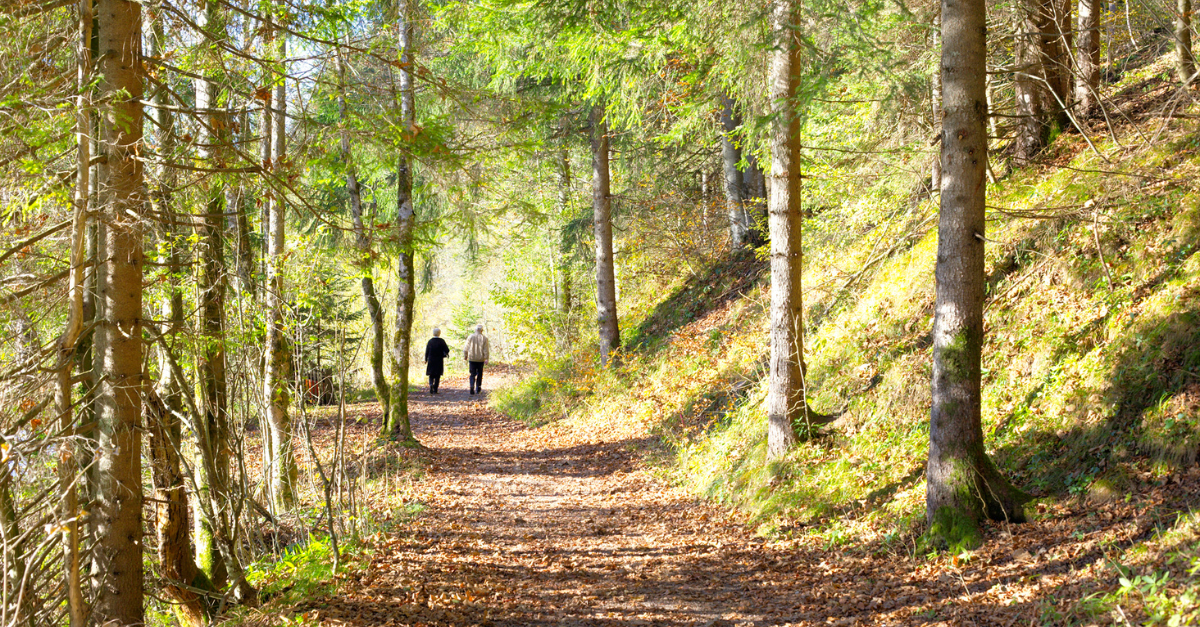
Why Hours in a Forest Can Feel Timeless? And What are the Proven Benefits?
The Forest Effect
TL;DR — Key Takeaways
- A 2008 study found that three days in a forest raised natural killer cell activity by roughly 50%, an immune effect that lasted more than a week.
- You don’t need three days. Research shows two hours in an intact forest is enough to produce a measurable physiological shift.
- Time itself feels different in nature. Lowered arousal and increased mindfulness combine to make a slow forest walk feel shorter than it is.
There’s a kind of tired that sleep doesn’t touch. You know it if you’ve felt it: the fog that settles in behind your eyes by 3pm, still there the next morning no matter how early you went to bed. A growing body of research suggests the fix for this isn’t more rest. It’s a different kind of environment.
The Forest and Your Immune System
In 2008, immunologist Dr. Qing Li at Nippon Medical School sent a group of Tokyo office workers into the forest for three days. He drew their blood before the trip and again after. What he found reshaped how scientists think about nature and the immune system: natural killer cell activity, the cells that hunt down virus-infected and cancerous cells in the body, had risen by roughly 50%. The effect held for more than a week after everyone was back at their desks.
The likely mechanism is phytoncides, compounds trees release into the air to defend themselves against insects and fungi. Breathe forest air and you’re breathing these in too. Li’s later work found that phytoncide exposure alone, without any physical exertion, was enough to trigger the same immune response. A 2024 review pulling together eight independent studies confirmed the pattern holds up: forest exposure elevates natural killer cell activity, lowers cortisol, and shifts the nervous system out of fight-or-flight.
You Don’t Need Three Days
You don’t need three days in the wilderness to get any of this. Li’s research also found that two hours in an intact forest is enough to produce a measurable shift in the body. A guided walk that runs two to three hours isn’t just a pleasant morning outdoors. It’s a dose.
What Happens to Your Sense of Time
Then there’s what happens to your sense of time while you’re out there.
Researchers at the University of British Columbia found that people in nature settings consistently experience time as passing more slowly than they do in cities. Two things seem to explain it: lowered arousal and a state closer to mindfulness, both of which nature reliably brings on. Separately, researchers at the University of Kent found that a short mindfulness exercise on its own was enough to change how people judged the length of time passing, stretching short intervals and easing that background hum of time pressure.
Put those findings together and something interesting happens. A slow, unhurried walk through the forest doesn’t drag the way you’d expect. It opens up. Your attention, usually split between your phone, your inbox, and half a dozen unfinished thoughts, settles onto one thing: the path underfoot, water somewhere nearby, the rhythm of your own breathing. People who’ve done these walks often say the opposite of what they braced for. Three hours felt like thirty minutes.
That’s part of why this sits so naturally the day before World Mental Health Day. The research keeps pointing to the same thing: people don’t need less on their plate so much as they need somewhere their nervous system can actually stand down. Few places do that as reliably, or as measurably, as a forest.
Recovery doesn’t always require doing less. Sometimes it just requires a different environment — one where your body already knows what to do.
The Resilience Institute partners with organisations globally. Our programmes are grounded in over 22 years of global resilience research and backed by the 50-factor Resilience Assessment. In conjuction with the World Mental Health Day we are bringing you the Silent Walk, we look forward to meeting you.
Bring Resilience Training to Your Team
Explore our corporate training, leaership and well-being programmes, grounded in over 20 years of resilience research.
Explore ProgrammesRelated Articles


Start Your Learning Journey with Us
Build resilience, strengthen your wellbeing, and take the next step towards meaningful personal and professional growth.


Send Us a Message
Fill out the form below and our team will get back to you.