

Self-Compassion and Self-Love: A Science-Backed Guide
- Self-compassion isn’t self-indulgence. A 2026 study of healthcare professionals found it was the single strongest factor protecting against burnout and stress, ahead of every other resilience factor measured.
- Negative self-talk is self-reinforcing once it starts. Research on rumination shows each repetition tends to spike stress and deepen the spiral, which is why interrupting it early works better than trying to eliminate it entirely.
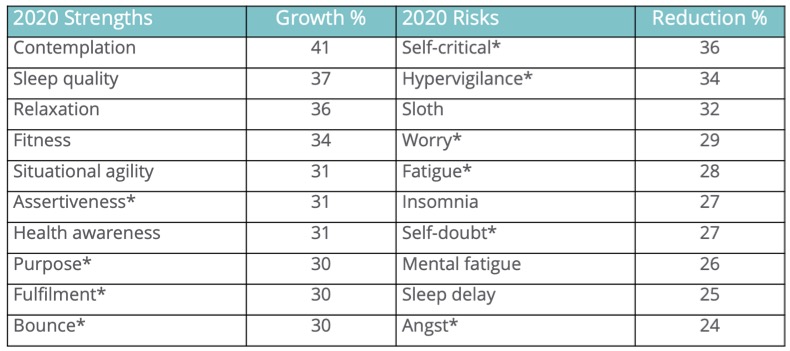
- Self-compassion is trainable. Randomized controlled trials consistently show measurable drops in depression, anxiety, and stress within six to eight weeks of consistent practice.
You make a mistake in a meeting. For the rest of the afternoon, a voice in your head keeps replaying it, sharper and less forgiving each time. Most people know this voice well. What fewer people know is that the way you respond to that voice, not whether you can silence it, is one of the more reliable predictors of how well you handle pressure over the long run.
That’s the terrain self-love and self-compassion research actually covers. Not affirmations in a mirror, but a specific, trainable relationship with yourself that shows up in your resilience, your sleep, and your ability to recover from setbacks.
Is Self-Love Selfish?
It’s a fair worry. Self-love can sound like a conceited or self-absorbed pursuit if you picture it as building a grandiose sense of self. In practice, it’s closer to the opposite: a state of mind built through specific mindsets, actions, and habits, most of which involve honesty rather than flattery.
Before you can genuinely love and accept yourself, you have to know yourself, which is harder than it sounds. Self-knowledge centres on your true identity: the beliefs, traits, and qualities that make you who you are. But a large part of who you are is shaped by other people, whether you notice it or not.
You don’t exist in a vacuum. Humans are social creatures, and identity forms through a loop: how you see yourself, how others see you, and how you act based on those perceptions. Notice how differently you might behave with close friends on a Friday night versus in a Monday morning meeting with your boss. Same person, genuinely different presentation.
The Science of Self-Compassion and Identity
UCLA neuroscientist Matthew Lieberman ran a functional MRI study that found people consistently use different regions of the prefrontal cortex when thinking about themselves compared to when thinking about others. Identity, in other words, isn’t fixed. It’s dynamic, and it shifts depending on whether your attention is turned inward or outward.
When you engage with others, a different set of social rules governs the exchange, which is part of why people so often look outward for affirmation instead of generating it internally. Wharton professor Sigal Barsade’s research on emotional contagion, published in Harvard Business Review, demonstrated how the emotions of people around you measurably influence your own mood and behaviour. If the people near you are calm and warm, that tends to rub off. The same is true of negative emotional states.
Putting your entire sense of well-being into the hands of other people’s opinions is a fragile strategy. A 2026 repeated-measures study published in PLOS Mental Health tracked participants over time and confirmed that self-compassion functions as a genuine mechanism for improving mental health, not just a symptom of already being well, by strengthening emotion regulation and resilience directly.
What Is Self-Love, Really?
A useful way to define self-love is to look at three things: how you act towards yourself, how you feel about yourself, and how you think about yourself. People who practice it well don’t just feel and think kindly about themselves. They also take actions that actively support their own growth and health.
Research consistently finds that people who genuinely love themselves hold an overall positive view of themselves, without it being unconditional. There will still be setbacks and hard days. The difference is where attention lands afterward.
Take the meeting mistake from the opening. You can still feel upset about it and offer yourself something kinder by the end of the day instead of continuing to replay it. That’s the second key feature of self-love: it isn’t only the absence of negative thoughts. It’s the active work of building a perspective that aligns with your actual goals and wellbeing, alongside them.
Self-love also includes being honest with yourself so you can actually reach your goals, rewarding real progress, setting boundaries and protecting them, placing your own wellbeing near the top of your priorities, and gradually releasing overly critical judgments about perceived flaws. None of that requires abandoning accountability. You can still look honestly in the mirror and hold yourself to your own standards. Self-love is about doing what’s genuinely good for you, not about excusing behaviour that isn’t.
Self-Compassion vs Self-Love: Is There a Difference?
The two terms are often used interchangeably, and for good reason: the overlap is substantial. The American Psychological Association defines self-compassion as not being excessively self-critical about personal failures or inadequacies, a stance that promotes wellbeing. Self-love, by the APA’s definition, is a broader regard for one’s own wellbeing overall.
In practice, self-compassion is closer to the in-the-moment skill: how you treat yourself immediately after a mistake or setback. Self-love is the wider architecture of habits, boundaries, and choices that support you over time. Most people who build one end up building the other, since they reinforce each other directly. If you need a simple distinction to hold onto: self-compassion is largely about forgiving yourself, while self-love is the broader set of habits that protect your wellbeing.
The Benefits, Backed by Recent Research
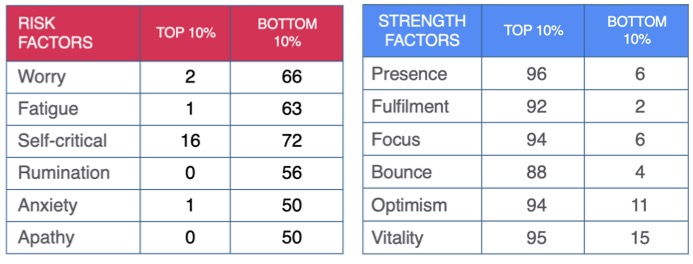
People who don’t practice self-compassion tend to default to harsh self-criticism, and that pattern carries real costs. Chronic self-criticism and perfectionism are associated with a range of negative health outcomes, including elevated risk for both physical and mental health conditions.
The research on the other side of the ledger has grown substantially in the past two years. A 2025 randomized controlled trial of a six-week self-compassion group counselling programme for young adults found significant reductions in depression, anxiety, and stress compared to a waitlist control group. A 2026 randomized controlled trial in Japan tested a self-compassion and mindfulness smartphone intervention with working adults and found measurable improvements in mental health and work-related outcomes. And the German healthcare worker study cited above found self-compassion was more strongly linked to protection against burnout than any other resilience factor tested, including social support and self-care behaviours on their own.
The mechanism appears to run largely through stress reduction. Self-compassion is consistently associated with better emotion regulation, and lower baseline stress tends to bring better sleep, steadier mood, and reduced anxiety along with it. It also supports the kind of honest self-assessment that makes it easier to notice your own progress and stay motivated toward genuine goals, rather than deflecting every setback with denial or every success with dismissal.
Breaking the Negative Self-Talk Cycle
Loving yourself isn’t always straightforward, largely because modern life rewards a certain amount of self-neglect. You take on extra work hoping it leads to a promotion. You cover for a colleague again, even though you’re already stretched thin and know you’ll lose sleep over it. Eventually, the inner voice turns critical, precisely because you’ve been running on empty and the results are starting to show.
On the surface, this can look like exactly what success requires. But research on burnout and rumination tells a more complicated story. A 2025 workplace study found that negative rumination consistently mediates the relationship between workplace stressors, incivility, and negative outcomes like burnout, reduced job satisfaction, and spillover into life outside work. Spreading yourself thin enough to damage your own sleep and mental health doesn’t sustainably help the people you’re trying to support. Past a certain point, it means you have less capacity to give them.
The trickier trap is negative self-talk itself, since it’s unrealistic to expect anyone to eliminate it completely. Research on rumination, including a 2026 book-length treatment by science journalist Donna Jackson Nakazawa on the neuroscience of rumination, describes how negative self-talk tends to become self-reinforcing once it starts: the thought triggers anxiety, the anxiety fuels more negative self-talk, and the resulting spiral often produces the exact poorer performance the original thought was worried about.
fMRI research on self-talk backs this up at the neural level. A widely cited neuroimaging study found that self-critical and self-respecting self-talk activate distinct brain networks tied to motivation and reward, with measurably different effects on subsequent cognitive performance. The goal isn’t a mind empty of negative thoughts. It’s catching the cycle early and interrupting it with something more accurate and kinder, rather than letting the loop run.
Five Evidence-Based Ways to Practice Self-Love
Set a Firm Boundary Between Work and Home
One of the most common places people lack boundaries is exactly here. Instead of checking work email once you’re home, turn off notifications and protect time for something that genuinely restores you, a hobby, a walk, a conversation that has nothing to do with your inbox.
Practice Mindfulness, Even Briefly
Mindfulness is a state of awareness centred on the present moment, letting perceptions arise and pass without judgment. You can build it through breathing exercises, short meditation, or a body scan, simply noticing what you’re sensing and feeling without trying to fix it immediately.
Interrupt Rumination Early
Since negative self-talk is self-reinforcing, the highest-leverage moment to intervene is at the start of the loop, not after it’s spiralled. Naming what’s happening (“this is rumination, not fact”) is a simple, evidence-backed way to create distance from the thought.
Reward Genuine Progress, Not Just Outcomes
Self-love includes honest accountability. Track progress toward goals that actually matter to you, and acknowledge it when it happens, rather than only registering the moments you fall short.
Protect Recovery Like Any Other Priority
Self-compassion research consistently ties back to stress reduction and recovery. Treating rest as optional undermines the very capacity you’re trying to build. Protect it the way you’d protect any other commitment that matters.
How Self-Compassion Builds Resilience
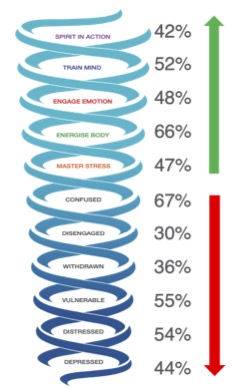
Resilience is a learnable capability, not a fixed trait, and it shows up as the ability to adapt to difficulty with flexibility rather than rigidity. People with strong resilience don’t just recover better from setbacks. They tend to feel more engaged, more inspired, and they perform better through sustained focus and flow.
Self-compassion strengthens resilience largely by changing how setbacks get reframed. Imagine making a mistake, at work or in a relationship. The internal dialogue that follows either compounds the damage or starts building resilience, depending almost entirely on its tone.
Everyone makes mistakes. What defines the outcome is the recovery. Avoiding harsh self-talk and offering yourself genuine forgiveness is the foundation. Layering in some active, specific positive self-talk on top of that is what turns the moment into resilience-building rather than just damage control: noticing real progress made, and recognising that a setback can sometimes be exactly what’s needed to move past a plateau.
Reflect on This
- What does my internal voice actually sound like after a mistake, and would I speak to a colleague that way?
- Where in my week am I sacrificing rest or boundaries in ways that quietly cost me more than they give?
- When negative self-talk starts, what’s my current way of interrupting it, if I have one at all?
- What would change if I treated self-compassion as a skill to train, rather than a trait I either have or don’t?
A little self-compassion goes a long way toward sustaining both wellbeing and resilience. Being kind to yourself, setting real boundaries, and still holding yourself accountable for your own goals aren’t in tension. Together, they’re what makes it possible to keep showing up.