
Women Illustration
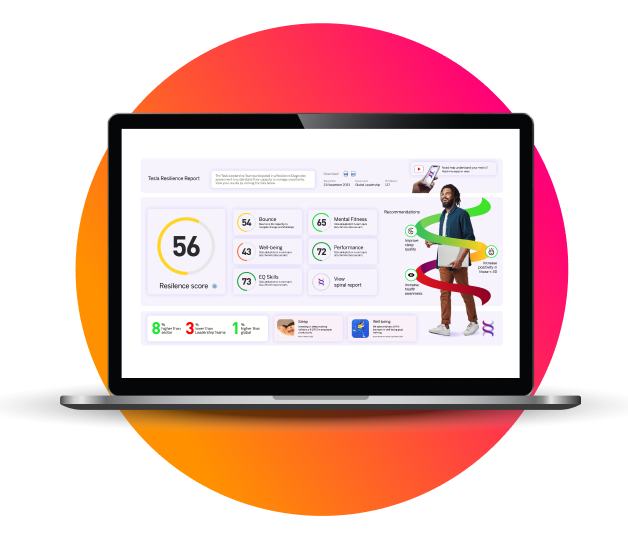
Overview of the personalised Resilience Assessment Report

See how we measure Resilience and the detailed insights into individual strengths and growth areas.

Download Report

Mental Health Matters: A Guide to Organisational & Personal Resilience

  • A landmark 2023 study found one in two people worldwide will experience a mental health disorder by age 75, based on WHO survey data spanning over 150,000 people across 29 countries.
  • WHO estimates depression and anxiety alone cost the global economy 12 billion working days and US$1 trillion in lost productivity every year.
  • A genuine mental health strategy needs both organisational commitment, culture, policy, trained leaders, and real personal practice, physical, social, digital, and emotional habits that actually support wellbeing day to day.

One in two people will experience a mental health disorder at some point in their lives. That’s the finding of a landmark 2023 study by researchers John McGrath, Ronald Kessler, and colleagues, published in The Lancet Psychiatry, drawing on World Health Organization survey data from more than 150,000 people across 29 countries, the largest coordinated study of its kind. Applied globally, that’s over 4 billion people personally touched by a mental health disorder in their lifetime.

Before diving in, and more importantly, to genuinely look after your own mental health in case reading a long article on this topic triggers anxiety, you’re welcome to scroll straight down to the personal and organisational action plans near the end. Otherwise, keep reading.

The effects of mental health disorders in the world of work have never been more visible. WHO estimates the global economy loses 12 billion working days every year to depression and anxiety alone, at a cost of US$1 trillion annually in lost productivity. What does that actually mean for you and your organisation? Read on to find out, with a real example.

Mental health issues and other stress-related disorders are recognised as leading causes of early retirement, high absenteeism, general health problems, weakened leadership, and reduced organisational efficiency. Mental health risk is also genuinely linked to newer pressures: rapid technology change, process overload, skills and agility gaps, digitalisation, and the sheer volume of information many people now have to process daily, sometimes called infobesity.

Do organisations need more reasons to tackle this seriously as part of a genuine resilience and wellbeing strategy? Before going further, let’s align on the actual terms so we’re discussing the same thing.

What Do We Actually Mean by Mental Health?

According to WHO, mental health is a state of mental wellbeing that enables people to cope with life’s stresses, realise their abilities, learn and work well, and genuinely contribute to their community. It’s also a basic human right, central to personal, organisational, and socio-economic development.

We can’t discuss mental health without addressing mental illness directly. Casual terms like “bonkers,” “crazy,” “psycho,” or “deranged” are still used, even by well-intentioned people, and they promote real rejection and stigma rather than understanding. The term mental disorder is broader, encompassing both diagnosable mental illnesses and crisis states that may not meet full diagnostic criteria: depression, bipolar disorder, burnout, anxiety disorders (including phobias, PTSD, panic disorder, generalised anxiety disorder, OCD, social anxiety), psychosis (including schizophrenia), substance use disorders, eating disorders, and behavioural addictions (screens, gambling, work, and others). Chronic stress itself can, in some cases, be understood as a mental disorder. Given how broad this territory genuinely is, it’s not surprising most people are affected at least once in their life.

This also can’t be covered without mentioning psychosocial risk. The European Agency for Safety and Health at Work defines it as the risk of harm to a worker’s psychological or physical wellbeing arising from poor work design, organisation, and management, alongside a poor social context at work. Workplace stress is genuinely associated with poorer mental health, even though stress itself isn’t classified as a mental disorder.

What Mental Disorders Actually Cost Your Organisation

The US$1 trillion annual global productivity cost is a genuinely staggering headline figure. Translating it to a specific organisation takes a proper framework. One useful formula was developed by Ravi Tangri, a Canadian strategy and leadership expert and author of Stress Costs, Stress Cures, who is also certified with Resilience Institute. His formula, incorporating six weighted cost elements, is one of those presented by the European Agency for Safety and Health at Work: 19% of absenteeism costs, 40% of staff turnover costs, 55% of Employee Assistance Programme costs, 30% of short- and long-term disability costs, 60% of workplace accident costs (professional causes only), and 100% of costs related to workers’ compensation and stress-related legal claims.

Applied to a real example: a Switzerland-based company with roughly 3,000 employees, an average absenteeism rate of 4%, a below-average turnover rate of 3%, modest EAP spend, disability and workplace accident costs under €1 million, and no workers’ compensation claims, still reached an estimated €3.9 million in annual stress and psychosocial risk costs. That’s a genuinely sobering number for an organisation that looks, on paper, like it’s managing things reasonably well.

A Guide to Implementing Mental Health in Your Organisation

Beyond the direct cost savings, taking mental health seriously genuinely helps organisations manage economic pressure, develop more authentic, empathic, and adaptive leadership, recruit increasingly scarce talent, advance real diversity, equity, and inclusion, and reduce quiet quitting and presenteeism.

Conduct a Genuine Needs and Risk Analysis

Use a robust resilience or mental health diagnostic, or a proper health risk assessment tool. What actually gets measured is what actually gets addressed.

Build a Genuinely Inclusive Culture

Actively end stigma and discrimination by raising real awareness and breaking the silence and taboo that still surround mental health at work.

Set Real Policies and Regulations

Cover overtime, leave, harassment, ethics and compliance, code of conduct, and psychological safety directly. A dedicated pillar or pilot group focused on mental health and psychosocial risk can genuinely help drive this.

Train and Coach Your Leaders Directly

A manager’s skills, behaviours, and habits have a genuine, direct link to the mental health of their team. Leaders need real training to detect risk, including psychosocial risk, and to manage their own mental health, emotions, and chronic stress alongside their team’s.

Offer Genuinely Targeted Training Programmes

The right content depends on your specific assessment and needs analysis, but strong candidates include mental health first aid, sleep and fatigue, stress and change management, resilience, suicide prevention, and addiction awareness, especially tailored for younger employees. Measure, map, and evaluate outcomes, and revise what isn’t working.

Get the Right Resources in Place

Depending on budget: a designated person of trust, an internal mediator, occupational health nurses, trained mental health first aiders, or structured group discussion forums can all genuinely help.

Your Personal Guide to Improving Your Mental Health

Around World Mental Health Day each 10 October, it’s worth reinforcing a few genuinely practical, individual habits: looking after yourself physically, socially, emotionally, mentally, and digitally all have a real, cumulative impact on your own mental health.

Make Real Time for Physical Care

Stay physically active; Harvard Health Publishing notes exercise can have an effect on depression comparable to medication for some people. Protect your sleep, aim for enough deep sleep especially around seasonal clock changes, and eat well: plenty of fruit and vegetables, omega-3-rich foods, protein, dark leafy greens, nuts, seeds, and legumes.

Keep a Genuine Support Network Close

Family, friends, or even pets, real social interaction has a genuine, positive impact on brain function and mental wellbeing.

Be Deliberate About Digital Consumption

Nurture real, offline connection, and seek support directly when you genuinely can’t switch off. It’s possible to navigate a digital-heavy life with real resilience rather than simply being carried by it.

Explore Complementary Options

Relaxation, meditation, hatha yoga, massage, support groups, bright light therapy, or music therapy can all genuinely support wellbeing alongside anything else you’re doing.

Practise Genuine Self-Compassion and Gratitude

Be kind to yourself directly. Kindness and self-compassion are associated with activation in the brain’s reward circuitry, involving neurotransmitters like serotonin and dopamine, contributing to genuine feelings of satisfaction and wellbeing. Practising gratitude consistently is also linked to meaningful improvements in mental health over time.

Reducing psychosocial and mental health risk is a genuinely major issue for organisations, one that shows real ability to be efficient and sustainable when properly tackled. Cost, productivity, and legal obligations all drive this conversation, but it’s also a genuine public health issue: because it reaches nearly every active member of the labour market, the workplace remains a fundamentally important player in promoting mental health across the wider population.

One in two people will face this. The real question isn’t whether your organisation, or you personally, will encounter it. It’s whether you’re genuinely prepared when you do.

Written by Delphine Caprez, Corporate Health Consultant, Author, and Senior Consultant at Resilience Institute.

Sources:
McGrath, J.J., Kessler, R.C., et al. (2023). Age of onset and cumulative risk of mental disorders: a cross-national analysis of population surveys from 29 countries. The Lancet Psychiatry.
Exercise is an all-natural treatment to fight depression (2021), Harvard Health Publishing.
Mental Health First Aid (2019), ensa, Swiss Foundation Pro Mente Sana, Zürich.
European Agency for Safety and Health at Work (2014), Calculating the costs of work-related stress and psychosocial risks.


Test Blog Loram Ipsum Generator

The Power of Pausing: Why Doing Nothing Matters

In a world where every spare moment can be filled with notifications, podcasts, videos, and social media, doing nothing can feel surprisingly difficult. Yet moments of quiet can give the brain space to process information, reflect on experiences, and make new connections.

Research into attention, creativity, and wellbeing increasingly suggests that constantly consuming information may leave little room for reflection. Learning to become comfortable with moments of boredom may therefore be a simple but valuable resilience practice.

The Wandering Mind

When we stop actively focusing on a task, the brain does not simply switch off. Instead, different networks become more active, including the Default Mode Network, which has been associated with self-reflection, memory, imagination, and thinking about the future.

Why Quiet Moments Can Be Useful

Some of our most useful ideas appear when we are not deliberately trying to solve a problem. Think about the moments when an answer suddenly appears while walking, showering, driving, or preparing a cup of coffee.

Space for Creative Thinking

Constant stimulation gives the mind very little opportunity to make connections between different ideas.

When there is less incoming information, the brain can revisit previous experiences and combine them in unexpected ways. This can support:

  • Creative problem-solving
  • Reflection and self-awareness
  • Memory processing
  • Planning and decision-making
  • Generating new ideas

Reflection Without Distraction

Quiet time can also help us notice thoughts and emotions that might otherwise remain hidden beneath constant activity.

Rather than immediately reaching for a phone whenever an uncomfortable thought appears, allowing the thought to exist for a moment can create an opportunity to understand it.

Why We Avoid Boredom

Boredom is often treated as something negative. We instinctively look for stimulation because silence can feel uncomfortable, especially when we are used to having something happening around us at all times.

The Habit of Constant Stimulation

Consider how often you check your phone during an ordinary day.

You might reach for it while waiting for an elevator, standing in a queue, sitting on public transport, or waiting for a webpage to load. These tiny moments seem insignificant, but together they can remove much of the natural downtime from our day.

The Notification Cycle

Every notification creates a small invitation to shift attention.

Over time, this can make uninterrupted attention feel increasingly unfamiliar. The problem is not necessarily the phone itself; it is the automatic habit of reaching for stimulation whenever there is a gap.

The Practical Upshot

You do not need to completely disconnect from technology or spend hours sitting in silence. Small changes can create more opportunities for your mind to slow down.

Start With Five Minutes

Try introducing one short period of intentional quiet into your day.

For example:

  1. Take a five-minute walk without headphones.
  2. Leave your phone in your bag during your commute.
  3. Drink your morning coffee without scrolling.
  4. Sit quietly before starting your next task.
  5. Spend a few minutes looking outside instead of opening an app.

A Guide to Measuring Resilience

Resilience gives you the strength and courage to continue your journey despite setbacks or unmet expectations. Research indicates that higher levels of resilience correlate with better outcomes when navigating a crisis, managing an illness or chronic pain, and improving physical and mental health. A 2020 Forbes article showed that resilience training reduced the average depression symptoms by 33-44%.

For organizations, resilience means having a stronger team capable of achieving against the odds and weathering change, challenges, and economic storms. As the world shifts further into choppy waters, resilience is the key to your organization staying its course. And, as the saying goes, what is measured is managed. Thankfully, measuring resilience is not only possible but is an effective way to understand the human risks and strengths within a team and an organization. Looking further ahead, it’s the starting block for building a more resilient and adaptable workforce.

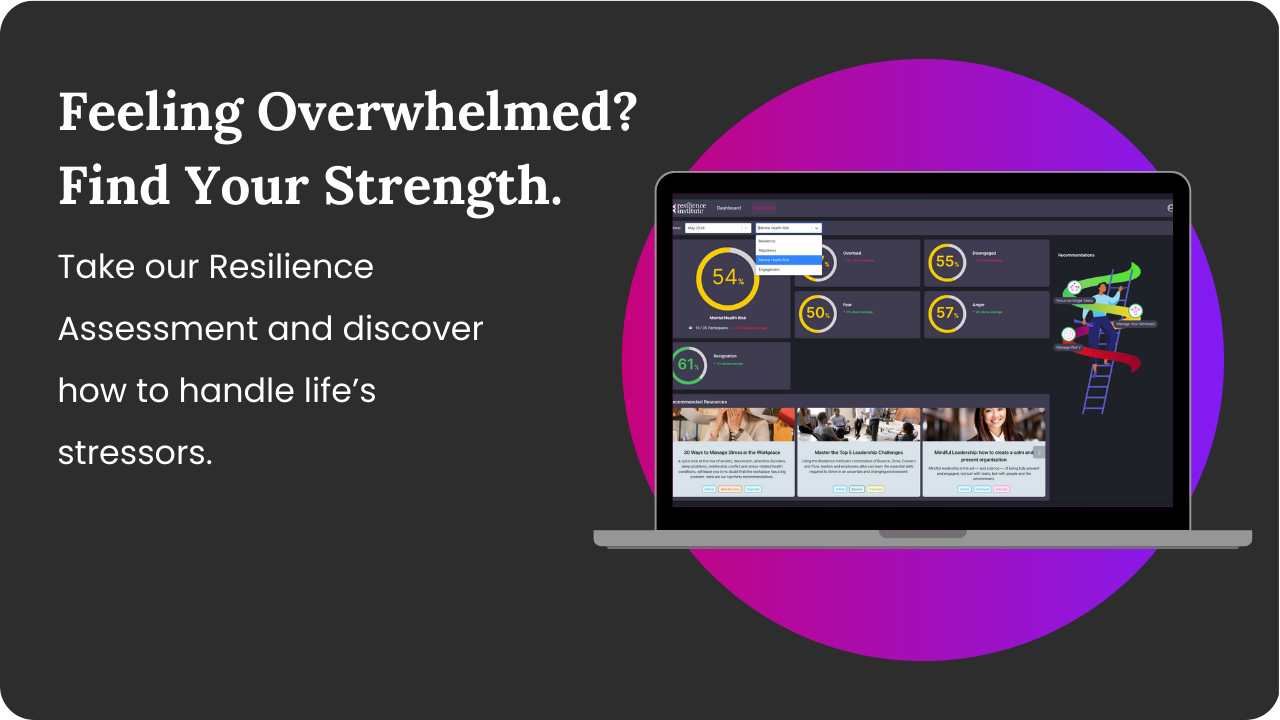
Want to measure your resilience? The Resilience Assessment is a peer-reviewed, psychometrically valid toolkit used by hundreds of thousands of participants worldwide.

__wf_reserved_inherit
Try the Resilience Assessment

What is resilience? Can you measure it?

Resilience is the ability to bounce back after facing a challenging situation without letting adversity affect one’s chances of future happiness or success.

While some people continue to thrive, facing a challenging period of their lives with the confidence that things will get better, others struggle under pressure. From the outside, it can be challenging to grasp what separates these two prevalent but opposite reactions. This is the result of resilience in action.

There is an essential distinction between repression and resilience; resilient people are still likely to be shaken by challenging events. However, they view these events as opportunities for growth. They change their direction and build a new positive path forward, incorporating the challenging situation into a new sense of self and reconsidering priorities.

Resilience research suggests six areas in which resilience can be seen in an individual’s life. These include reframing, using the power of positive emotions, using the power of positive emotions, exercising, engaging in trusted social networks, identifying signature strengths, and being optimistic.

Reframing

An essential aspect of resilience is reframing a challenging situation and developing a refreshed, more constructive, and beneficial perspective. By reframing a problematic situation, an individual can better cope without feeling stuck.

Using the power of positive emotions

Accessing positive emotions even following challenging times is an essential component of resilience. Positive emotions can help us face the problems in our lives while considering solutions to move forward. They also encourage us to connect with others and give us an overall sense of purpose and fulfillment.

Taking part in physical activities

The benefits of exercise are well-established for physical health, but physical activity also does wonders for mental health. By participating in physical activity, individuals can mitigate stress and build a new sense of self-respect and self-worth.

Engaging in trusted social networks regularly

Spending quality time with friends, work pals, and family members can help alleviate the loneliness of challenging situations. In addition, conversations with others about what’s going on can help to take some of the pressure off and help to gain a more holistic view of the situation.

Identifying and utilizing signature strengths

Continuing to recognize strengths despite challenging times is a critical component of resilience. By utilizing strengths, individuals can feel a boost in control and meaning in their lives and take on new responsibilities and challenges.

Being optimistic about the future

A general sense of optimism towards the future is another sign of resilience. Individuals with strong resilience will view challenges or setbacks as temporary, knowing their future path isn’t permanently negative. This outlook can help maintain a hopeful perspective towards the future.

Resilience Assessments: Why are they important?

Resilience tests, also known as scales, examine an individual’s resilience across key areas. Usually, this test is conducted using a questionnaire, which collects information and responses from individuals about how they adapt to difficulties.

Resilience assessments are essential because they help to identify areas of strength and areas where improvement may be needed. This can be beneficial individually and for a business, as it can identify weaknesses and strengths within a company. Resilience assessments can also promote awareness, leading to more effective intervention use.

How do we measure resilience?

Resilience is a complex psychological phenomenon that can be classified by a person’s ability to continue to cope with and recover from adversity. Several assessments or scales have been created in the last 30 years to help researchers, employers, therapists, and even private individuals better understand how resilience functions and, more importantly, how it can be quantified. These different frameworks are primarily conducted via surveys and questionnaires that assess a person’s mindset, coping strategies, and broader support network.

Different tools can be employed in various situations. For example, the Academic Resilience Scale was specifically designed to assess students. While the Resilience Scale for Adults is best utilized when assessing grown adults. The Resilience Diagnostic Assessment, on the other hand, is primarily employed by organizations looking to improve their resilience as a whole. By using these tools, organizations can better understand their ability to handle stress and setbacks while also understanding where points of weakness may lie. Below are several tools and frameworks that can help your business better understand its quantifiable resilience score.

Resilience Assessment

The Resilience Assessment is developed and updated by the Resilience Institute. Recently releasing V5 of this comprehensive tool, the Resilience Institute continues to help businesses and organizations quickly and comprehensively assess their staff and management’s well-being, effectiveness, and resilience.

The diagnostic assessment covers 50 factors within 5-8 minutes, looking at mental health, stress management, well-being, emotional intelligence, and more. Based on peer-reviewed psychometrics, the assessment features 11 categories labeled as strength or risk based on a respondent’s results. One of the benefits of choosing the Resilience Assessment is that it is presented alongside a wealth of interactive resilience training & coaching for individuals and organizations. This means there is a direct way to go beyond measurement towards actively engaging with improving resilience. So, if you’re interested in assessing your organization’s resilience, this is an effective and convenient tool.

‍

__wf_reserved_inherit

Connor-Davidson Resilience Scale

Dr Kathryn Connor and Dr Jonathon Davidson developed the Connor-Davidson Resilience Scale (DC-RISC). It’s a widely adopted assessment designed to help measure resilience in individuals. The scale consists of 25 items, each rated on a five-point scale. These items focus on several areas of resilience, including personal competence, adaptability, tolerance of negative affect, and more. This tool has been used across many cultures and diverse populations, making it a reliable and effective method for measuring resilience.

Predictive 6-Factor Resilience Scale

This innovative assessment tool, the Predictive 6-Factor Resilience Scale (PR6), measures a person’s resilience based on six factors. The PR6 offers a unique approach to understanding resilience, considering several factors contributing to someone’s ability to experience a setback and cope positively. The PR6 assesses self-regulation, optimism, adaptive coping, supportive relationships, and more. Many physicians and therapists use this set of tools to predict resilience in their clients.

Resilience Scale for Adults

The Resilience Scale For Adults (RSA) is a well-established tool for assessing and evaluating resilience, specifically in the adult population. Developed in Norway, the RSA looks at six core dimensions of resilience: perception of self, perception of the future, social competence, family cohesion, and social support. The RSA aims to establish a comprehensive understanding of a person’s resilience and has also been used successfully in clinical practices.

How to improve resilience?

Resilience is a skill that can be cultivated over time by implementing specific strategies into your daily life. If you are looking for ways to improve your resilience, then consider incorporating some of the below methods:

  1. Work on having a positive mindset—Having a positive outlook on life can be immensely beneficial for your everyday life. Still, it is also a direct path to helping build resilience. Stopping negative self-talk and adjusting to a positive mindset can take time, so be patient. Mindfulness activities and meditation can help monitor negative self-talk and move toward a more positive outlook.
  2. Grow a strong support network — A social circle is essential to resilience. Making an effort to maintain relationships with friends and family members can help individuals cope with adversity. Friends can help by providing support, advice, and positivity in challenging periods.
  3. Introduce self-care routines—Practising self-care can help improve resilience. Self-care includes taking care of yourself in all key areas, including sleeping well, exercising regularly, eating a healthy diet, and implementing stress-minimizing techniques like meditation or yoga. Self-care practices can also help individuals overcome self-esteem issues and low confidence.
  4. Learning from the past — By learning from the past and reflecting on past coping methods that have worked or not worked, individuals can work on new strategies for successfully coping in the future.
  5. Seeking help—Everyone needs help sometimes; there’s no shame in reaching out and getting help when needed. Many professional help sources, such as psychology, can help individuals get back on track. Alternatively, reaching out to friends for extra support can be beneficial.

Conclusion

Resilience is an essential aspect of the human experience, and our ability to navigate negative changes and recover from adversity can significantly impact our lives. So, measuring and assessing resilience is the first step in improving our ability to handle life’s challenges. On an organizational level, this can significantly impact a business’s ability to weather downturns and right the ship when needed. Ultimately, by quantifying resilience, using the tools and psychological scales available, we can understand how to improve it and make a difference in our personal and work lives.

Original Source: https://resiliencei.com/blog/a-guide-to-measuring-resilience/

How Micro Habits Build Big Change

  • “It takes 21 days to form a habit” traces to a 1960s plastic surgeon’s offhand observation about patients adjusting to a new face after surgery, not a study of habits at all.
  • The real research puts the median at 66 days, with a genuinely enormous range, 18 to 254 days, depending on the habit’s complexity and the individual attempting it.
  • Missing a single day doesn’t meaningfully derail the process. The habits that actually stick are the ones built small enough to survive a bad day, not the ones chased against an artificial deadline.

Big, ambitious change usually fails for a predictable reason: it demands too much, too fast, from a system, a person’s daily life, that has limited capacity to absorb sudden shifts. The more reliable path runs through small, deliberately designed habits that compound quietly over time. Understanding how that compounding actually works, and how long it genuinely takes, changes how realistically you can plan for it.

The 21-Day Myth, and Where It Actually Came From

Almost everyone has heard some version of “it takes 21 days to form a habit.” It’s a genuinely useful story to trace, because the real origin has nothing to do with habits at all. In 1960, plastic surgeon Maxwell Maltz published Psycho-Cybernetics, in which he observed that his patients typically took about 21 days to psychologically adjust to a new face after surgery, or to phantom sensations following an amputation. That’s the entire basis for the claim: a clinical observation about adjusting to physical change, generalised, decades later, into a rule about behaviour change it was never designed to describe.

The actual research on habit formation tells a different, more useful story. A landmark 2010 study by Phillippa Lally and colleagues at University College London tracked participants building a new daily habit over 12 weeks and found a median of 66 days to reach near-automatic behaviour, with individual results ranging from as little as 18 days to as long as 254, depending on the habit’s complexity and the person attempting it. A 2024 meta-analysis covering more than 2,600 participants confirmed a similar median, somewhere between 59 and 66 days, with some more complex habits taking considerably longer still. One further finding matters as much as the headline number: missing a single day along the way did not meaningfully disrupt the overall trajectory toward automaticity.

This reframes the whole project. Chasing a fixed 21-day deadline sets most people up to feel like they’ve failed right around the point real change was actually starting to take hold. Planning realistically for something closer to two months, with room for the occasional missed day, sets expectations that match how change actually works.

Why Small Beats Big

James Clear’s Atomic Habits popularised a version of this idea worth taking seriously: habits compound the same way interest does, small, consistent actions producing outsized results over a long enough timeframe, precisely because each repetition is small enough to actually survive contact with a busy, imperfect life. Stanford behaviour scientist BJ Fogg makes a closely related point in his own research: the size of a habit matters more than most people assume. A habit so small it feels almost trivial, two push-ups, one sentence in a journal, a single deep breath before a meeting, is far more likely to survive a bad day than an ambitious routine that collapses the first time real life gets in the way.

Both frameworks point toward the same underlying mechanism the Lally research confirms directly: consistency across a realistic, forgiving timeframe beats intensity chased against an artificial deadline, every time.

Building a Micro Habit That Actually Sticks

1

Shrink It Until It Feels Almost Too Easy

If the habit still feels like it requires willpower to start, it’s still too big. A genuinely tiny version, one that feels almost silly to skip, is far more likely to survive the weeks it actually takes to become automatic.

2

Attach It to Something Already Automatic

Anchor the new habit to an existing one, immediately after your morning coffee, right before you close your laptop for the day. Borrowing the automaticity of an established routine gives the new habit a stable, repeatable trigger rather than relying on remembering it independently.

3

Plan for Weeks, Not Days

Set your own expectations around a genuine two-month runway rather than a three-week sprint. Simple habits may click sooner; more complex ones will likely take longer. Knowing that going in prevents the discouragement that comes from measuring real progress against a made-up deadline.

4

Let a Missed Day Be Just a Missed Day

The research is specific and genuinely reassuring here: missing a single day did not meaningfully disrupt the overall path toward automaticity in the studies tracking this. Treating one missed day as proof the whole effort has failed is precisely the thinking pattern most likely to actually end it. Pick the habit back up the next day and keep going.

Big change rarely arrives as a single decisive leap. It arrives as a small, repeated action, given enough time, closer to two months than three weeks, to actually take hold.