A January 2025 study identified the specific mechanism behind the brain’s overnight waste-clearance system, and late 2024 research confirmed, for the first time, that this same system operates in humans, not just lab animals.
This clearance process, nicknamed the brain’s “dishwasher cycle,” runs almost exclusively during deep sleep and is thought to remove metabolic waste linked to neurodegenerative disease when it fails to run properly.
Sleep isn’t passive downtime. It’s an active, biologically necessary maintenance cycle, and skipping it accumulates a cost that goes well beyond feeling tired the next day.
For decades, the honest scientific answer to “why do we sleep?” was surprisingly thin. Restoration, memory consolidation, energy conservation, all genuine partial answers, none fully satisfying. A wave of research over the past two years has added something far more concrete: a specific, physical cleaning process that runs almost exclusively while you’re asleep, and that researchers only confirmed operates in humans within the last year.
The Brain’s Nightly Dishwasher Cycle
In 2012, neuroscientist Maiken Nedergaard and her team at the University of Rochester discovered what they named the glymphatic system, a network of fluid-filled channels running alongside the brain’s blood vessels that flushes out metabolic waste, including proteins linked to neurodegenerative disease, using cerebrospinal fluid as the cleaning agent. Unlike the body’s lymphatic system, the brain has no traditional lymph nodes, so it relies on this separate, glial-cell-supported pathway instead.
The critical detail: this system is dramatically more active during sleep than during wakefulness. A January 2025 study published in Cell identified the specific driver, synchronized waves of the neurotransmitter norepinephrine triggering rhythmic contractions in blood vessels, that pump cerebrospinal fluid through brain tissue during deep, non-REM sleep specifically. Nedergaard’s own description of the process has become genuinely famous in sleep science circles: “It’s like turning on the dishwasher before you go to bed and waking up with a clean brain.”
Until recently, every finding on this system came from studies in mice. That changed in late 2024, when researchers imaging the brains of patients undergoing surgery confirmed, for the first time directly in humans, that this same clearance pathway runs alongside blood vessels exactly as the animal research predicted. It’s a rare thing in neuroscience: a mechanism proposed over a decade ago, finally confirmed in the species it was always meant to explain.
Why This Matters Beyond Feeling Rested
The stakes here go well past next-day grogginess. Researchers increasingly view impaired glymphatic clearance as a plausible contributing factor in neurodegenerative conditions, since the waste products this system is designed to remove include proteins implicated in Alzheimer’s and Parkinson’s disease. When sleep is chronically disrupted, this maintenance cycle doesn’t get to run properly, night after night, and the researchers studying this describe a genuinely bidirectional problem: poor sleep may allow harmful waste to accumulate, and that accumulation may, in turn, make good sleep harder to achieve, a pattern that can compound quietly over years before symptoms become obvious.
Notably, one widely used sleep medication, zolpidem, was found in the same research to actually suppress the norepinephrine oscillations that drive this clearance process, even while helping someone fall asleep faster. This is a genuinely important nuance: sleep quantity and sleep quality aren’t automatically the same thing, and how a person gets to sleep may affect whether the brain’s cleaning cycle can actually do its job once they’re there.
What Actually Supports This Process
Since this clearance process depends specifically on deep, non-REM sleep, the practical guidance lines up closely with standard sleep hygiene advice, now with a clearer biological reason behind it.
1
Protect Total Sleep Time
Deep sleep is concentrated in the earlier part of the night and shrinks disproportionately when total sleep time gets cut short. Consistently sleeping 7 to 9 hours protects the specific sleep stage this clearance process depends on, not just total rest.
2
Keep a Consistent Schedule
Irregular sleep timing disrupts the deeper sleep stages more than total hours alone suggest. A steady sleep and wake time, even on weekends, supports the consistent architecture this process needs to run properly night after night.
3
Be Thoughtful About Sleep Aids
Falling asleep quickly isn’t the only thing that matters. Some common sleep medications have been found to suppress the specific neurological activity this clearance process depends on, even while helping someone fall asleep faster. This is worth raising directly with a doctor rather than assuming all paths to “more sleep” are equivalent.
4
Limit Alcohol Before Bed
Alcohol measurably reduces the proportion of deep, restorative sleep across the night, even when it helps someone fall asleep faster initially. A drink that seems to help you doze off can quietly work against the very sleep stage that matters most for this process.
Sleep isn’t the brain switching off. It’s the one time each day the brain runs its own cleaning cycle, and that cycle only just got confirmed to actually run in humans the way scientists always suspected.
Some popular health advice genuinely doesn’t hold up: the French Paradox, the idea you can train yourself to need only 5 hours of sleep, and most supplements all fail to survive scrutiny.
Some claims need real nuance rather than a hot take. Depression’s exact biological mechanism is genuinely debated among researchers, but that debate doesn’t mean treatment doesn’t work, and it’s not a reason to stop medication without a professional’s guidance.
Sunscreen remains recommended by essentially every major health authority. The genuine nuance is about timing sun exposure for vitamin D, not about abandoning sun protection altogether.
Evidence-based medicine and the broader wellbeing movement are, on balance, a genuine achievement, aimed squarely at improving both the quality and length of life. And yet plenty of confidently stated health advice doesn’t hold up well under scrutiny, while other claims get dismissed too quickly in the rush to sound contrarian. Both failure modes are worth avoiding. Here’s a closer look at ten common claims, what the evidence actually supports, and where real nuance is worth preserving rather than flattening into a hot take.
“You Need 8 Glasses of Water a Day”
Outside extreme heat or heavy exercise, meaningful dehydration in healthy adults is genuinely rare. The thirst mechanism is a reliable signal for most people; the body generally finds a way to ask for fluid before it’s in real trouble. Young children and older adults are more vulnerable in hot conditions and deserve more attention. Overhydration, hyponatremia, causes more hospitalisations and deaths than everyday dehydration does, and the added sugar in most bottled drinks contributes meaningfully to obesity, diabetes, and cardiovascular disease. The simplest guidance holds up: drink to thirst, and reach for water over sugary alternatives.
“Sunscreen Isn’t Really Necessary”
This one deserves a direct correction rather than a myth-busting spin: sunscreen is recommended by essentially every major health authority, including the WHO and national dermatological associations, and that recommendation is well supported by the evidence on UV exposure and skin cancer risk, including melanoma. Skin cancer rates remain a serious and, in several countries, rising public health concern, and consistent sunscreen use meaningfully reduces that risk.
There is a genuine, narrower nuance worth knowing. Vitamin D synthesis does require some unprotected sun exposure, and brief, non-peak-hour sun exposure, morning or late afternoon, is a reasonable way to support that alongside diet or supplementation where needed. Some sunscreen ingredients have raised legitimate environmental concerns, oxybenzone’s effects on coral reefs among them, which is why reef-safe formulations exist and are worth choosing where relevant. Protective clothing and shade remain excellent additional tools, especially during peak UV hours. None of that adds up to skipping sunscreen. It adds up to using it thoughtfully alongside other forms of protection, not instead of them.
“Alcohol Is Good for You”
The French Paradox, the idea that moderate red wine consumption explains lower cardiovascular disease rates in France, has not held up well under more rigorous recent analysis. Large-scale research has moved decisively away from the idea that any level of alcohol carries a net health benefit. The combined social and health costs of alcohol, violence, road accidents, several cancers, mental illness, and family strain, are substantial and well documented. Enjoying a drink socially in genuine moderation is a personal choice most adults can make reasonably. Believing it’s actively good for you is the part the evidence no longer supports.
“I Only Need 5 Hours of Sleep”
Sleep researchers are largely aligned on a range of roughly 7 to 9 hours for most adults. A genuine, biologically rare “short sleeper” variant exists, but it’s uncommon, and most people who believe they’ve trained themselves to function well on 5 hours are simply adapted to chronic impairment rather than genuinely thriving on less sleep. Consistently short sleep is linked to elevated risk across cardiovascular disease, obesity, diabetes, cognitive decline, and mental health difficulties. Protecting sleep is one of the highest-leverage things most people can do for both health and daily performance.
“I Have Burnout”
The World Health Organization formally recognises burnout in the ICD-11 as an occupational phenomenon, resulting specifically from chronic workplace stress that hasn’t been successfully managed, characterised by exhaustion, cynicism, and reduced professional efficacy. It’s genuinely distinct from clinical depression, though the two can share symptoms and sometimes coexist, which is exactly why the distinction matters rather than being dismissible. Telling someone experiencing genuine burnout symptoms that they simply have depression and should “accept and manage it” risks discouraging them from addressing either condition appropriately.
What’s fair to say: not every difficult week at work constitutes burnout, and the term does get used loosely. Maintaining reasonable boundaries and taking real responsibility for your own physical, emotional, and mental wellbeing remains genuinely important. But the right response to burnout symptoms is addressing the underlying causes, workload, autonomy, support, and recovery, not simply relabelling the experience and pushing through.
“Take a Deep Breath”
The common version of this advice, a quick inhale through the mouth, tends to elevate heart rate and activate the sympathetic (fight-or-flight) nervous system, the opposite of calming. The more effective practice under pressure is a slow, complete exhale through the nose. This lowers heart rate, restores vagal tone, and improves heart rate variability coherence, the physiological signature of a nervous system able to think clearly and reconnect with others. Building a daily practice of even a few minutes of slow, nasal, exhale-focused breathing genuinely compounds this benefit over time.
“Depression Is a Chemical Imbalance”
This one genuinely needs nuance rather than a flat verdict either way. A widely discussed 2022 umbrella review by Joanna Moncrieff and colleagues found no consistent evidence that depression is caused by low serotonin specifically, challenging the simplified “chemical imbalance” explanation many people have been given. That review has itself faced substantial methodological criticism from other researchers, and the underlying biology of depression remains genuinely unsettled and likely more complex than any single-neurotransmitter story.
Here’s the distinction worth holding carefully: whether the serotonin explanation is correct is a separate question from whether antidepressants work. Multiple large meta-analyses, including a 2018 network meta-analysis in The Lancet covering 21 antidepressants, have found real, evidence-backed efficacy for antidepressant treatment in major depression, regardless of debate over the precise mechanism. Exercise, time in nature, structured social connection, and dietary patterns like the Mediterranean diet all have genuine, growing evidence behind them as well, and for some people are highly effective either alongside or instead of medication. None of this is a reason to stop or avoid prescribed treatment without guidance. Depression treatment is a personal medical decision that should be made with a qualified professional, not settled by a single research debate read secondhand.
“Detox With Hot Lemon Juice”
Detox diets rest on a flawed premise: the digestive system isn’t a tube that benefits from being “flushed.” The gut hosts roughly 50 trillion bacteria that do genuine, ongoing work supporting both physical and mental health, and a consistently healthy diet and lifestyle is what actually keeps that ecosystem functioning well. A daily cup of hot lemon juice adds meaningful acid exposure to tooth enamel over time without any offsetting detox benefit. If gut health is a real concern, a diet rich in vegetables and fibre, occasional structured fasting windows, and medical evaluation where appropriate (faecal microbiota transplantation is a legitimate, clinically supervised procedure for certain conditions, not a home remedy) are the evidence-backed paths, not a morning glass of lemon water.
“Supplements Keep You Well”
Most supplements lack strong, consistent evidence of benefit for the general population, despite the confident claims on their packaging. Two genuine exceptions worth naming: vitamin D, particularly for people with limited sun exposure, has real evidentiary support, and nicotinamide (vitamin B3) has some evidence specifically around skin cancer risk reduction in higher-risk individuals. For most other supplements, the honest picture is that a varied, nutrient-dense diet delivers what a pill claims to, at lower cost and with fewer unknowns.
“Staying Safe Has No Downside”
There’s a genuine, ongoing debate, argued seriously by researchers and commentators on multiple sides, about whether contemporary risk-aversion has gone further than it needs to, sometimes described as “safetyism.” Proponents of this view argue that measured risk, real adventure, and the freedom to fail are genuine contributors to resilience and character, and that excessive caution can leave people, especially children, less equipped to handle the adversity life inevitably brings. Critics of this framing point out, fairly, that many safety improvements, reduced road deaths and workplace fatalities among them, represent genuine, hard-won public health wins that shouldn’t be casually dismissed.
Both things can be true at once: safety measures have delivered real, measurable benefits, and there’s a reasonable case that some environments, particularly for children, now over-index on caution in ways that may carry a genuine developmental cost. The productive question isn’t picking a side, it’s building the judgement to tell the difference between risk worth managing and risk worth removing entirely.
A Framework for Evaluating the Next Health Claim
Whatever confident health claim shows up next, a few questions travel well: Does this align with how the body evolved to function, or does it require ignoring that entirely? Who benefits financially if I believe this, and does that change how sceptical I should be? Are my basic daily rhythms, sleep, movement, relaxation, and diet, already solid, since most quick fixes are trying to compensate for gaps there anyway? And for anything touching a genuine medical decision, treatment for depression, sun protection, medication of any kind, has this been checked against a qualified professional’s guidance, not just a persuasive article?
A good myth-busting instinct still needs to land on the truth, not just on the more contrarian answer. This article is informational, not medical advice; personal health decisions deserve a qualified professional, not a blog post.
A 2025 study of more than 35,000 people found deactivating Facebook or Instagram for six weeks produced a measurable, if modest, improvement in wellbeing, comparable to roughly 15 to 22% of the effect of a structured psychological intervention like CBT.
The harm isn’t the technology itself. It’s largely about design choices built to maximise engagement, and the dose and context in which people use it.
The same category of technology that can erode resilience, when engagement-optimised and unbounded, can also build it, when it’s collaboration tools, sleep tracking, or structured mindfulness practice used deliberately.
Organisms adapt to their environment over millennia to improve their odds of survival and reproduction. Humans mastered fire and complex language, gaining an edge over apex predators and the elements. We’re a species defined by relentless invention, and that impulse hasn’t slowed down. We’ve gone from tribal groups of roughly 150 people to a global network carried in a pocket. It’s worth asking honestly: is that shift outpacing what we’ve had time to adapt to?
What Resilience Actually Means Here
Amit Sood, executive director of the Global Centre for Resiliency and Well-Being, defines resilience as the ability to withstand adversity and bounce back and grow despite life’s downturns. Resilience Institute takes largely the same view: high resilience is the capacity for growth, mental, emotional, and physical, amid and beyond adversity, not just surviving it intact. Some call the more advanced version of this antifragility: genuinely relishing chaos rather than merely tolerating it.
The New Atmosphere We’re All Living In
Weather has shaped human behaviour for eons, which is exactly why it’s still the default conversation opener. “Lovely day out there?” is really a way of reading someone’s mood and establishing basic trust. There’s now a second atmosphere surrounding each of us, shaped by algorithms that understand our attention and emotional triggers better than we consciously do. A full inbox or a stream of notifications functions like weather: some of it moves us toward useful action, and some of it brings nothing but overwhelm and distraction.
The Real, Documented Risks
Digital technology’s benefits are genuinely indisputable. It’s also not without real costs, and several of them are well documented rather than speculative.
Social isolation. Social platforms were meant to bring people closer together. Research has found the opposite can also be true: heavier social media use is associated with less in-person socialising and correlates with higher anxiety in large longitudinal samples. Separately, research on device presence has found that simply having a phone visible during a conversation, even switched off, measurably reduces people’s sense of emotional connection with each other. The device doesn’t need to be in use to interfere.
Attention and compulsive checking. A meaningful share of adults report real anxiety after just a short period without checking social platforms, and a smaller but notable share admit checking in situations most people would agree are unsafe, while driving, for instance. This pattern reflects deliberate design, not user weakness; platforms compete directly for attention, and engagement-optimised feeds are built to make disengaging difficult.
Cyberbullying. Young people who experience cyberbullying show a significantly elevated risk of suicidal ideation compared to peers who don’t, and researchers note this form of bullying can carry an added weight: it plays out in front of a far larger, more persistent audience than traditional bullying ever did.
Harmful content moderation. Content promoting self-harm remains a genuine, ongoing challenge for platform moderation, particularly for younger users. Platforms have made real investments in detecting and removing this content, but enforcement is inconsistent, and harmful material can persist under alternate framing even after direct terms are blocked. This is a serious, unresolved problem, worth taking seriously as a parent or an organisation supporting young people, without needing to catalogue the specific ways it currently evades detection.
Misinformation. Misinformation spread at real scale during the COVID-19 pandemic, and popular misinformation sources at points generated more views than major public health institutions. This remains a live, ongoing challenge rather than a resolved one; platforms have taken varying and evolving approaches to moderation and labelling, with real debate, from multiple legitimate perspectives, about where the line between harmful misinformation and legitimate dissent should sit. That’s a genuinely contested policy question, not one with a single settled answer.
What the Best Current Research Actually Shows
The strongest recent evidence on this comes from a 2025 study published through the National Bureau of Economic Research, run by Hunt Allcott, Matthew Gentzkow, and a large team of independent academics in partnership with Meta, with the academic authors retaining full control over the analysis and findings. Involving more than 35,000 participants, nearly 20,000 deactivating Facebook and over 15,500 deactivating Instagram, it found that six weeks of deactivation produced a measurable improvement in an index of happiness, depression, and anxiety. The effect was real but modest, roughly 15 to 22% as large as the effect of a structured psychological intervention like cognitive behavioural therapy. The Facebook effect was concentrated among users over 35; the Instagram effect was concentrated among women under 25. Deactivation also reduced participants’ knowledge of current events, a genuine trade-off worth naming honestly rather than glossing over.
The honest takeaway from research at this scale isn’t “delete everything” or “it’s all fine.” It’s that the effect is real, directionally consistent with smaller earlier studies, and meaningful without being dramatic, exactly the kind of nuanced finding that gets lost in more dichotomous popular framing of the issue.
Where Digital Technology Genuinely Builds Resilience
The same broad category of technology that can erode resilience when engagement-optimised and unbounded can also build it when used deliberately.
Collaboration tools. Knowledge workers spend a substantial share of a typical week on email and searching for information, time that real-time collaboration tools can meaningfully reduce by cutting down the back-and-forth of collecting feedback and comments separately from each contributor.
Mindfulness and meditation apps. Because this category is relatively young, large long-term studies are still catching up to adoption, but the research available so far is consistent: users report measurable stress reduction that can persist for up to two weeks after a session, and some show physiological markers of reduced stress even when they don’t consciously report feeling calmer. Reported secondary benefits include better focus, improved mood, reduced fatigue, and greater self-acceptance.
Health and fitness tracking. Apps that track diet, movement, or vitals make it straightforward to monitor progress and notice patterns worth adjusting. The tool itself won’t supply motivation, that still has to come from the person using it, but tracking consistently correlates with better sleep, more consistent exercise, and improved dietary awareness simply by making patterns visible in real time.
Sleep, the exception worth flagging. Devices used near bedtime are a clear, well-documented exception to “technology can help.” A controlled study comparing e-reader use to print reading before bed found e-reader users experienced delayed melatonin release, slept worse, and felt less rested the following day. The pull to check a device “just quickly” reliably extends into longer use and makes falling asleep harder. This is one place where the evidence points in a single, unambiguous direction: keep devices out of the bedroom, or at minimum off in the hour before sleep.
Technology doesn’t have a fixed effect on resilience. It has a dose, a design, and a context, and all three matter more than whether the technology exists at all.
The global dietary supplement industry is worth over $150 billion, yet good evidence for real longevity benefit from most supplements is practically non-existent.
Genetics accounts for perhaps 10% of longevity outcomes. Environment and lifestyle, sleep, movement, diet, relationships, purpose, do almost all the rest of the work.
Across RI’s own data on more than 71,000 people, the same short list keeps separating the top 10% most resilient from everyone else: sleep quality, fulfilment, bounce, focus, daily relaxation, and clearly articulated purpose.
The desire to extend life runs deep. Fear of death is old and universal, and the willingness to pay handsomely for an “elixir of life” is just as old. This piece looks at longevity through the lens of resilience, and the honest recommendation up front is this: the exciting frontier research is genuinely worth following, but double down on the basics while living with equanimity, joy, and wisdom. That combination outperforms almost everything sold in a bottle.
Balancing Hope With Evidence
Humans have concocted herbs, potions, prayers, and countless strange remedies across every society, and both well-meaning and outright criminal entrepreneurs have profited handsomely from selling “elixirs.” The global dietary supplement industry is worth over $150 billion today, growing at a rapid clip, while good evidence for real benefit remains practically non-existent for most products on the shelf, and the environmental cost of the plastic packaging alone likely outweighs whatever marginal benefit exists.
Until relatively recently in human history, life expectancy topped out around 30 years. That began changing around 1900, driven by unglamorous but transformative basics: clean water, safe housing, reliable food, reduced child mortality, and improved healthcare. Today, global life expectancy still varies enormously, from the high 50s in some of the hardest-hit regions to 83 in Japan, though the gap has narrowed meaningfully where sustained public health investment has taken hold. Eswatini offers a genuinely striking example: life expectancy there rose from 45 in 2009 to roughly 57 by 2021, driven by a massive scale-up in HIV treatment access that surpassed international targets, a real demonstration of how much basic healthcare access alone can move this number. The current documented maximum human lifespan remains 122 years, held by Jeanne Calment.
What Good Science Actually Says
Genetics contributes perhaps 10% to longevity outcomes, and remains an active area of ongoing research. Environment and lifestyle do nearly all the rest of the work: not smoking, maintaining a healthy weight, moving for at least 30 minutes most days, eating well with a Mediterranean-leaning pattern, managing mental health and distress, protecting sleep quality and consistency, reducing alcohol, and building genuinely strong relationships. Regular screening, blood sugar, blood pressure, and sometimes lipids, catches problems early enough to matter. Wealth measurably outperforms poverty, adding up to two decades in some analyses. Women currently outlive men by several years on average. Untreated mental illness can reduce life expectancy by 10 to 25 years, and chronic illness reduces it significantly as well. Education, independently, is associated with greater longevity.
Genuine innovation continues at the frontier, genetics, biotechnology, and artificial intelligence are all being applied to the search for new “elixirs of life,” and attention-seeking claims abound alongside the real research. Staying cautiously optimistic that genuine progress will emerge is reasonable. As of now, though, there’s no convincing evidence for anything that meaningfully outperforms the fundamentals above, whatever a given colleague’s hormone regimen or supplement stack might suggest.
What the Most Resilient People Actually Do
Resilience Institute’s own data tracks the behaviours of programme participants directly, drawing on assessments from more than 71,000 people between 2016 and 2022. Comparing the top 10% by Resilience Ratio against the bottom 10% reveals a consistent, repeated pattern across the strength factors that separate them: securing sleep quality, seeking and securing genuine fulfilment, understanding and mastering the ability to bounce back, strengthening and lengthening focus, practising daily relaxation, and clearly defining and articulating purpose.
On the risk side, the same top group consistently protects against three things above all: eliminating chronic worry, protecting against fatigue, and mastering anxiety before it compounds. RI’s most recent programme impact data, drawn from a 2022 cohort of over 4,000 participants, shows measurable gains across these same factors following structured resilience training.
Dr. Sven Hansen’s Personal Reflections on Longevity
Resilience Institute’s founder, Dr. Sven Hansen, shares his own approach directly: “I am almost 64. Blessed with great parents, environments, education, marriage, family, friends and a purposeful career. Structured and demanding sport is part of every day. Sleep is not negotiable. I relax or meditate daily. My wife will likely outlive me. Life is fun. Ocean swimming and surf-ski are competitive. Kite surfing and nature-walking is joyous. I am no puritan. I love the sun, never use sunscreen, eat and drink mostly Mediterranean, and feed my curiosity with at least one book a week.”
Worth noting: the sunscreen choice above reflects Dr. Hansen’s personal practice, not general medical guidance. Mainstream dermatological consensus continues to recommend sunscreen as an effective, evidence-backed tool for reducing skin cancer risk, alongside protective clothing and shade during peak sun hours.
“My father was a professor of paediatrics who published hundreds of studies on child well-being and lived well to 91. As children, we met many experts who pioneered preventive medicine. I have consumed literature on prevention, well-being, longevity, mental health and resilience throughout my medical career, and it is my life work. These are my recommendations for longevity.”
Sit Lightly With Your Life
You are important, but not that important. We coalesce into a living, conscious being for a brief blink of time. Play the game of life well and enjoy the moment. Accept death. Be grateful and content. Live with dignity. Be good to others. Smile.
Sleep Well
Maintain consistent sleep timing, quantity, and quality. Sleep’s restorative effects are well established: it restores hormones, immunity, brain function, emotional regulation, and creativity, and it’s the one thing you can do daily that touches nearly every other system. Without it, everything else gets harder.
Move With Precision
We’re designed to move, and when we don’t, we age faster and get sick more often. Train the body daily across flexibility, balance, strength, cardiovascular fitness, and speed. Real progress comes from study, expert guidance, consistent practice, and relentless follow-through, not intensity alone.
Master Relaxation
Life and work pressure generate real physical, emotional, and mental distress. Restoring homeostasis requires reliable, genuinely effective relaxation. When pressure and distress persist unchecked, wellbeing and longevity both decline. Whatever works, breathwork, massage, time in nature, meditation, deep relaxation, practise it daily for at least eight minutes.
Find Your Purpose and Flow
Emerging research suggests clarity of purpose may support wellbeing and longevity even more than fulfilment alone. Define what genuinely matters to you, articulate it clearly, then build the skills to meet the challenge ahead. Absorb setbacks, learn from them, and bounce forward.
Be Connected
Feeling safe with others and finding real ways to collaborate is a fundamental human drive worth actively working at, through family, sport, work, or shared pursuits. Even those who live in deliberate isolation tend to seek some form of connection to something larger.
Eat Consciously
Eat plenty of vegetables, lean toward a Mediterranean pattern, and genuinely enjoy good food. Know when to stop. Periodically running the body lean has real support behind it: caloric restriction is one of the more well-validated ways to extend lifespan across multiple species. Fasting for a day or two a week is worth considering.
Soak in Nature
Research on nature-relatedness consistently shows real physical and emotional benefit from around 20 minutes a day, or roughly two hours a week, in natural settings, both green (forest, garden) and blue (ocean, lake) environments. Exercising outdoors in the morning or evening adds safe sun exposure and supports healthy vitamin D levels.
Don’t Be Gullible
Stay wary of self-proclaimed experts selling pills, creams, or interventions promising to enhance, prolong, or enrich your life. Enormous sums go toward enthusiastically marketed products whose bright packaging claims outrun the actual evidence. There’s a genuinely lively scientific debate underway in this space; stay curious, but stay sceptical. A handful of possibilities currently have real, if measured, support: nicotinamide (vitamin B3) has published evidence for reducing non-melanoma skin cancer risk in higher-risk individuals; vitamin D remains well supported, ideally from sensible sun exposure; melatonin in small doses may support sleep cycles for some people past 50; and cold exposure before sleep may help via built tolerance for discomfort, though the evidence here is thinner.
The pursuit of longevity comes from a fear of death. Don’t chase living forever. Live with equanimity, joy, and wisdom instead, and double down on what’s genuinely well-proven: sleep, movement, relaxation, purpose, connection, nutrition, and nature, practised with real consistency.
Recommended reading from those pushing the frontiers of longevity: The Song of the Cell, Siddhartha Mukherjee, 2022 Exercised, Daniel Lieberman, 2021 Life Force, Tony Robbins, 2022 Lifespan, David Sinclair, 2019
We are waking up to the importance of sleep. In our most recent research report on 23,990 resilience assessments, sleep quality ranked as the #1 most important factor in order to be in the top 10% of resilience scores. There is wide acknowledgement that human sleep is disrupted. The consequences are chilling. They undermine every aspect of a good life.
Adults get about an hour a night less than needed. Teenagers get almost two hours less than they require. We go to bed too late and are overstimulated. We sleep in to recover. We live perpetually jet-lagged. Our timing and quality of sleep are disrupted from natural rhythms.
Consequences include weight gain, diabetes, inflammation, heart disease, cancer, mental illness, dementia, and attention disorders. Not to mention crankiness. Along with alcohol, fatigue is a major cause of road accidents, safety violations, and conflict. Sleep causes a loss of productivity estimated at 2-4% of GDP. Walker quotes studies showing costs to businesses of $1,400 USD per person per year as a consequence of sleep disruption. If you don’t secure your sleep, your productivity is punished.
On the positive side, sleep is the ultimate performance and anti-ageing treatment. Get a good night’s sleep, and everything works better. You are a better version of yourself. You can jump higher, run faster, connect better, think smarter, and experience more joy.
Food and water often have been in short supply throughout our evolution. Hunger and thirst became powerful drives. Long, dark, cool nights and the danger of moving about in the dark meant that time for sleep was abundant through evolution. Compared with hunger and thirst, sleep is a weak drive.
When your sleep rhythms are broken, every rhythm of your body, emotion, and mind is disrupted.
There are three elements to lock in your sleep rhythm. Sleep timing, sleep need, and sleep quality. There is no prescription that will work for everyone. For genetic, environmental, work, and family reasons, you will have to experiment. Once you find what works for you, lock it into a non-negotiable routine.
Table of Contents
Why is Sleep Timing Important?
Sleep timing is the best time to fall asleep and wake up each day. The circadian rhythm establishes the period during which sleep is most effective. When you sleep during the right hours for your personal clock, the quality of your sleep is optimised.
In humans, the circadian clock ranges from 24 hours to 25 hours. Sleep lags behind the 24-hour day-night cycle. There are morning people and night people: larks and owls. A lark tends to have a short clock, thus gets tired early in the evening and is ready to get up early in the morning. The owl, with a longer circadian clock, gets tired later and prefers to sleep in through sunrise.
There is a dynamic relationship between the day-night rhythm and the circadian clock. The primary rhythm is set by pre-sunrise blue light. Blue light reboots the active and alert period of your circadian rhythm through the supra-chiasmatic nucleus behind the eyes.
The best way to stabilise your clock to the day-night rhythm is to get 20 minutes of pre-sunrise blue light. This becomes the foundational rhythm for all other biological rhythms. Physical activity, light, coffee or tea, social activity, refined carbohydrates, and mental habits can also adjust your circadian clock, for better or for worse.
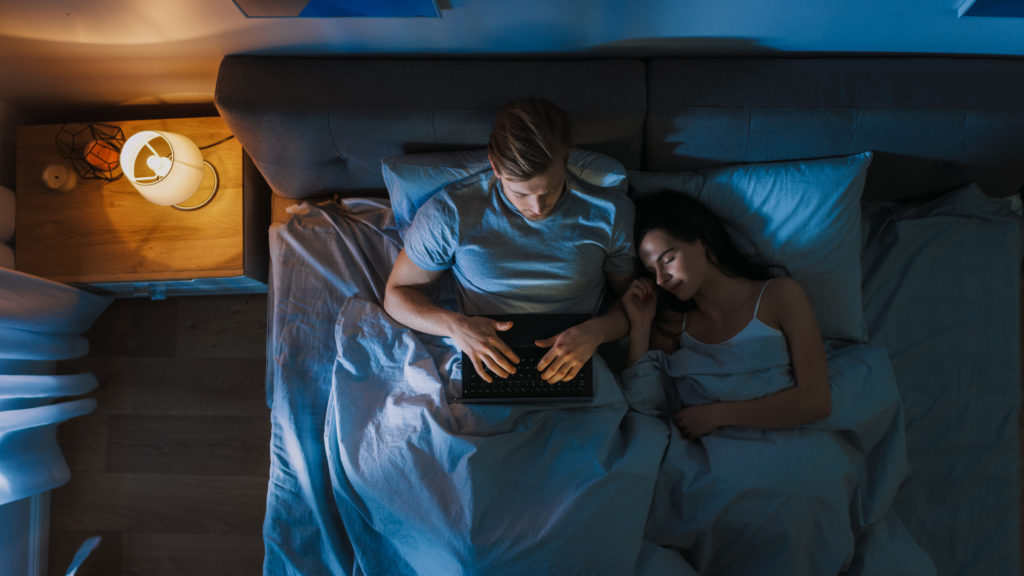
Blue light in the evening will wake you up right when you need to prepare to sleep. We come home to blue LED lighting, TV screens, laptops, and mobile devices. In addition, we socialise, drink, and eat late. Your clock gets pushed toward later sleep onset.
Sleep Phase Delay is a common sleep disorder that pushes us to sleep too late. We are perpetually jet-lagged and pressed into behaving more like an owl. There are established physical and mental health risks for the owl pattern. Recent studies show that there may be benefits to behaving more like a lark. This is certainly true for a lark and looks hopeful for the owl.
Beware of the weekend sleep-in. Roughly 30% of our clients sleep in later through the weekend to catch up on sleep. This is exaggerated in males under 30. After a busy and sleep-deprived week, sleeping into the day allows your circadian clock to “free-run” a couple of hours into the next day. The quality of this “extra” sleep is poor. It leaves you jetlagged through the next week.
The single most effective action to start is to wake up with or before dawn. Ideally, be outside in dawn blue light. This is especially true on weekends. The best blue light is just before sunrise.
Tracey, a participant on a course some years back, argued vehemently against losing the pleasure of a weekend sleep-in. Six months later, she grabbed my shoulder on a flight. She said: “When you explained the importance of wake-up times, I hated you. However, my husband and I have followed your plan. Our energy and our weekends have improved dramatically. Thank you”.
Next, you must take care of the cool-down period. If you rise early and press into the night with blue-light stimulation, you will sleep-deprived. Sadly, many ask me what they can do if they cannot stare at and fidget on a screen.
Our needs are different. I suggest that for 90 minutes before sleep, you read a book, play a game (cards, jigsaws, board games), meditate, write (in a journal or notepad, not via a screen), talk, take a walk, stretch, take a bath, or make time for intimacy.
It is essential to avoid blue light from screens before sleep. Replace LED lighting with soft yellow lighting. Eat dinner early. Limit alcohol.
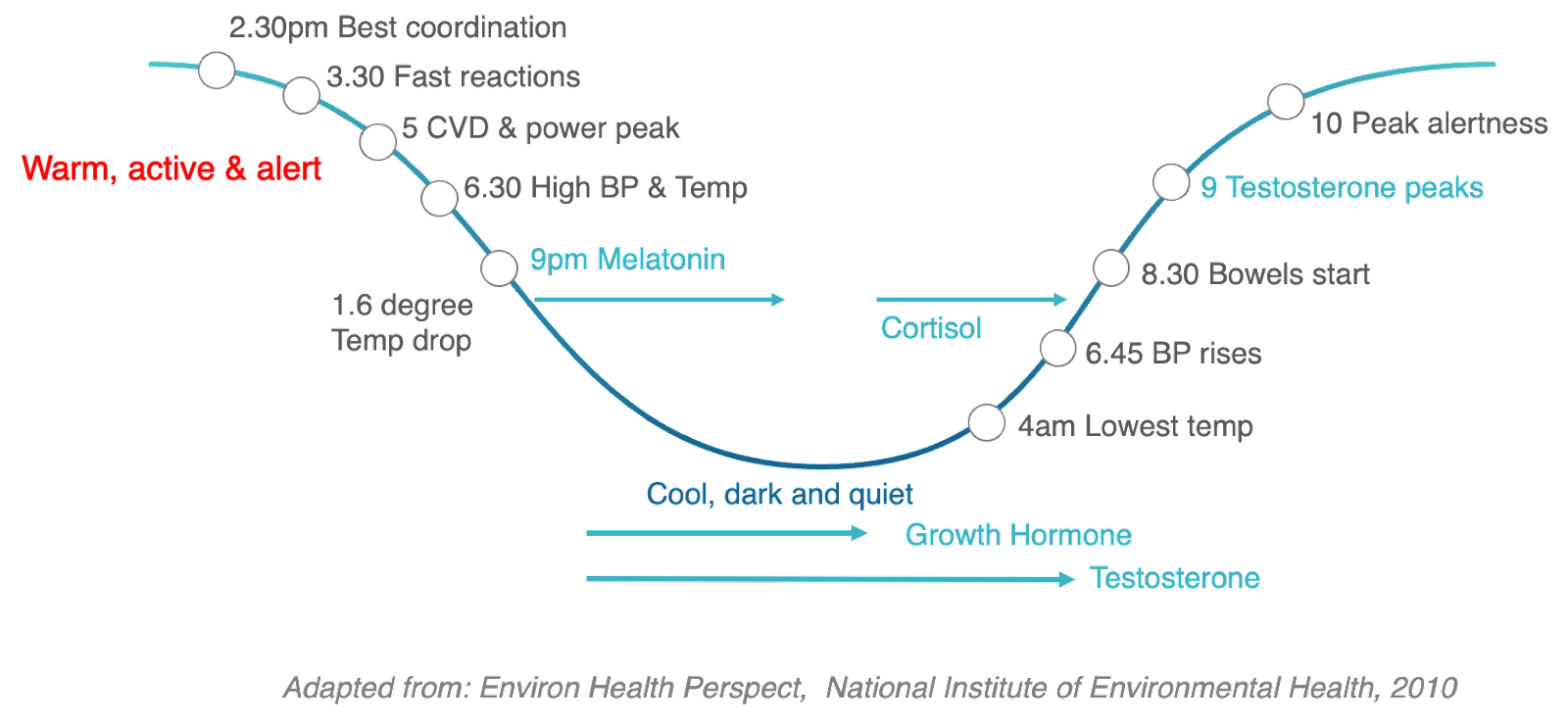
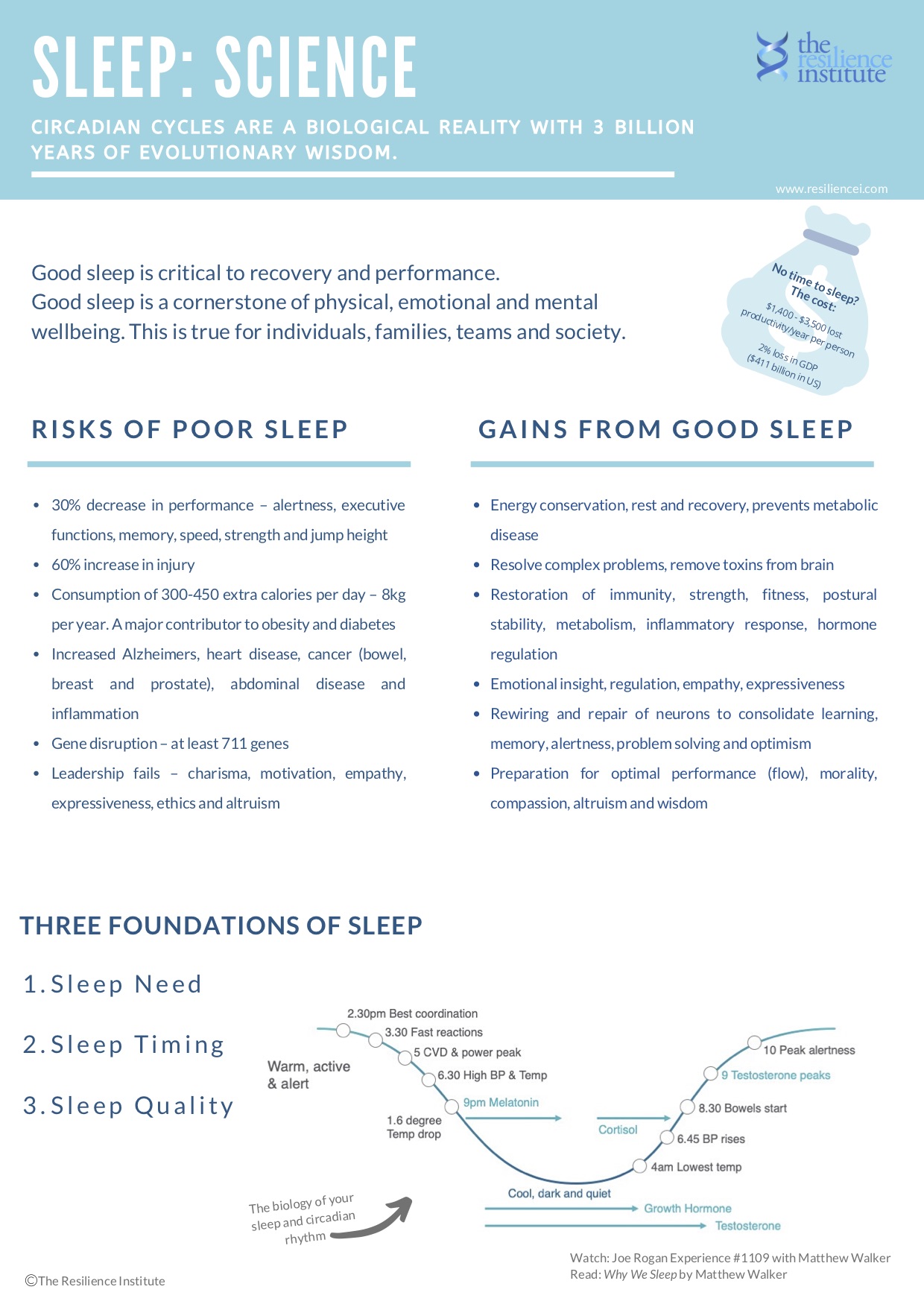
Figure 1: Schematic illustration of the circadian cycle
During this period, you want to shift heat from your core to your periphery. The body releases melatonin in the evening to help cool your core temperature slightly. When exposed to blue light, melatonin is compromised. An easy walk outside or a cool bedroom will help. Aim for 18 degrees Celsius (about 65 degrees Fahrenheit) or cooler if possible. Intense exercise in the four hours before sleep is not recommended as it increases your core temperature. A cold shower or ice bath is helpful to some.
The final key is to apply your Tactical Calm techniques as you relax into sleep. Lie relaxed and flat on your back. Soften your face and chest. Breathe slowly, with your attention resting peacefully on the rise and fall of your belly.
Sleep Quantity Varies Per Person
Sleep need is widely agreed to be somewhere between six and a half and eight hours. It is based on the S-phase, the requirement for the body to sleep for a period of each day. If we sleep too little or too much, the prospect of a good life declines fast. Every species has its own sleep need. We need more than most mammals our size. Our overdeveloped brain demands it.
Experiment and study your own requirement. The natural way is to go camping, live by natural light for three days and see what happens. Many people now use sleep trackers. Buy or borrow one and watch your sleep for a fortnight.
When you review the data on a sleep tracker, you will notice that your body keeps hunting for a consistent sleep period. Pay attention to how you feel when you get it and when you miss or exceed it. In my case, the magic number is seven hours and twenty-two minutes. When I get it right, I feel refreshed. Too little or too much, and I feel sleepy or lethargic.
The Science Behind Sleep Quality
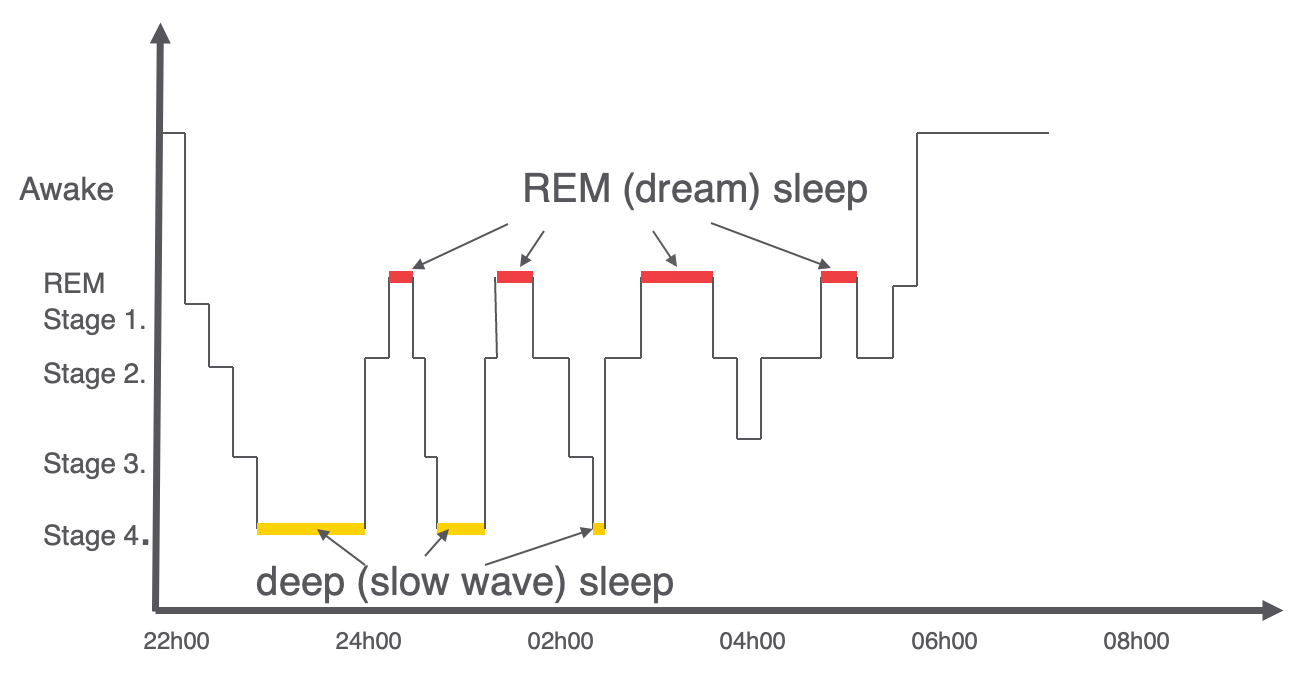
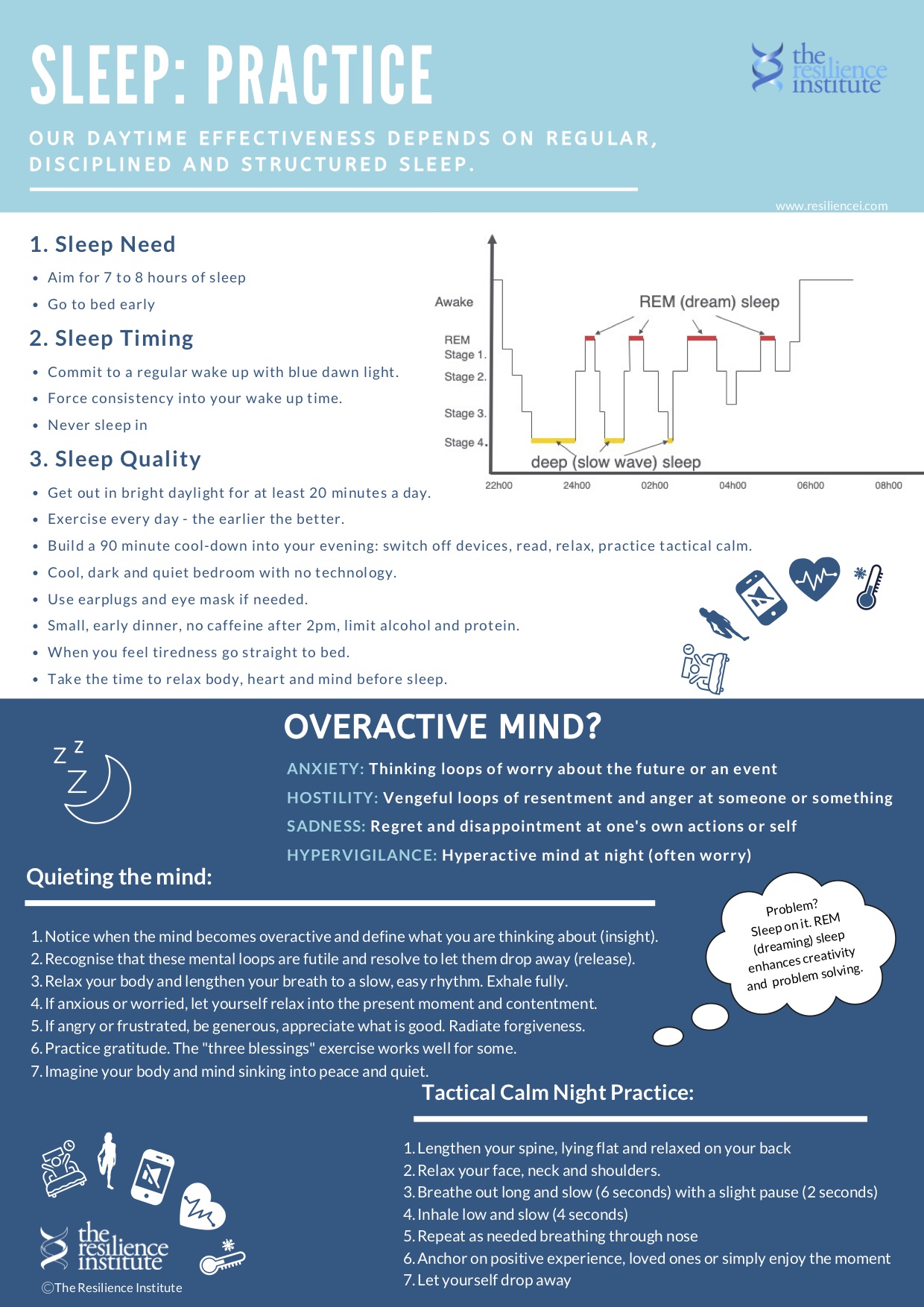
Once you have established the right timing and protected your sleep need, the next challenge is to get your ultradian rhythm working. Think of this as your sleep-depth rhythm. The ultradian rhythm is a 90-minute cycle that allows for roughly two cycles of deep sleep followed by two or three cycles of dream sleep. When you get this right, the rejuvenation effects of sleep are optimised.
Simple trackers will give you an immediate, rough indication of your deep, light, and dream sleep. For an adult, approximately 25% of sleep is in deep (slow-wave) sleep, 25% in dream or rapid eye movement (REM) sleep, and 50% in light sleep. Your teenager and child need more deep sleep as well as more sleep.
In the cycles of deep sleep that follow falling asleep, the brain and body are both quiet. Core body temperature drops. This is the time for the repair and rejuvenation of cells. Growth hormone and testosterone production activate. The cardiovascular system slows right down. Immunity improves.
In light sleep, the body is more active and in transition.
During the dream cycles through the early morning hours, the brain is active while the body is paralysed. If not, we might act out our dreams and sleepwalk. Dreaming sleep facilitates memory, learning, creativity, emotional intelligence, and recovery from traumatic experiences.
Figure 2: Schematic illustration of the sleep cycles and ultradian rhythm
Deep sleep is prioritised if you are deprived of sleep. The best deep sleep comes in the 10 p.m. to 2 a.m. period. As we get older, deep sleep is less effective. Deep sleep is an effective longevity tactic.
Late nights compromise your dream sleep cycles. To reduce mental illness and anxiety in young people, an obvious first step is to help them get to sleep earlier so that they complete their dream sleep. Quality sleep will reduce the suffering caused by attention disorders, anxiety, and depression. As parents, we have two key responsibilities to our children. First, get devices out of the bedrooms. Second, maintain a regular, blue-light-infused wake-up time.
There will be times when healthy sleep is disrupted. Accept this calmly and make it up quickly. The best solution, if you need to repay sleep debt, is to go to bed the next night an hour or so early. Eat early or eat less at night. Remove all devices, cool the room, and read a book. You may like to test a light surgical tape over the lips to prevent snoring and encourage nasal breathing.
Why You Should Stop Thinking in Bed
In my experience, about a third with sleep difficulty wreck sleep with unhelpful thinking. When you secure a good night’s sleep, there is no conscious thought. It is easy to let a storm of thoughts into your bed. Worry (repetitive thoughts about the future) will generate anxiety and destroy sleep. Rumination (repetitive thoughts about the past) will generate sadness or anger and destroy sleep.
Ban thinking from the bedroom. If thoughts arise, refocus on slow diaphragmatic breathing. Watch the rise and fall of your belly. Feel your body relax and dissolve on the exhalation. With a few weeks of practice, you will be amazed how your mind stops bothering you. Make it a habit and stay committed. Sleep can be very peaceful.
Finally, a short power nap of ninety seconds to fifteen minutes is another effective way to catch up on sleep. Ideally, the best time is just after lunch. Find a private, quiet, cool, and dark place. Set the alarm. Use your breathing to drop off more quickly. If sleep does not come, simply enjoy the rest.
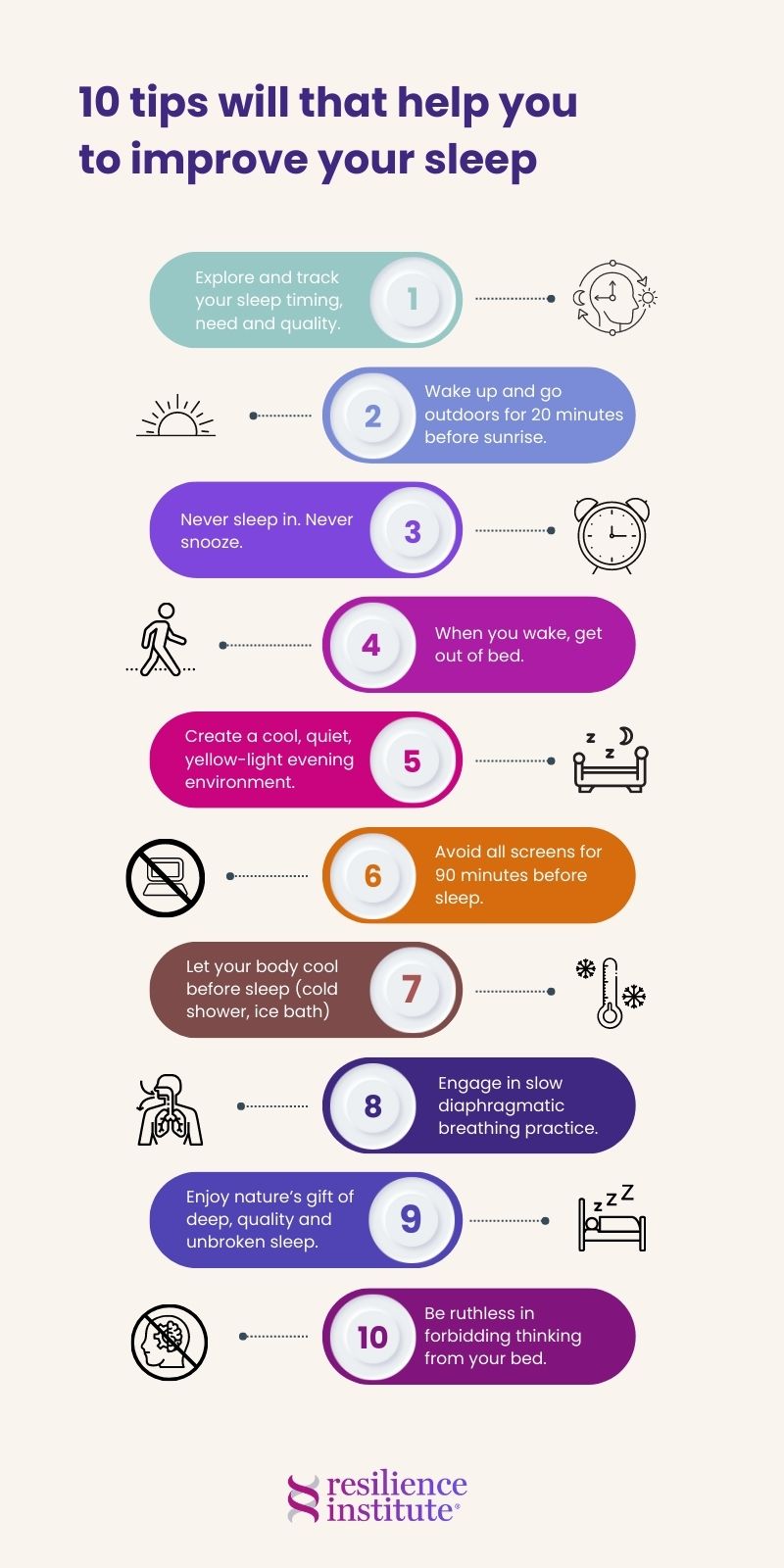
In summary, these 10 tips will help you to improve your sleep:
Explore and track your sleep timing, need and quality.
Wake up and go outdoors for 20 minutes before sunrise.
Never sleep in. Never snooze.
When you wake, get out of bed.
Create a cool, quiet, yellow-light evening environment.
Avoid all screens for 90 minutes before sleep.
Let your body cool before sleep (maybe a cold shower or ice bath?)
Engage in slow diaphragmatic breathing practice.
Enjoy nature’s gift of deep, quality and unbroken sleep.
Be ruthless in forbidding thinking from your bed.
Sources:
Walker, Matthew, Why We Sleep, Penguin, 2107. A very popular and helpful overview of sleep science.
Focus, mood, energy, metabolism, gut health, recovery, immune function, hormone regulation, memory retention, waste removal, problem solving…
Sleep is absolutely necessary for all of these critical functions. Without good sleep, you are compromised. See below for simple steps to improve your sleep.