


Grindset Is Back. Here Is What the Latest Research Says
- Grindset did not disappear after the “quiet quitting” backlash. Return to office mandates and the rise of “founder mode” culture in 2024 and 2025 signal it is cycling back, in a new form.
- Deloitte’s 2025 Gen Z and Millennial Survey found fewer than 6 in 10 millennials rate their mental wellbeing as good, and over a third report feeling stressed or anxious most or all of the time.
- Gallup’s research puts leader burnout at roughly 25% experiencing it often or always, meaning the people setting the pace for a grindset culture are frequently burning out themselves.
- The alternative is not working less. It is working with deliberate recovery built in, a pattern the research consistently links to better output than sustained overdrive.
Grindset, a relentless drive to work hard, constantly and excessively, once looked like the golden path to success. Then it did not. Then, in 2024 and 2025, some of it quietly came back. Understanding why matters more than picking a side in the debate.
Grindset Never Fully Left. It Cycled Back.
Around 2022 and 2023, hustle culture faced a real and visible backlash. “Quiet quitting,” “lazy girl jobs,” and “bare minimum Mondays” climbed social platforms as young workers pushed back against burnout being treated as a badge of honour. A 2022 Prudential survey found 70% of American workers had prioritised, or were considering prioritising, their personal life over their career, with 20% willing to take a pay cut for better balance.
That backlash was real, but it was not the end of the story. Through 2024 and 2025, return to office mandates spread across major employers, and “founder mode,” a term describing an intensely hands on, always available leadership style, gained real traction in start up and tech circles. Some commentators now describe this as hustle culture 2.0, arriving under new branding rather than actually disappearing. Economic pressure, layoffs, and anxiety about AI displacing roles are widely cited as the reasons people feel compelled to prove their value through visible overwork again, even while burnout rates remain high.
Defining Grindset
Grindset is not simply working hard. It is working constantly. It is a mindset fixated on achieving goals at all costs, marked by an inability to switch off or step back. Never enough, always more, regardless of the toll.
It shows up across culture in familiar ways: the tireless workaholic portrayed as the hero in film and television, “crunch” culture worn as a badge of honour in start ups, hashtags like #hustle and #grind across social platforms, and a long shelf of motivational literature arguing that rest is for the weak. Grant Cardone’s The 10X Rule, Gary Vaynerchuk’s Crush It!, and similar titles have sold millions of copies on some version of this promise. None of that makes the promise accurate.
What Current Data Actually Shows About the Cost
Deloitte’s 2025 Gen Z and Millennial Survey found fewer than 6 in 10 millennials rate their mental wellbeing as good or very good, and over a third report feeling stressed or anxious all or most of the time, with their job frequently cited as the major source. This is not a generational quirk. It is a direct signal about the environment grindset culture creates.
The pattern extends up the org chart. Gallup’s workplace research finds roughly a quarter of leaders report experiencing burnout often or always, and nearly two thirds say they experience it at least sometimes. A leader modelling grindset behaviour is frequently doing so from inside their own burnout, not from a position of sustainable strength, which is exactly how the pattern replicates down through a team.
The paradox holds up under scrutiny too. Extended overwork without sufficient recovery reliably degrades decision making, memory, and creativity, producing a cycle of diminishing returns where more hours worked does not translate into better output. Working constantly is not the same as working effectively, and the research gap between those two things has only become clearer as more recent data has come in.
Common Characteristics of Grindset
Workaholism, perfectionism, chronic stress, and an avoidance of leisure are the clearest hallmarks. A few others worth naming specifically: an inability to switch off, leading to constant checking of messages and normalised late night or weekend work. Depersonalisation, a cynical detachment from colleagues and clients under sustained stress. And, less discussed but real, reliance on substances to turn productivity on and stress off, a pattern that became particularly visible with off label stimulant use in some tech and finance circles.
Who Is Most at Risk
Ambitious professionals in competitive fields like finance, law, or tech, where long hours are normalised. Entrepreneurs and start up founders, who often feel every hour not spent working is a lost opportunity. High achievers and perfectionists, who fear that slowing down equals failure. People under genuine financial pressure, working multiple jobs out of necessity rather than ambition. Anyone in a culture, organisational or societal, that equates busyness with status. And, perhaps counterintuitively, people with a previous burnout history, who can fall back into old patterns without new coping strategies in place.
Balancing Grindset With Kindset
The alternative is not working less for its own sake. Call it Kindset: a deliberate shift toward self-compassion, care for others, and a genuinely multidimensional view of success. Kindset is not soft. It involves fiercely focusing on what actually matters, being purposeful, and practising real self-discipline about recovery, not just about output.
Before your next planning cycle, ask:
- Is our leadership team modelling grindset from a place of genuine strength, or from inside their own burnout?
- Are we quietly rewarding visible overwork, even while our stated values say otherwise?
- Where could deliberate recovery actually be built into the way our teams work, not just talked about?
Grindset promises that more hours equal more success. The data keeps showing the opposite past a certain point. Kindset is not the soft option. It is the one the research actually supports.

How AI Is Redefining Leadership: Why Human Judgement Still Matters Most
- AI genuinely improves decision-making, until leaders start trusting it too much. Automation bias, the tendency to accept an AI’s output even when it’s wrong, is a well-documented, decades-old risk now showing up across medicine, aviation, and increasingly, leadership.
- A 2009 airline crash, later linked partly to over-reliance on cockpit automation, remains one of the starkest illustrations of what happens when a skilled human stops actively questioning a system.
- Resilient leaders don’t reject AI. They stay self-aware enough to keep genuinely questioning it, which is precisely the skill automation bias erodes if left unchecked.
Artificial intelligence has been genuinely transformative, reshaping industries and changing how work gets done. For leaders, it brings real opportunity alongside a complex, easy-to-miss risk. AI can’t replace the emotional intelligence, adaptability, and judgement that define good leadership, but it can quietly erode a leader’s willingness to actually use them.
How AI Is Actually Reshaping Leadership
AI is changing leadership in three clear ways. It analyses large volumes of data quickly, supporting faster, better-informed decisions. It automates routine tasks, from scheduling to performance tracking, freeing leaders to focus on strategy. And it surfaces predictive insight, flagging trends and risks that might otherwise go unnoticed. Tools now generate detailed reports and forecast shifts in market behaviour well beyond what a person could track manually, giving leaders real room to focus on long-term vision rather than operational grind.
The first item on that list, better decisions, deserves a closer, more honest look than it usually gets.
The Risk Hiding Inside “Better Decisions”
Automation bias, the tendency to accept an automated system’s output while discounting contradictory information, was first documented in the research literature in 1999, well before modern AI, and it hasn’t gone anywhere since. A 2026 international AI safety report notes it “undermines competence by discouraging active reasoning and verification,” weakening both the accuracy of a person’s judgement and their willingness to act independently of the system in front of them.
The effect isn’t hypothetical. In February 2009, Continental Connection Flight 3407 crashed near Buffalo, New York, an accident later linked in part to increased cockpit automation contributing to a loss of situational awareness among the flight crew. More recent research finds the same pattern in far lower-stakes settings: a 2025 study found that participants who held more positive general attitudes toward AI performed worse at distinguishing real from AI-generated content when given AI guidance, precisely because their trust in the tool discouraged genuine, independent scrutiny. Similar patterns have been documented in medical diagnostics, where clinicians using AI-based decision support have been found to accept incorrect recommendations without sufficient critical evaluation.
None of this means AI-assisted decisions are worse than unassisted ones. The research consistently finds real benefits from good human-AI collaboration. It means the benefit depends entirely on the human half of that collaboration staying genuinely engaged, not quietly deferring the moment a confident-looking output appears on screen.
Why Human Skills Are the Actual Safeguard
AI excels at processing scale. It’s the human capacity to stay genuinely engaged, sceptical, and present that determines whether that processing actually gets used well.
Emotional intelligence underpins trust, collaboration, and a team’s willingness to raise a genuine concern about a system’s output rather than deferring silently. One Forbes contributor piece put it directly: empathy and adaptability are vital for leaders navigating the AI shift, a view broadly consistent with the wider research on human-AI collaboration, even if that specific framing is one perspective among several rather than a settled consensus.
Adaptability matters because AI is a tool, not a finished solution. Integrating new systems, adjusting workflows, and navigating the genuine ethical questions AI raises all require a leader who can pivot without losing their footing.
Creativity and vision stay firmly human. AI optimises within existing parameters; it doesn’t set new ones. Visionary leadership is still what turns a good forecast into an actual decision worth making.
Resilience as the Framework for Staying Sharp
Resilience is what keeps a leader’s judgement genuinely intact alongside AI, not despite it. Self-awareness lets a leader notice when they’re deferring to a system rather than actually evaluating it. Emotional regulation keeps decision-making composed under pressure rather than rushed toward whatever answer arrives fastest. And agility in the face of uncertainty turns a wrong AI output, or a wrong human call, into a genuine learning moment rather than a repeated pattern.
Building This Deliberately
Build a Habit of Second-Guessing the Output
Before accepting an AI-generated recommendation on anything consequential, ask directly: what would make this wrong, and have I actually checked for it? This is the specific habit automation bias research shows erodes fastest under time pressure and repeated exposure, and it’s exactly the one worth protecting deliberately.
Invest in Emotional Intelligence Directly
Strengthen your capacity to empathise, connect, and read a room, capacities that don’t erode with automation and directly support a team’s willingness to speak up when something looks off.
Stay Genuinely Curious About How the Tools Work
Understanding roughly how an AI system reaches its output, not the underlying code, but its general logic and known limitations, makes it meaningfully easier to spot when it’s confidently wrong rather than accepting a plausible-looking answer at face value.
Use a Resilience Assessment to Find Your Own Blind Spots
Tools like the Resilience Assessment reveal where self-awareness, emotional regulation, and adaptability are genuinely strong versus quietly under strain, useful information well before those factors get tested by a high-stakes, AI-assisted decision.
AI is a powerful ally, not a substitute for judgement. The leaders who thrive won’t be the ones who trust it most. They’ll be the ones who stay resilient enough to keep questioning it.

Leading Across Differences in an AI-Driven Workplace
- Aperian’s own research, published by co-founder Dr Ernest Gundling, found culture shapes how AI gets adopted just as much as AI shapes culture in return, particularly around bias, communication style, and leadership dynamics.
- A large 2025 study across 18 societies and 2,451 employees found clan-oriented, collaborative cultures generate significantly higher psychological safety than hierarchical ones, with trust in leadership as the key mechanism.
- A 2026 scoping review of high power distance environments across Asia found the fix is not removing hierarchy. It is using it deliberately, senior leaders visibly inviting dissent rather than pretending rank does not exist.
- This exact tension, AI adoption meeting cultural difference, is the subject of Fit for Change, Across Differences, a Singapore gathering for senior HR and L&D leaders this October.
Most corporate AI training assumes a flat, culture-neutral workplace. Same prompt techniques, same rollout deck, same change management playbook, whether the office is in Austin or Ahmedabad. That assumption does not survive contact with the actual research, and for anyone leading a multicultural team in Singapore, the gap between the assumption and the evidence is worth taking seriously.
Culture Shapes AI Adoption. AI Reshapes Culture Back.
Aperian, the cultural intelligence firm co-hosting Fit for Change with Resilience Institute, has published research directly on this question. Dr Ernest Gundling, Aperian’s co-founder, argues the relationship runs in both directions. Cultural norms shape how a team actually adopts AI, whether people trust an AI recommendation over a manager’s judgement, whether raising a concern about an AI output feels safe to do out loud. And AI use, in turn, reshapes team culture over time, changing communication patterns and who ends up with more influence in a decision.
That second part is easy to miss. A team that starts routing decisions through an AI tool is not just adding a tool. It is quietly changing who gets listened to, and that shift lands differently depending on how hierarchy already works in the room.
Why Hierarchy Changes the Whole Equation
Psychological safety, the shared belief that a team is safe for interpersonal risk taking, has become one of the most cited ideas in organisational research since Amy Edmondson’s original work. What gets discussed far less is that most of the foundational research on it, including Google’s well known internal study, was conducted primarily in Western, relatively low power distance organisational cultures.
A large 2025 study spanning 18 societies and 2,451 employees found clan oriented cultures, built on collaboration and belonging, generate significantly higher psychological safety than hierarchical ones, with trust in top management as the mechanism connecting the two. A separate 2026 scoping review focused specifically on high power distance environments across Asia reached a more actionable conclusion: trying to eliminate hierarchy outright rarely works. The more effective path is using the hierarchy that already exists, senior leaders actively inviting dissent, visibly rewarding people who raise concerns, and modelling their own fallibility, to build safety across rank rather than pretending rank does not exist.
For a Singapore leadership team, or any team spanning Singapore, India, China, and a handful of Western headquarters, this is not an abstract academic point. It means a psychological safety programme copied unchanged from a US or UK headquarters, built on the assumption of low power distance, will tend to quietly underperform here. Not because the science is wrong, but because it was validated somewhere else.
What This Looks Like When AI Enters the Room
Now add AI to that dynamic. In a high power distance culture, an AI tool’s output can carry a strange kind of borrowed authority. If a junior team member already feels uncomfortable contradicting a senior leader directly, they may feel even less comfortable contradicting an AI recommendation the senior leader has already endorsed. The tool does not just sit neutrally in the room. It can quietly reinforce exactly the dynamic that made speaking up hard in the first place.
This cuts the other way too. A junior employee who is fluent with AI tools can suddenly produce work that looks senior, fast, which scrambles the usual signals a hierarchical culture uses to decide whose voice carries weight. Some organisations are finding this genuinely destabilising. Others are finding it opens a door that used to be closed, a way for someone junior to demonstrate judgement without first needing years of tenure to earn the room’s attention.
Practical Moves for Leading Across This
This exact intersection, AI adoption meeting cultural difference across a multinational team, is what Fit for Change, Across Differences is built around. It is a closed-door gathering of senior HR and L&D leaders in Singapore on 16 October, co-hosted by Resilience Institute and Aperian, with Aperian bringing its own cultural intelligence research directly into the room. It is invite-only with limited seats, RSVP by 30 September. Details are on the event page.
Before your next cross-cultural AI rollout, ask:
- Did our AI governance guidelines come from a headquarters with different power distance norms than our own team?
- Is an AI tool quietly borrowing a senior leader’s authority in our meetings, without anyone naming that out loud?
AI does not arrive in a culturally neutral workplace, because no such workplace exists. It arrives in yours, with your hierarchy, your history, and your unspoken rules about who gets to disagree with whom, and it amplifies whatever it finds.

Why Workplace Culture Matters: The Models That Have Held Up
- Edgar Schein’s model of organisational culture, developed in 1980, is still being empirically tested in peer-reviewed studies published in 2024 and 2025, across industries and countries as different as Indonesian schools, Ghanaian small businesses, and Japanese business schools.
- Gallup’s employee engagement research has produced remarkably consistent findings across more than two decades and eleven editions of its meta-analysis, evidence that is rarely this durable in organisational research.
- Deloitte found in 2012 that 94% of executives and 88% of employees believed a distinct workplace culture mattered to business success. A 2024 Deloitte survey found almost identical sentiment, 93% and 88%, on a related question about purpose and culture.
- The oldest and best-tested finding in this field is also the simplest: culture is not what an organisation says about itself. It is the pattern of behaviour it actually rewards, day to day.
Workplace culture is something you can sense within minutes of walking into a building, and something that resists being pinned down in a sentence. That tension is not new, and neither is the best available explanation for it. Some of the most useful research on workplace culture is decades old, and what makes it worth revisiting now is not novelty. It is that recent, rigorous studies keep testing these older ideas and keep confirming them.
A 45 Year Old Model That Keeps Getting Retested
Edgar Schein’s model of organisational culture, first developed in 1980 while he was at MIT’s Sloan School of Management, describes culture across three levels: visible artefacts (office layout, dress code, written policies), espoused values (what an organisation says it believes), and underlying basic assumptions, the deepest, least visible layer, and the one that actually drives behaviour. Some cultural elements are easy to see. The values, beliefs, and norms underneath them are much harder to identify from the outside, and often harder for people inside the organisation to name too.
What makes this model worth citing in 2026 is not that it was influential once. It is that researchers keep independently testing it with modern statistical methods and keep finding it holds up. A 2024 study applied Schein’s framework to teacher performance and job satisfaction in schools. A 2025 study used structural equation modelling to test Schein’s model against leadership competencies and organisational structure in small and medium enterprises. Different countries, different industries, different decades since the original theory, and the underlying logic keeps replicating: culture operates on visible and invisible levels, and the invisible level is where the real explanatory power sits.
What Decades of Data Confirm About Culture and Performance
Gallup’s Q12 employee engagement meta-analysis is now in its eleventh edition, and the headline findings have proven unusually stable across more than twenty years and 183,806 business units worldwide: organisations in the top quartile for engagement consistently show meaningfully higher profitability, productivity, and customer loyalty than those in the bottom quartile, alongside sharply lower absenteeism and turnover. In a research field where findings often shift or fail to replicate, this level of consistency across two decades of editions is itself a form of evidence.
Deloitte’s research tells a similar story from a different angle. Its original Core Beliefs and Culture survey found 94% of executives and 88% of employees believed a distinct workplace culture was important to business success, a wide gap from the roughly 12% of executives who felt their own organisation was actually getting it right. More than a decade later, a 2024 Deloitte workplace study found almost identical sentiment, 93% of executives and 88% of workers agreeing that culture and purpose genuinely matter to how an organisation performs. The specific number barely moved. The belief that culture matters has not faded with time. What continues to lag is execution.
Resilience as the Engine Behind Culture
Culture is shaped by the behaviours an organisation encourages, radiates, and nurtures over time, and different organisations reasonably need to encourage different things. A corporate client focused on navigating external market disruption needs a different emphasis than a first responder unit that needs toughness under acute pressure, which needs something different again from a public health department adapting to shifting community needs. None of these should be built on a single trait alone. Toughness without empathy produces a brittle culture. A focus on external change without attention to internal wellbeing burns people out from the inside while they are busy managing the outside.
Resilience Institute’s own integral approach, first set out by founder Dr Sven Hansen in Inside-Out (2015), rests on six assumptions that have aged well against more recent, independent research: resilience is a learnable skill available to everyone, not a fixed trait some people simply have; it integrates body, emotion, mind, and purpose rather than treating performance as a purely cognitive exercise; it takes a fundamentally positive view of human development; it is dynamic, requiring an ongoing balance between demands and resources rather than a one-time fix; it is systemic, responding to and shaping the environment around it; and it is non-judgemental, meeting people wherever they currently are as the actual starting point for growth.
Independent research published since 2015 has largely reinforced these assumptions rather than undermining them. A large 2025 meta-analysis of leader mindfulness found consistent effects on follower wellbeing and performance, supporting the idea that resilience-related skills are learnable and transferable rather than fixed. Resilience Institute’s own 2025 Global Resilience Report, drawn from more than 8,400 professionals across 70 countries, found the gap between struggling and thriving employees is driven almost entirely by emotional regulation, not raw talent or effort, directly consistent with the integrated, whole-person view Hansen described a decade earlier.
Using Resilience as a Transformation Engine
Before your next culture initiative, ask:
- Are we measuring the invisible level of our culture, values and assumptions, or only the visible artefacts?
- Where does our stated culture diverge from the behaviour we actually reward day to day?
- Are we treating resilience as a fixed trait some people have, or as a skill we are actively building across the organisation?
The best evidence in this field is not the newest. It is the oldest evidence that keeps surviving contact with new data. Culture is still what an organisation actually does, not what it says, and four decades of research have not found a reason to say otherwise.

Why Becoming a Resilience Consultant Is a High-Impact Career Move
- 76% of employees experience burnout at least sometimes, and Gallup’s research found manager behaviour, not hours worked, is the strongest predictor of who burns out.
- Employees who frequently experience burnout are 2.6 times more likely to be actively job-hunting, 63% more likely to take a sick day, and 23% more likely to visit the emergency room.
- The World Economic Forum ranks resilience, flexibility, and agility as the second most essential workplace skill globally, exactly the demand resilience consultants are positioned to meet.
Workplaces are genuinely shifting, and fast. Employees are navigating real, sustained stress, organisations are prioritising workplace wellbeing more seriously than before, and demand for resilience-based solutions has rarely been higher. Against that backdrop, becoming a Resilience Consultant isn’t just a career opportunity. For people who want to make a meaningful impact while building a genuinely durable career, it’s a strong, evidence-backed move.
Who Is the Right Fit for This Role?
Not everyone is suited to resilience consulting, but a few qualities tend to predict a genuinely good fit: a real motivation to help people overcome challenges and build emotional agility, strong interpersonal and communication skills for building trust, genuine adaptability and curiosity about new tools and strategies, and existing experience as a coach, consultant, or leader looking to add real depth to an existing practice. It particularly suits people who want a career with genuine purpose and flexibility, not just a job title.
What the Data Actually Shows About Burnout
Gallup’s research found 76% of employees experience burnout on the job at least sometimes, and 28% report being burned out “very often” or “always.” It’s commonly assumed burnout is caused purely by overtime, and hours do matter, risk climbs meaningfully past 50 hours a week and further still past 60. But how people experience their workload turns out to matter more than the raw hours themselves.
Gallup identified five specific factors most strongly correlated with burnout: unfair treatment at work, an unmanageable workload, unclear communication from managers, a lack of manager support, and unreasonable time pressure. All five trace back significantly to manager behaviour, which is precisely the lever resilience consultants are positioned to help organisations pull. The consequences are concrete: employees who frequently experience burnout are 63% more likely to take a sick day, 23% more likely to visit the emergency room, and 2.6 times more likely to be actively job-hunting.
This is where resilience consulting earns its place. It isn’t just about helping individuals cope with stress after the fact. Done well, it addresses the upstream, manager-driven factors Gallup’s own research identifies as the actual root causes.
Why This Is a Genuinely High-Impact Career Move
High, Documented Demand
The World Economic Forum’s Future of Jobs Report 2025, surveying over 1,000 employers across 55 economies, ranks resilience, flexibility, and agility as the second most essential core skill in today’s workforce, immediately behind analytical thinking. Organisations aren’t just open to resilience-based solutions; a majority of the world’s largest employers say they need them directly.
Scalable Career Paths
Whether working one-on-one with clients, delivering corporate workshops, or partnering directly with organisations, resilience consulting offers genuine flexibility in how a practice actually gets built and scaled.
Durable, Not Trend-Dependent
Resilience skills remain essential regardless of which specific industry trend dominates a given year. As a consultant, expertise in this space stays relevant even as the surrounding business landscape keeps shifting.
The Genuine Benefits of the Work Itself
Beyond market demand, resilience consulting offers real, purpose-driven work: helping people navigate stress, build emotional strength, and genuinely thrive in life and work. It offers real flexibility and autonomy in shaping a career around personal and professional goals simultaneously, and it produces impact that’s actually visible, in individual wellbeing, in stronger teams, in a measurably better organisational culture. It also builds continuous growth in the consultant’s own emotional intelligence, adaptability, and resilience along the way, skills that compound well beyond the work itself.
How to Get Started
Learn the underlying frameworks first, resilience assessments, stress management, and emotional agility. Earn genuine credibility through recognised certification, which provides both the tools and the standing to stand out in a genuinely competitive space. Build a real network among leaders, organisations, and communities that value resilience-based solutions. And consider partnering with an established organisation like Resilience Institute, which can provide the support, tools, and resources to get a new practice off the ground faster and more credibly than building entirely from scratch.
Becoming a resilience consultant is more than a career pivot. It’s a chance to address, directly and credibly, the specific manager-driven factors that the actual research shows are causing most workplace burnout in the first place.
If you’re interested in becoming a Resilience Consultant, we’d love to connect. Let’s have a conversation about how you can join us and make an impact. Reach out today.

What Does AI Actually Change About Human Leadership?
- Microsoft’s 2026 Work Trend Index, built on 20,000 employees across 10 countries, found that organisational factors, culture, manager support, and talent practices, explain 67% of whether AI actually improves someone’s work. Individual mindset explains 32%.
- Gartner’s 2025 research found only 26.7% of employees actually believe in their organisation’s culture. That was true before most companies had rolled AI out at any real scale.
- Naval Ravikant has started calling AI a motorcycle for the mind, an upgrade on Steve Jobs’s old bicycle metaphor. His point is not really about speed. It is that a motorcycle can throw you if you do not know how to ride it.
- These questions sit at the centre of Fit for Change, Across Differences, a closed-door gathering of senior HR and L&D leaders in Singapore this October.
Ask ten leaders what AI has changed about leadership and most will talk about tools. Faster drafting. Meeting summaries nobody has to type. An agent that drafts the first pass of a performance review. That is real, and it matters, but it is not the interesting question.
The interesting question is what happens to leadership itself once the work under it changes shape. And the early data on that is more specific than most of the AI commentary flying around right now.
The Tool Question Was Never the Real One
Microsoft’s 2026 Work Trend Index ran a large analysis trying to answer a genuinely useful question: what actually determines whether AI use translates into better work, not just more AI use. They surveyed 20,000 employees across ten markets and modelled 29 separate factors against self-reported outcomes.
The result surprised even people inside Microsoft, according to the report. Organisational factors, culture, manager support, and talent practices, accounted for 67% of the effect. Individual factors, someone’s own AI skill and attitude, accounted for 32%. In other words, whether an employee personally likes or is good at using AI matters about half as much as whether their manager and their workplace actually support them in using it well.
That flips the usual framing on its head. Most corporate AI rollouts still look like training programmes: teach people prompts, run a workshop, measure adoption. The Microsoft data says the workshop was never the lever. The manager was.
Culture Was Already Fraying Before AI Arrived
Here is the part that should worry a CHRO more than any AI rollout timeline. Gartner’s 2025 research on organisational culture, run before most companies had deployed AI at scale, found only 26.7% of employees actually believed in their company’s stated culture. Just 26.4% understood it. Another 26.4% said they were actively acting on its behalf. Roughly a quarter, a quarter, a quarter, across the board.
Deloitte’s 2026 Global Human Capital Trends research then found 65% of organisations believe their culture needs to change significantly because of AI. So the honest picture looks like this: most companies were already running on a culture their own people did not fully believe in, and now they are asking that same fragile culture to absorb one of the biggest operational shifts most workplaces have seen in a generation. Deloitte also found 42% of workers say their employer rarely even checks what AI is doing to people, as opposed to what it is doing to output.
Gallup’s Q1 2026 CHRO Roundtable, a survey of 102 CHROs at global Fortune 500 companies, found something consistent with this. In workplaces that have rolled out AI, only 51% of employees say their culture has stayed the same over the past year. In workplaces without it, that number is 59%. AI does not sit neutrally on top of an existing culture. It moves it, and the direction it moves depends heavily on how the rollout was led, not just whether it happened.
What Naval Ravikant’s Motorcycle Metaphor Actually Gets Right
Steve Jobs famously called the personal computer a bicycle for the mind, a tool that made a fundamentally human capability, thinking, dramatically more efficient without replacing the rider. On his own podcast in early 2026, Naval Ravikant updated the line for the current moment: AI is not a bicycle anymore. It is a motorcycle.
People usually repeat that quote for the speed. The part worth sitting with is the risk. A bicycle is forgiving. You wobble, you learn, you rarely get hurt badly. A motorcycle amplifies your skill in both directions. A good rider goes faster and further than a bicycle could ever take them. A bad rider crashes harder.
Applied to leadership, this is close to what the Microsoft and Gartner data is describing from a different angle. AI amplifies whatever is already true about how a team works. A team with clear direction, psychological safety, and a manager who actually models good judgement will use AI to genuinely extend their capability. A team without those things will use AI to generate more output faster, with no one checking whether the output is actually right, or whether anyone still knows how to check.
On a separate 2025 episode, Ravikant made a related point about recruiting, quoting the investor Vinod Khosla: “the team you build is the company you build.” That line predates AI by years, but it has become more true, not less, now that so much of the actual production work can be delegated to a model. What is left for a human team to own is judgement, direction, and trust in each other. That is exactly the layer culture sits in.
The Singapore Angle Nobody’s Global Deck Accounts For
Most of this research comes out of the US and Europe, which is a real gap for anyone leading a team here. Singapore’s own economic story right now is a strange, specific version of the AI moment: Q1 2026 GDP growth came in strong, largely on the back of electronics exports riding the global AI investment wave, even as the Ministry of Trade and Industry kept its full year forecast cautious, citing Middle East tensions as a real drag on the outlook.
That is the Singapore condition in one paragraph. AI as genuine tailwind, geopolitics as genuine headwind, both hitting the same small, open economy at the same time. A leader here is not choosing whether to engage with AI. That decision was made for them by the export data. The actual leadership question is whether the team underneath them has the judgement, trust, and shared direction to make good calls while both forces are pulling at once.
This is one of the exact questions being worked through at Fit for Change, Across Differences, a closed-door gathering of senior HR and L&D leaders in Singapore on 16 October, co-hosted by Resilience Institute and Aperian. The session looks specifically at cultural agility and human-first leadership in an AI-driven world, the same gap the Microsoft and Gartner data both point to. It is invite-only with limited seats, RSVP by 30 September. Details are on the event page.
What This Actually Means for How You Lead
The temptation is to answer “what does AI change about leadership” with a list of new skills. Prompt literacy. AI fluency. Something with the word “agentic” in it. The data above suggests a less exciting, more useful answer.
AI does not change what good leadership looks like. It raises the cost of bad leadership. A manager who never built trust, never modelled sound judgement, and never made their team feel safe raising a concern was already a problem before AI arrived. Now that same manager is handing their team a motorcycle. The gap between a well led team and a poorly led one used to grow slowly. It is starting to grow fast.
Before your next AI rollout conversation, ask:
- Are we investing more in individual AI training than in the manager behaviour that the Microsoft data says matters twice as much?
- If a quarter of our people do not believe in our culture, what exactly are we asking AI to amplify?
- Do our managers actually know how to check AI-assisted work, or are they just checking that it got done?
AI does not replace judgement. It removes the friction that used to slow bad judgement down. That is the actual leadership problem, and no amount of prompt training solves it.

B Corp Just Changed Its Rules. Here Is What That Means for Asia
- B Lab launched the biggest overhaul of the B Corp standards since the certification began, replacing the old 80-point self-assessed score with mandatory requirements across seven Impact Topics, verified by independent third-party auditors.
- Every existing B Corp, Resilience Institute included, must recertify against the new standards on a five-year cycle by September 2026, with rising requirements at Year 3 and Year 5, not just at the point of certification.
- Singapore’s B Corp community grew from 2 companies in 2015 to 33 by last count, and Hong Kong is targeting 100 by the end of 2026, a genuine regional movement rather than an imported Western trend.
- B Corp status is increasingly a factor in Singapore MNC vendor selection, sitting alongside data security certifications like ISO 27001 as a procurement signal, particularly since SGX’s mandatory climate disclosure rules took effect.
Resilience Institute became a Certified B Corporation in early 2025. Since then, the certification itself has changed more than it has in its entire prior history. If you evaluated us as a B Corp back then and have not looked again since, the standard we are now held to is a different, and considerably tougher, one.
What Actually Changed
On 8 April 2025, B Lab retired the points-based B Impact Assessment that had defined B Corp certification since it began. Under the old system, a company needed 80 out of 200 points across five impact areas, and a strong score in one area could offset a weak one elsewhere. Critics, and some departing B Corps, argued this let companies optimise for the scorecard rather than for genuine impact.
The new standards remove that loophole entirely. Companies must now meet specific, non-negotiable requirements across seven Impact Topics, including Climate Action, Human Rights, and Fair Work, with no ability to average out a weak area against a strong one. Certification starts with baseline “Year 0” requirements, then steps up at Year 3 and Year 5 of a five-year cycle, so continuous improvement is now built into the certification itself rather than assumed. Assessments are also independently verified by third-party auditors under ISO 17021-1 standards, replacing the self-assessment model. Every existing B Corp must recertify under these standards, with recertification for most companies due by September 2026.
Why This Is an Asia Story, Not Just a Global One
B Corp is often discussed as a Western sustainability trend that eventually reaches Asia. The actual growth numbers tell a different story. Singapore had just 2 certified B Corps in 2015. By 2022 that had grown to 24, and by last count it stood at 33. Hong Kong went from a single B Corp in 2016 to 25 by 2023, and the local B Corp community there is targeting 100 by the end of 2026. This is not a handful of boutique brands. Publicly listed companies across the region, including a digital bank in Taiwan and a real estate developer in Singapore, now hold the certification alongside multinationals.
The timing matters for Singapore specifically. SGX now requires mandatory Scope 1 and Scope 2 climate disclosure from listed issuers, with Scope 3 following for Straits Times Index constituents from 2026. Procurement teams inside those listed companies, and the multinationals that supply or serve them, are under real pressure to show verified evidence for their own sustainability claims, not just a statement of intent. A vendor holding a rigorously audited certification is a more useful answer to that pressure than a vendor without one.
What B Corp Actually Verifies
B Corp certification is not a marketing badge a company applies for and receives. Under the new standards especially, it is an audited claim about how a business actually operates, its governance structure, how it treats its workers, its environmental footprint, and its accountability to stakeholders beyond shareholders, not just what it says about those things in a sustainability report.
Benoit Greindl, Resilience Institute’s CEO, described the original certification as “a significant stride in our journey. It’s a testament to our values and a reinforcement of our commitment to ethical practices in every facet of our operations.” That commitment now carries a higher bar to clear. Resilience Institute holds B Corp certification alongside ISO 27001 information security certification, a combination the organisation’s own market positioning describes as rare in the corporate training and leadership development space, and increasingly material in enterprise ESG procurement criteria across Asia.
What This Means If You Are Evaluating an L&D Vendor
Most corporate wellbeing and leadership development providers cannot show independently audited evidence for their own governance and impact claims. Under B Lab’s new standards, a current B Corp certification is a genuinely stronger signal than it was even a year ago, precisely because the loophole that let companies coast on a strong score in one area has been closed.
If you are shortlisting vendors and ESG credentials sit on your evaluation criteria, it is worth asking any B Corp supplier a direct question: are they certified under the pre-2025 points system, or have they recertified under B Lab’s new standards? The answer tells you whether the credential reflects a one-time score from several years ago or an audited, continuously improving standard.
Before your next vendor procurement round, ask:
- Does our vendor evaluation checklist ask for evidence behind ESG claims, or just for the claims themselves?
- If a supplier holds a certification, do we know whether it is current under today’s standards?
- Are our own sustainability claims backed by anything a third-party auditor could verify?
A certification earned once and never revisited is a marketing asset. A certification that requires recertification, rising standards, and independent audits every few years is closer to an operating discipline. B Lab’s 2025 overhaul pushed B Corp firmly into the second category, and Asia’s procurement teams are starting to notice the difference.

How to Become a Resilience Coach: Training, Tools, and Insights
- A structured resilience assessment turns vague client feelings, “I feel stuck,” “I feel off”, into specific, measurable signals across 50 science-based factors.
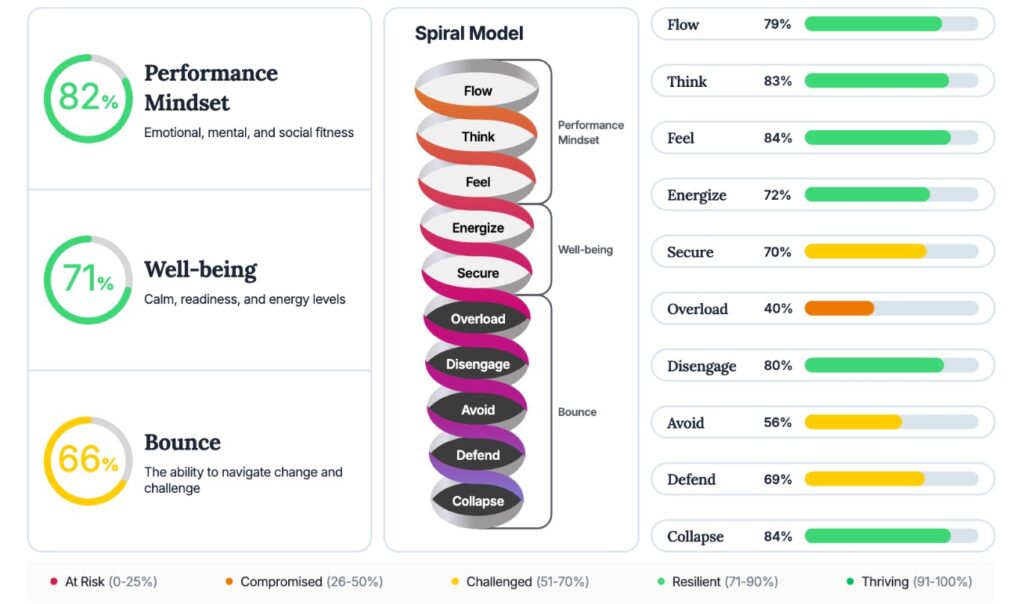
- The Resilience Spiral, now in its fifth iteration, maps the stages between distress and flow, giving coaches a shared, evidence-based language for human performance.
- Coaching outcomes become genuinely measurable: real client progress can be tracked and shown in concrete terms rather than left as an unverifiable impression.
Effective coaching needs more than listening skills. It needs data. It needs clarity. It needs tools that reveal what people often can’t see in themselves. That’s what makes Resilience Institute’s Coaching Certification distinct. It cuts through ambiguity and gets to the heart of what actually makes people thrive.
Why Is Self-Awareness So Hard to Pin Down?
Many clients struggle with self-awareness. They feel stuck, anxious, or disengaged, yet can’t quite explain why. They guess at solutions. Coaches guess too. The Resilience Assessment changes that.
It measures 50 science-based factors driving physical, emotional, mental, and social fitness. It shows real patterns, spots genuine blind spots, and turns vague feelings into clear, specific signals, giving coaches an actual roadmap to work from.
Have you ever coached someone and felt unsure whether they were telling you the whole story? Only in session four do they mention they’re taking sleeping tablets, or medicating for anxiety. Plenty of leaders don’t want to acknowledge they’re short on rest or multitasking all day. Using a holistic assessment to capture a genuine baseline depersonalises the struggle and shifts the conversation to an objective perspective:
“Ah, I see sleep has been a struggle for you recently…”
“So you find yourself juggling many tasks each day…”
“Your hypervigilance score signals that you’re struggling to fall asleep…”
Some leaders still wear sleepless nights or constant multitasking as a badge of honour. Some coaches still overlook the physical dimension entirely when supporting clients. But human performance is genuinely integrated, body, emotion, and mind together, and small, precise adjustments can transform how someone actually experiences their life. That’s where the Spiral comes in.
What Is the Resilience Spiral, and Why Does It Matter?
Since 2002, Resilience Institute has worked with thousands of organisations and more than 100,000 individuals. The Resilience Spiral sits at the core of that work. Now in its fifth iteration, it maps the natural stages of resilience, from distress through to flow.
The Spiral is genuinely practical. It weaves together fields that too often stay fragmented, mental health, stress mastery, emotional intelligence, high performance, and wellbeing, helping people climb toward what RI calls “altitude,” a state of real thriving where purpose, energy, and performance meet.
Isn’t Resilience Just a Buzzword?
No. Resilience is a learned set of skills, genuinely measurable and trainable. It includes sleep, nutrition, and recovery. It includes self-awareness, emotional regulation, and focus. It includes connection, purpose, and optimism.
RI’s model draws from neuroscience, positive psychology, epigenetics, preventative medicine, and behavioural science, refined over decades and tested in boardrooms, classrooms, clinics, and frontline teams alike. The feedback stays consistent: it gives people real language to describe what they’d previously only been able to feel.
What Makes This Certification Different?
Coaches completing the certification gain more than a framework. They gain a genuinely powerful assessment tool, letting them deliver individual reports that spark real insight, benchmark teams and track progress over time, target interventions with real precision, and show a genuine return on investment. That makes coaching not just more effective, but measurably more valuable to client organisations.
How Does It Help Coaches Succeed?
Coaching is a genuinely competitive space. To stand out, coaches need real results and a methodology grounded in science but flexible enough for actual practice. The Resilience Coach Certification offers a clear, structured model, actionable data from real clients, tools for both individuals and groups, and language that genuinely resonates with leaders. It isn’t a script. It’s a system, and it works.
Can Coaching Be Measured?
Most coaching programmes struggle to show clear outcomes. This one doesn’t. Group dashboards let coaches and organisations see genuine shifts in resilience over time, measuring growth, pinpointing pain points, and adjusting strategy accordingly.
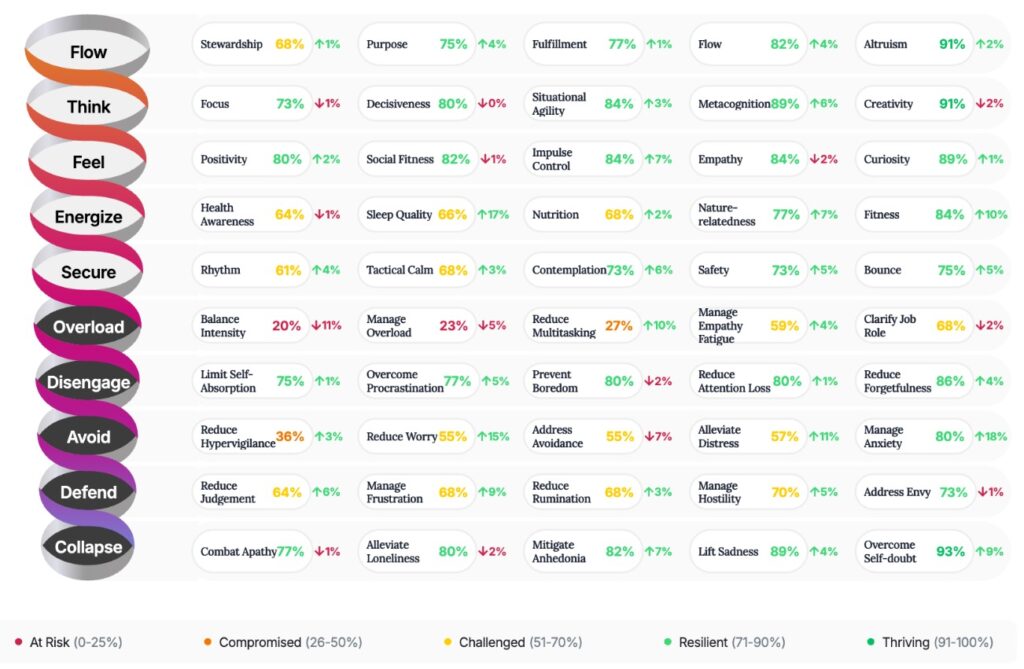
No more “thanks, I think that coaching helped.” Instead: “I improved my sleep quality by 17%, and I’m 18% better at managing anxiety.” That’s why HR teams and executives respond so well to this approach. It brings real credibility and real evidence, turning coaching into a genuine strategic investment. If you’re after referrals from existing or previous clients, give them data worth sharing. They become genuine ambassadors in the market.
What Kind of Coaches Should Apply?
This certification suits coaches working with leaders and executives, teams and departments, healthcare professionals, educators and students, and athletes and performers. It’s built for coaches who want a genuinely deeper impact, who value insight over opinion, and who are ready to work at the intersection of performance and wellbeing.
Why Now?
The world is demanding more from people than it used to. Change is constant. Stress runs high. Plenty of people feel genuinely overwhelmed. Coaches are more needed than ever, but meeting the moment requires the right tools. The Resilience Coach Certification is evidence-based and built to equip coaches to guide others through real complexity with genuine clarity.
What Happens After Certification?
Graduates join a global network of resilience professionals, with access to ongoing learning, group support and mentorship, upgrades as the model evolves, and new insight as the underlying resilience science develops. It’s a living system, not a static course, and it keeps improving. The certification is also approved by the ICF for Continuing Coach Education, offering 4 CCE hours on completion.
The future of coaching isn’t guesswork. It’s grounded, measurable, and genuinely human, and it starts with resilience.

20 Types of Workplace Culture, and What the Research Says Works
- Four of the culture types below, clan, adhocracy, market, and hierarchy, come from Cameron and Quinn’s Competing Values Framework, one of the most studied models in organisational research.
- A 2025 study using the framework’s assessment instrument found that hierarchy culture is often the dominant style in large organisations, even though clan culture, with its focus on people and belonging, is associated with stronger resilience.
- Separate 2025 research found adhocracy culture has the strongest link to digital transformation capability among the four core types, ahead of clan, market, and hierarchy.
- Gallup’s 2026 workplace report found global engagement fell to 20% in 2025, with the sharpest decline among managers, a reminder that culture is carried by daily leadership behaviour, not by a values poster.
Workplace culture gets described in a lot of grand language: the soul of an organisation, its DNA, the thing that eats strategy for breakfast. Most of that language is not wrong, exactly, but it is not especially useful either. What is useful is knowing where these culture types actually come from, what the current research says about which ones support resilience, and having a clear enough picture of your own culture to do something about it.
Where These Culture Types Actually Come From
Four of the categories below, clan, adhocracy, market, and hierarchy, are not marketing labels. They come from the Competing Values Framework (CVF), developed by Cameron and Quinn and built around two tensions every organisation navigates: flexibility versus control, and internal focus versus external focus. It remains one of the most extensively tested models in organisational culture research, with a validated assessment tool, the Organisational Culture Assessment Instrument, used across industries from healthcare to manufacturing.
The other types in this list are not part of that academic framework. They are practical, commonly used descriptions (performance-oriented, well-being, transparent, and so on) that organisations and consultants use to describe cultural emphasis. Both kinds are useful. It just helps to know which is which before you go looking for a study to back up a claim about your “aggressive culture.”
What Recent Research Says About Culture and Resilience
An exploratory study applying the CVF’s assessment instrument to public institutions found that hierarchy culture tends to be the dominant style in practice, even though employees consistently prefer, and organisations benefit more from, a clan culture oriented around unity and belonging. The researchers concluded that resilient cultures are specifically the ones that emphasise cohesion and mutual support, because that is what allows an organisation to absorb a shock and respond rather than fracture under it.
A separate 2025 study published in Information and Management examined all four CVF culture types against digital transformation capability and found adhocracy culture had the strongest positive relationship, followed by clan, then market, then hierarchy. The practical read for leaders is not “pick one culture type and commit forever.” It is that different cultural emphases pay off for different challenges, and a resilient organisation needs enough flexibility in its dominant culture to draw on adhocracy’s adaptability and clan’s cohesion when the moment calls for either.
This is not an abstract concern. Gallup’s State of the Global Workplace 2026 report found global employee engagement fell to 20% in 2025, its lowest point since 2020, with the sharpest single year drop occurring among managers, the people most directly responsible for translating a stated culture into daily behaviour. Culture that exists only in a values document does not show up in that kind of data. Culture that is actually practised does.
Culture and Strategy Are Not Actually in Competition
The idea that “culture eats strategy for breakfast” gets repeated so often it has lost some of its meaning, but the underlying point holds up. Strategy sets the direction. Culture determines whether people actually follow it when no one is watching.
Deloitte’s Core Beliefs and Culture research found 94% of executives and 88% of employees believe a distinct workplace culture is important to business success, though only around 12% of executives believed their own organisation was actually driving the “right” culture, a gap worth sitting with. More recently, Deloitte’s 2024 workplace wellbeing research found 93% of executives and 88% of workers agree a company’s purpose should extend beyond shareholders to include people and society, and that organisations investing in what Deloitte calls human sustainability see stronger engagement, retention, and trust in leadership as a result. The pattern across both surveys is consistent: people already believe culture matters. The gap is in execution, not conviction.
Culture Is Practised, Not Mandated
You cannot mandate culture into existence with a mission statement or a slogan on a wall. It is built through consistently repeated behaviour, starting with leaders. As Gandhi put it, “Be the change you wish to see in the world.” In an organisation, that means leaders modelling the values they want to see before anyone else adopts them, because employees calibrate to what leadership actually does, not what leadership says in a town hall.
Types of Workplace Culture
Most organisations are a blend of several of these. Missing one you recognise from your own workplace? Let us know.
Resilient Culture. Prioritises adaptability and the ability to recover from setbacks. Strong for quick recovery and sustained problem-solving, but can tip into complacency if people assume resilience will always carry them through without addressing root causes. Start by measuring your current resilience levels rather than assuming you know where you stand. This type tends to support and strengthen all the others on this list.
Clan Culture (Competing Values Framework). Resembles an extended family, built on collaboration, loyalty, and shared tradition. Strong for loyalty and a nurturing environment, weaker on incorporating outside ideas and can drift toward excessive consensus-seeking. Build it through genuine interpersonal investment and team-building, not forced fun.
Adhocracy Culture (Competing Values Framework). Encourages risk-taking, innovation, and entrepreneurial behaviour. Strong for agility and pioneering work, weaker on stability, and can tip into chaos without some structural anchor. The 2025 research above found this culture type has the strongest link to digital transformation capability of the four CVF types.
Market Culture (Competing Values Framework). Focused on results, competition, and the external environment. Strong for competitive edge and goal achievement, weaker on long-term thinking and can neglect employee wellbeing if left unchecked.
Hierarchy Culture (Competing Values Framework). Structured, with clear roles and defined procedures. Strong for stability, predictability, and efficiency, weaker on innovation and change readiness. The most common dominant style in large organisations, according to the research cited above, but not the one most associated with resilience.
Purpose Culture. Driven by a shared mission beyond profit. Strong for commitment and alignment, weaker on operational discipline if the mission is not tied to concrete metrics.
Learning Culture. Prioritises growth, knowledge-sharing, and adaptability. Strong for staying current, weaker on decisiveness if constant learning tips into analysis paralysis or change fatigue.
Innovative Culture. Emphasises creativity and new ideas. Strong for market leadership, weaker on focus if novelty is rewarded for its own sake.
Customer-centric Culture. Built around exceeding customer expectations. Strong for loyalty and satisfaction, weaker on internal operations or employee experience if the balance tips too far outward.
Team-first Culture. Centred on collaboration and team dynamics. Strong for cohesion, weaker on individual accountability and can slide into groupthink.
Aggressive Culture. Driven by competition and outperforming rivals. Strong for achieving significant milestones, weaker on sustainability and ethical guardrails need to be explicit and enforced, not assumed.
Performance-oriented Culture. Rewards based on measurable results. Strong for clarity and achievement, weaker if metrics crowd out process quality or ethical behaviour.
Safety-first Culture. Built around protocols and training. Strong for reducing incidents and building trust, weaker on speed, and can breed complacency if audits become routine rather than genuinely scrutinised.
Bureaucratic Culture. Rigid adherence to established policy. Strong for standardisation and compliance, weaker on innovation and change response.
Holacracy. A flatter system without traditional hierarchy, with clear but autonomous roles. Strong for flexibility and empowerment, weaker on accountability if role boundaries are not actively maintained.
Diversity and Inclusion Culture. Prioritises inclusiveness across backgrounds. Strong for wider perspectives and morale, weaker if initiatives stay surface-level rather than structural.
Sustainability and Green Culture. Built around eco-friendly practice. Strong for reputation and long-term thinking, weaker if upfront costs are not budgeted honestly, which invites greenwashing accusations.
Transparent Culture. Built on open communication and shared information. Strong for trust, weaker if information sharing outpaces people’s ability to process it usefully.
Global Culture. Prioritises multicultural operation and global perspective. Strong for reach and adaptability, weaker on complexity and requires genuine cultural sensitivity training, not a single onboarding slide.
Coaching Culture. Built on continuous feedback and mentoring. Strong for development and retention, weaker if it tips into over-management rather than genuine growth support.
Well-being Culture. Focused on holistic employee health, physical, mental, and emotional. Strong for productivity and retention, weaker if wellness initiatives become a substitute for addressing the operational causes of stress in the first place.
If you are a senior HR, L&D, or OD leader working through what a resilient, inclusive culture actually looks like across borders and functions, Resilience Institute and Aperian are co-hosting Fit for Change, Across Difference, a closed-door gathering of 40 to 45 senior leaders in Singapore on 16 October 2026. The session looks at cultural agility, cross-cultural psychological safety, and human-first leadership in an AI-driven world, the same questions this article is built around, worked through directly with peers. It is invite-only with limited seats, RSVP by 30 September 2026. Details are on the event page.
Cultivating the Culture You Want
Look at your own organisation honestly. Which of the types above actually describes it today, not which one you would like to claim in a recruitment deck? Then ask what specific, repeatable behaviours would move you toward the culture you actually want.
Before your next leadership offsite, ask:
- Which culture type would we honestly assess ourselves as today, using a validated instrument rather than a gut feeling?
- Where does our stated culture diverge from what our engagement or resilience data actually shows?
- What is one behaviour our leadership team could model consistently, starting this month, that the culture we want actually requires?
Culture is not a slogan you choose. It is the pattern of behaviour your organisation actually rewards, and the research now gives leaders a real way to measure which pattern they have, rather than guessing from a values poster.

The Best Coaching Tools for Executive and Leadership Coaching
- Coaches and HR professionals increasingly need tools that go beyond conversation, ones that offer measurable, evidence-based insight into resilience, strengths, and behaviour.
- Resilience-specific tools (like RI’s own Resilience Assessment and Hello Driven’s CReC platform) measure burnout risk and recovery capacity directly; strengths and personality tools (CliftonStrengths, DISC, MBTI) build shared language for communication and team dynamics.
- Pricing varies by tool and changes over time; always confirm current pricing directly with the provider rather than relying on a fixed figure from any single article.
Leaders are under pressure to perform, adapt, and inspire, often all at once. Coaches and HR professionals supporting them need tools that go beyond conversation: insights that are measurable, evidence-based, and genuinely relevant to the realities of leadership today.
Whether working with senior executives, cross-functional teams, or emerging leaders, the right coaching tool helps guide genuinely meaningful change. From strengthening resilience and reducing burnout to improving collaboration and communication, these tools bring real clarity to complexity. This guide reviews five of the most trusted and effective coaching assessments used by executive coaches, leadership consultants, and HR leaders worldwide.
Resilience Assessment (Resilience Institute)
A scientifically validated tool measuring 50 key factors across 10 levels of the Resilience Spiral, including focus, adaptability, empathy, recovery, and burnout risk. It provides clear, actionable insight into performance, mental health risk, leadership readiness, and team dynamics, now powered by RI’s own AI platform for individualised recommendations across areas like sleep, vitality, and emotional regulation. Reports are available for both individuals and groups, with benchmarking and trend tracking for repeat use over time.
Certified professionals gain access to a structured framework, preferred pricing, and best-practice guidance for using the tool in coaching engagements. Pricing is tiered per user, with a reduced rate for certified professionals; confirm current rates directly on RI’s assessment page.
Why it benefits executive coaches and HR leaders: it provides a measurable, holistic view of personal and team resilience, ideal for coaching aimed at genuine wellbeing, better decision-making, and sustainable performance.
Hello Driven (CReC Resilience Tools)
A digital platform for tracking and building resilience over time, built around the peer-reviewed Predictive 6 Factor Resilience Model (PR6), which measures six domains and expands to 24 skills through the extended PR6E. It uses AI-supported dashboards and micro-coaching to help users develop awareness and adaptability, with coaches and facilitators able to become certified through the Certified Resilience Coach (CReC) programme, which is ICF-accredited for continuing coach education.
Certification includes a 12-month platform subscription, group and trend-tracking features, and access to specialist follow-on pathways like Resilience First Aid and High Adversity Resilience Training. Confirm current certification pricing directly with Hello Driven, since programme inclusions and cost have been updated more than once since launch.
Why it benefits executive coaches and HR leaders: a solid option for organisations wanting continuous digital engagement with employees and a scalable resilience programme backed by a peer-reviewed model.
CliftonStrengths (Gallup StrengthsFinder)
Identifies an individual’s top 5 or full 34 strengths from a list of 34 themes, Achiever, Strategic, Relator, and others. Widely used in corporate coaching and leadership development, it’s a foundational tool for aligning roles with natural talent and genuinely fostering engagement, priced at a relatively accessible entry point for the Top 5 report and a higher tier for the full 34.
Why it benefits executive coaches and HR leaders: helps leaders build real confidence, deepen self-awareness, and align teams around complementary talents in a positive, genuinely scalable way.
DISC Personality Profile
A behaviour-based assessment categorising individuals into Dominance, Influence, Steadiness, and Conscientiousness. Often used to improve communication and resolve team conflict, particularly in leadership and cross-functional teams, and priced moderately, with cost varying by provider.
Why it benefits executive coaches and HR leaders: gives teams and leaders a shared language for discussing behaviour, genuinely useful for building trust, improving collaboration, and leading with real awareness.
MBTI (Myers-Briggs Type Indicator)
A globally recognised tool for understanding personality preferences, categorising individuals into 16 types. Often used in leadership coaching, communication training, and change management. It has genuine limitations in scientific robustness worth being upfront about, but remains one of the most familiar tools in corporate settings, particularly valuable for introducing personality frameworks and fostering team dialogue, typically administered by a certified practitioner at a moderate to premium price point.
Why it benefits executive coaches and HR leaders: familiar and accessible, ideal for clients who need a basic shared framework for understanding themselves and their teams, especially in cross-cultural or high-stakes environments.
Choosing the Right Tool for High-Impact Leadership
Whether coaching executives, supporting teams, or designing organisational development programmes, the right tool helps turn genuine insight into real action. Resilience-specific tools like RI’s own Resilience Assessment and Hello Driven bring measurable clarity to performance, mental health, and burnout prevention, arguably the most critical areas in modern leadership right now. Others, CliftonStrengths, DISC, and MBTI, offer frameworks for communication, collaboration, and personal growth that complement rather than replace that resilience-specific lens.
The best coaching tools don’t just inform. They empower. Choose the one that genuinely aligns with your coaching goals, your client’s actual needs, and the organisational context you’re working within, and always verify current pricing directly with the provider before committing.
The right assessment doesn’t replace good coaching. It gives good coaching something measurable to actually work with.