Resilience training, assessment and certifications
Category: Resilience Science & Research
Research, behavioural science and evidence-based insights into resilience, mental fitness, leadership, wellbeing and human performance. Explore resilience models, research findings, measurement approaches and evidence informing effective resilience development.
Receive the latest articles, insights, and special offers.
“It takes 21 days to form a habit” traces to a 1960s plastic surgeon’s offhand observation about patients adjusting to a new face after surgery, not a study of habits at all.
The real research puts the median at 66 days, with a genuinely enormous range, 18 to 254 days, depending on the habit’s complexity and the individual attempting it.
Missing a single day doesn’t meaningfully derail the process. The habits that actually stick are the ones built small enough to survive a bad day, not the ones chased against an artificial deadline.
Big, ambitious change usually fails for a predictable reason: it demands too much, too fast, from a system, a person’s daily life, that has limited capacity to absorb sudden shifts. The more reliable path runs through small, deliberately designed habits that compound quietly over time. Understanding how that compounding actually works, and how long it genuinely takes, changes how realistically you can plan for it.
The 21-Day Myth, and Where It Actually Came From
Almost everyone has heard some version of “it takes 21 days to form a habit.” It’s a genuinely useful story to trace, because the real origin has nothing to do with habits at all. In 1960, plastic surgeon Maxwell Maltz published Psycho-Cybernetics, in which he observed that his patients typically took about 21 days to psychologically adjust to a new face after surgery, or to phantom sensations following an amputation. That’s the entire basis for the claim: a clinical observation about adjusting to physical change, generalised, decades later, into a rule about behaviour change it was never designed to describe.
The actual research on habit formation tells a different, more useful story. A landmark 2010 study by Phillippa Lally and colleagues at University College London tracked participants building a new daily habit over 12 weeks and found a median of 66 days to reach near-automatic behaviour, with individual results ranging from as little as 18 days to as long as 254, depending on the habit’s complexity and the person attempting it. A 2024 meta-analysis covering more than 2,600 participants confirmed a similar median, somewhere between 59 and 66 days, with some more complex habits taking considerably longer still. One further finding matters as much as the headline number: missing a single day along the way did not meaningfully disrupt the overall trajectory toward automaticity.
This reframes the whole project. Chasing a fixed 21-day deadline sets most people up to feel like they’ve failed right around the point real change was actually starting to take hold. Planning realistically for something closer to two months, with room for the occasional missed day, sets expectations that match how change actually works.
Why Small Beats Big
James Clear’s Atomic Habits popularised a version of this idea worth taking seriously: habits compound the same way interest does, small, consistent actions producing outsized results over a long enough timeframe, precisely because each repetition is small enough to actually survive contact with a busy, imperfect life. Stanford behaviour scientist BJ Fogg makes a closely related point in his own research: the size of a habit matters more than most people assume. A habit so small it feels almost trivial, two push-ups, one sentence in a journal, a single deep breath before a meeting, is far more likely to survive a bad day than an ambitious routine that collapses the first time real life gets in the way.
Both frameworks point toward the same underlying mechanism the Lally research confirms directly: consistency across a realistic, forgiving timeframe beats intensity chased against an artificial deadline, every time.
Building a Micro Habit That Actually Sticks
1
Shrink It Until It Feels Almost Too Easy
If the habit still feels like it requires willpower to start, it’s still too big. A genuinely tiny version, one that feels almost silly to skip, is far more likely to survive the weeks it actually takes to become automatic.
2
Attach It to Something Already Automatic
Anchor the new habit to an existing one, immediately after your morning coffee, right before you close your laptop for the day. Borrowing the automaticity of an established routine gives the new habit a stable, repeatable trigger rather than relying on remembering it independently.
3
Plan for Weeks, Not Days
Set your own expectations around a genuine two-month runway rather than a three-week sprint. Simple habits may click sooner; more complex ones will likely take longer. Knowing that going in prevents the discouragement that comes from measuring real progress against a made-up deadline.
4
Let a Missed Day Be Just a Missed Day
The research is specific and genuinely reassuring here: missing a single day did not meaningfully disrupt the overall path toward automaticity in the studies tracking this. Treating one missed day as proof the whole effort has failed is precisely the thinking pattern most likely to actually end it. Pick the habit back up the next day and keep going.
Big change rarely arrives as a single decisive leap. It arrives as a small, repeated action, given enough time, closer to two months than three weeks, to actually take hold.
Taking a deep breath will create arousal, anxiety, distress, and reduce CO2 even more. “Experts”, from physicians to coaches, default to this faulty recommendation.The science of breathing demonstrates how this advice is scientifically and practically wrong. Rather, apply the correct practice to counter distress, calm, focus and connect to reality. This is how you prevent and beat “burnout”.
Table of Contents
The Science Behind Breathing and Heart Rate
1. Heart rate changes with breathing. Inhalation accelerates your heart. Exhalation – particularly when sustained longer than inhalation – slows your heart.
2. This is called sinus arrhythmia or heart rate variability. When it follows a sine curve it is a very reliable marker of good health and reduced risk (1).
3. Exaggerating inhalation engages chest muscles shortening and accelerating the breath. This causes CO2 to drop and is part of hyperventilation syndrome (2).
4. Hyperventilation happens when anxious and, if sustained, leads to low CO2 (carbon dioxide) and a range of symptoms including anxiety, pounding heart rate, chest pain, light-headedness. It is estimated to affect 10-30% of otherwise healthy people and can lead to hospitalisation.
5. Arousal, with increased heart rate is associated with the sympathetic nervous system (SNS) and calm, with lower heart rate is associated with the parasympathetic nervous system (PNS, mediated by the vagus nerve) and called vagal tone or vagal brake (3).
6. Neck and upper chest (secondary) muscles ventilate the upper lung. These are only required in extreme situations of physical effort
7. Diaphragm and intercostal (primary) muscles ventilate lower lung. These muscles facilitate heart rate variability, calm and good health.
What Really Happens When You Take a Deep Breath
You will activate your chest and neck muscles, trigger the sympathetic system, strain your neck muscles, accelerate your heart, and activate a state of increased arousal. The vagal brake is switched off and you can compromise both muscle and brain function as CO2 falls.Advice to “breathe in through the nose” further strains secondary breathing muscles. Adding “out through the mouth” causes the loss of CO2 and a shorter exhalation. If you continue to take this advice you can drive your physiology into an acute or chronic case of hyperventilation.There is no point in voluntarily taking a deep breath. Your neurophysiology takes care of it in the background. Remember the last time you dived under a big wave!
The Key to Calm Is in the Exhale
The first step to calm and focus is to exhale voluntarily through the nose. As you lengthen the outbreath, the diaphragm relaxes, domes upward and the vagus (PNS) nerve activates. Heart rate slows, muscles relax, and blood returns to the prefrontal cortex and empathy circuits.Whether on stage, in battle, on the court, needing to connect or be creative, experts in all fields have to master this simple technique. Below is a short demonstration of heart rate variability showing these effects.
Figure 1. Heart rate changes through three conditions:
Concern about conflict in a family (heart rate accelerates from 55-60 up to 70 bpm)
Advised to take three deep breaths (irregular pulse, wild acceleration 50 to 70). It counters the natural calming that was taking place prior to advice.
Slow exhalations creates high amplitude heart rate variability and calm
For more on the physical, emotional and mental effects of breath and vagus nerve read The Power in Your Vagus Nerve.
How to Use Breath to Calm the Body and Focus the Mind
Whenever you notice agitation, worry, fatigue and any distress symptom, simply exhale for 5 or 6 seconds with a pause at the end. Then breathe slowly into the lower ribs and abdomen through the nose for 3 or 4 seconds. Repeat as needed.
Tactical Breathing: The 4×4 Method for Calm Under Pressure
All special forces are now taught a variation of this which involves: 4 seconds exhale, 4 seconds hold, 4 seconds inhale and 4 seconds hold. This is used to get combat ready (condition yellow) and effective by being calm, focused an connected. The yogis have recommended this explicitly for over 2000 years. We recommend reading Breath by James Nestor (Penguin, 2021) and for those wanting to stretch adaptation, The Wim Hoff Method by the iceman (Penguin, 2021)
A 2025 meta-analysis of 117 studies and over 292,000 children found screen time and emotional or behavioural problems reinforce each other in both directions, not a simple one-way cause and effect.
How screens are used matters as much as how long. Contingent interaction, a screen that responds meaningfully to a child rather than just occupying them, changes the developmental impact considerably.
The famous “marshmallow test” link between self-control and later success is real but weaker than its popular reputation suggests once family background is properly accounted for. Self-control still matters, just not as a single deterministic switch.
Parenting is a long, genuinely difficult project, full of real joy and real despair in roughly equal measure. Children grow up navigating a world of chaos, temptation, and constant novelty that human evolution never specifically prepared any of us for. As a parent, you get a real chance to guide a child toward engaging well with all of it. Five recurring tensions are worth reflecting on, and revisiting, throughout the journey.
Chaos Versus Rhythm
You have both the responsibility and the genuine opportunity to model, teach, and reinforce the basics: good sleep, daily movement, real nutrition, and family connection. When a child is chronically sleep-deprived, sedentary, eating poorly, or constantly on a device, something important is being crowded out. Children still need fun, freedom, and real risk-taking, that isn’t in tension with rhythm. What matters is whether you’re deliberately establishing and reinforcing healthy patterns of sleep, movement, meals, and communication underneath all of it. The research on daily rhythm and wellbeing is consistent: the benefit compounds over a lifetime, not just across a single well-rested week.
Entitlement Versus Humility
Recent generations have lived through extraordinary gains in both quality and length of life, and it’s easy for that abundance to be taken for granted by kids who’ve never known anything else. Alongside encouraging genuinely high expectations, help your children understand humility and hard work directly. Left unchecked, entitlement tends toward narcissism and eventual disappointment, and consistently smoothing every obstacle out of a child’s path tends to cost them later, not help them now. Reward effort and humility deliberately, wherever you can. Limiting unstructured social media exposure tends to support this too, for reasons the next section gets into.
Craving Versus Restraint
The craving instinct, for food, stimulation, reward, kept humans alive through genuine scarcity for most of our history. In an environment of abundance instead, that same instinct tips toward addiction: obesity, substance use, attention difficulties, and treating other people as means to an end all trace back to unmanaged craving. Help your children genuinely understand the value of saying no. Restraint is worth building deliberately, and it’s easiest taught by example rather than instruction alone. As it develops, focus, discipline, and real skill tend to follow.
The famous “marshmallow test,” where children who delayed eating one marshmallow to get two later were found to do better in life decades on, has become something close to popular shorthand for this whole idea. It’s worth knowing the fuller picture: a large 2018 replication found the original effect shrank substantially once researchers controlled for family income and background, suggesting the test was partly picking up on socioeconomic stability, not pure willpower in isolation. Restraint still matters, and it’s still trainable. It just isn’t a single, deterministic switch a young child flips once and coasts on for life.
Impulsivity Versus Agility
Emotion regulation shows up repeatedly in developmental research as one of the stronger predictors of long-term wellbeing, and the brain regions responsible for it are still maturing into a person’s early twenties. Fear, anger, and sadness can escalate fast under real pressure, and the fallout rarely helps anyone involved. You can teach a child to recognise and name these states as they arise, and to understand that emotions can be trained, much like a muscle, rather than simply endured or suppressed. From there, model and coach the reframe: toward calm in fear, toward understanding in anger, toward gratitude in sadness. That combination, naming plus reframing, is what agility actually looks like in practice.
Digital Versus Human
Screen time among children and teens has been climbing for years, a trend that predates any single event and has continued well past it. A 2025 meta-analysis published in Psychological Bulletin, drawing on 117 studies and more than 292,000 children worldwide, found the relationship between screen time and emotional or behavioural problems runs in both directions: heavy use contributes to difficulties, and those difficulties in turn drive more screen use, a self-reinforcing loop rather than a simple one-way cause.
More recent research adds an important nuance: how a screen is used matters as much as how long it’s used. Passive, non-responsive screen time appears to carry more developmental risk than screen use built around what researchers call contingent interaction, an adult or an app responding promptly and meaningfully to a child’s actual communication, rather than simply occupying their attention. Real connection with extended family, friends, and school communities remains genuinely vital to developing social skills, self-awareness, empathy, and conflict resolution, capacities that simply can’t be built through a screen alone, however well-designed. Help your children become digitally capable, screens are legitimately useful tools, but stay deliberate about protecting and rebuilding real-world connection alongside that.
Holding the Line, and Knowing When to Let Go
Developmental psychologist Diana Baumrind’s classic framework on parenting styles still holds up well here. Permissive parenting lets children drift freely across all five tensions above, and over time that tends to erode rhythm, humility, restraint, agility, and social skill together. Authoritarian parenting demands rigid compliance at the opposite extreme, which tends to produce either passivity or open resistance. Authoritative parenting, flexibility and genuine responsibility held within clear boundaries, sits between the two. Some things are worth holding firmly, emotional control among them. Others call for real space and real trust.
Your children will eventually have to manage every one of these tensions on their own, without you in the room. Home is the dress rehearsal. Parenting, at its best, is being a good director for it.
None of these five tensions resolve once and stay resolved. They’re worth revisiting regularly, because the child in front of you keeps changing, and so does the right balance point.
Four years ago, resilience became a boardroom priority.
The 2022 Global Resilience Report highlighted how organisations facing the pandemic, remote work and supply chain disruption needed a new capability: human resilience.
At the time, resilience was largely seen as the ability to bounce back from adversity.
Today, the conversation has evolved.
In 2026, resilience is no longer about recovery (Global Resilience Report 2025). It is about sustained performance in constant disruption.
For HR leaders and CEOs, resilience training is now recognised as a strategic performance capability — not just a wellbeing initiative.
What the 2022 Global Resilience Report Revealed
The 2022 research analysed 23,990 professionals worldwide, examining 60 human factors that influence resilience and performance.
The findings were clear.
High-performing individuals consistently demonstrated five capabilities:
Sleep quality
Fulfilment at work
Bounce (recovery from adversity)
Relaxation and emotional regulation
Focus and attention control
These five factors differentiated the top 10% most resilient individuals from the lowest performers.
The insight was simple but powerful:
Resilience is not personality or mindset.
It is a trainable system of habits and capabilities.
The pressures leaders face today are different from those in the pandemic years.
Here are the five major trends shaping resilience today.
1. The Shift from Burnout Prevention to Performance Sustainability
In 2022, resilience training was often positioned as burnout prevention.
Today organisations recognise something deeper:
Burnout is not simply a wellbeing issue.
It is a performance risk.
Teams experiencing chronic overload show:
reduced decision quality
increased conflict
lower innovation
higher absenteeism
Resilience training helps employees maintain energy, clarity and emotional regulation, even in demanding environments.
This is why leading organisations now refer to resilience as performance with care.
2. Focus Has Become the Most Valuable Skill at Work
The 2022 report already identified focus as a key differentiator of high resilience.
But the challenge has intensified.
Digital overload, AI tools, constant notifications and hybrid work have fragmented attention.
Research shows knowledge workers now switch tasks every few minutes.
When focus disappears:
productivity drops
errors increase
stress rises
Resilience training teaches professionals how to protect attention and regain deep focus, enabling the “flow state” where productivity can increase dramatically.
3. Emotional Intelligence Has Become a Leadership Imperative
In the 2022 report, connection factors such as empathy, trust and presence were identified as the next frontier of leadership resilience.
This prediction proved accurate.
Hybrid work, cross-cultural teams and digital communication have made leadership far more relational.
Leaders who lack emotional regulation often trigger:
team conflict
psychological safety breakdown
disengagement
Resilience training strengthens emotional intelligence and self-regulation, which are now essential leadership capabilities.
4. Sleep and Recovery Are Now Recognised as Performance Drivers
One of the most surprising insights from the 2022 report was that sleep quality was the number one predictor of resilience.
Today this insight is widely accepted.
Poor sleep affects:
decision making
emotional control
concentration
productivity
Resilience training programs that improve recovery habits often produce significant improvements in resilience scores and cognitive performance.
5. Resilience Is Now a Strategic Capability
In 2022, resilience appeared on many board agendas because of the pandemic.
In 2026, resilience remains on the agenda for a different reason: constant disruption.
Leaders are navigating:
AI transformation
geopolitical uncertainty
talent shortages
hybrid work complexity
rising employee expectations
In this environment, organisations cannot rely on reactive solutions.
They must build resilient people and resilient systems.
The Measurable ROI of Resilience Training
Resilience training produces measurable improvements across multiple business factors.
Research and organisational case studies show improvements in:
Mental distress Reduced anxiety, stress and burnout symptoms.
Focus and productivity Higher attention control and deeper engagement with work.
Emotional intelligence Improved communication and leadership influence.
Sleep and recovery Better energy management and sustained performance.
Team collaboration Higher trust and stronger psychological safety.
When these factors improve simultaneously, organisations experience measurable benefits:
reduced absenteeism
lower presenteeism
improved engagement
higher productivity
Why the Best Organisations Invest in Resilience
Technology can accelerate productivity.
Strategy can define direction.
But human capability determines whether organisations succeed under pressure.
Resilient professionals:
think clearly in uncertainty
collaborate effectively under stress
recover quickly from setbacks
sustain performance over time
For this reason, leading organisations are embedding resilience into leadership development and corporate learning.
The Leadership Multiplier
Resilience spreads through culture.
When leaders model calm, focus and recovery habits, teams follow.
When leaders remain reactive and overwhelmed, the same behaviour cascades throughout the organisation.
This is why the most effective resilience initiatives start with leaders first.
Leadership resilience becomes the foundation for organisational resilience.
The Future of Resilient Organisations
The next decade will bring more disruption, not less.
AI will transform work.
Global competition will intensify.
Employees will expect healthier, more meaningful workplaces.
Organisations that thrive will be those that invest in the human skills that sustain performance under pressure.
Resilience is no longer optional.
It is the capability that allows people — and organisations — to adapt, recover and grow in uncertainty.
Resilience training helps employees develop the mental, emotional and physical capabilities needed to perform effectively under pressure.
What are the benefits of resilience training
Benefits include improved focus, reduced stress, stronger leadership skills, better teamwork and higher employee engagement.
Does resilience training improve productivity
Yes. Research shows that resilience improves focus, emotional regulation and energy management — all of which increase workplace productivity.
Who should attend resilience training
Resilience training is most valuable for leaders, managers, HR teams and professionals working in high-pressure environments.
Why are organisations investing in resilience training?
Organisations invest in resilience training to reduce burnout, improve leadership effectiveness, increase engagement and sustain performance during change.
A 2025 meta-analysis of 32 randomized controlled trials, over 3,000 participants, found wearable device-based interventions produce real, measurable improvements in depression, anxiety, stress, and quality of life, though the effects are generally modest rather than dramatic.
Most existing evidence is stronger for detecting and predicting mental health states than for treating them. A separate 2025 review found the evidence base for serious mental illness specifically is still thin.
The device category matters less than what’s actually being measured and how consistently it’s used. Sleep and heart rate variability have the strongest evidence behind them of any wearable-tracked metric.
There’s a real shortage of mental health professionals, and it’s worse outside major cities almost everywhere in the world. Wearable devices won’t fix that shortage. What a growing body of research suggests they can do is give people useful, continuous information about their own body, information that used to require a clinic visit and now shows up on a wrist or a ring.
The harder question is how much that information actually helps, and the honest answer is: it depends heavily on what’s being measured and what you do with it.
What the Evidence Actually Shows
A 2025 systematic review and meta-analysis pooled data from 32 randomized controlled trials, more than 3,000 adult participants, specifically examining whether wearable device-based interventions improve depression, anxiety, stress, and quality of life. The finding: they do, on average, though the effect sizes are generally modest rather than transformative. This puts wearables in a similar category to many other adjunct mental health tools: genuinely useful as part of a broader approach, not a replacement for one.
A separate, more cautious 2025 review in JMIR Mental Health looked specifically at consumer-grade wearables for people with severe mental illness and found the evidence base there is still thin, mostly small studies centred on relapse prevention rather than treatment. The pattern across the research is consistent: wearables are considerably better studied for detecting and predicting mental states than for actively improving them, and the gap between those two things matters more than most marketing copy admits.
Sleep Tracking Has the Strongest Case Behind It
Of everything a wearable can measure, sleep has the most established, most replicated connection to both physical and mental health outcomes. The stakes are well documented outside the wearables research entirely: fatigued workers are roughly 70% more likely to be involved in workplace accidents than well-rested colleagues, a finding that’s held up since it was first established in the early 2000s and has been replicated across multiple industries since. Poor sleep efficiency in the weeks before viral exposure has also been experimentally linked to significantly higher susceptibility to the common cold.
Sleep-tracking wearables use motion sensors, and increasingly heart rate and temperature data, to estimate sleep stages, interruptions, and consistency over time. As sleep researcher Dr. Matthew Walker has put it, the value of any of this depends entirely on accuracy: “One cannot understand their health, nor make changes and see how those changes make a difference, unless the measuring tool is of acceptable accuracy, and consistently accurate.” That caveat matters. Consumer sleep-tracking accuracy has improved substantially over the past several years, but it still varies meaningfully between devices, and none of them are a clinical-grade diagnostic tool.
The Main Categories of Mental Health Wearables
Rather than naming specific products, which change faster than an article can stay accurate, it’s more useful to understand the underlying categories, since new devices within each category appear constantly while the mechanism stays the same.
1
Heart Rate Variability and Mood Wearables
These track heart rate variability, skin conductance, and sometimes temperature, using the patterns to infer stress load and recovery. HRV in particular has decent research support as a proxy for autonomic nervous system state. One RI consultant who has worn a ring-style HRV tracker for several years described the value less as the raw number and more as pattern recognition over time: certain evening habits reliably showing up as worse HRV overnight, which made the cause-and-effect concrete enough to actually change the habit.
2
Sleep-Focused Wearables
Purpose-built around sleep stage, consistency, and disruption tracking, these can help identify patterns, frequent waking, irregular bedtimes, that a person often can’t accurately self-report. The evidence connecting good sleep to mental health is strong; the evidence for how much a tracker alone changes behaviour is more mixed, and depends heavily on whether the data is paired with an actual intervention.
3
EEG and Brain-Sensing Wearables
Headband-style devices using consumer EEG technology to give real-time feedback during meditation or focus practice, typically translating brain signal changes into an intuitive visual or audio cue. These are generally aimed at building a meditation habit rather than diagnosing anything, and work best framed that way.
4
Stimulation-Based Wearables
A category of wristbands and patches that use gentle vibration or low-level electrical stimulation, aiming to shift nervous system state directly rather than through information feedback. The underlying science, that certain stimulation patterns can influence stress physiology, isn’t new, but rigorous independent replication for consumer versions of this technology remains limited.
5
Passive Smartphone-Based Monitoring
Not a wearable in the traditional sense, but arguably the most-used device in this entire category, since almost everyone already carries one. Research from Northwestern University’s David Mohr and colleagues has used smartphone GPS and usage patterns to infer mood and detect early warning signs, enabling “just-in-time” support. The main limitation researchers keep running into is variability: activity patterns differ enormously by age, location, and season, which makes findings hard to generalise from one study population to another.
Where Caution Is Warranted
Wearables aren’t for everyone, and they aren’t a substitute for clinical care, particularly for anyone experiencing serious symptoms. Data privacy is a genuine, ongoing concern: mental-health-adjacent apps and devices have repeatedly been found sharing user data with third parties in ways not clearly disclosed to users, and regulatory oversight in this space is still catching up to the technology. Device accuracy also varies considerably. With thousands of wearables now on the market, quality control is inconsistent, and a device that misreads a sleep stage or a stress spike can create false confidence or unnecessary alarm in either direction.
None of this means the category isn’t worth using. It means treating any single device’s output as one useful data point, not a diagnosis, and pairing it with genuine behaviour change rather than passive data collection alone.
The device on your wrist can show you the pattern. It can’t do the work of changing it. That part still depends on sleep, movement, time in nature, real connection, and, when needed, a trained professional, wearable or not.
Picture this. You are called on stage unexpectedly. Your body reacts before your mind does.
With a trained vagus nerve, you feel the surge, steady your breath, soften your voice, and connect with the moment. With an untrained vagus nerve, panic takes over. Your heart races. Your mind blanks. Your body freezes.
The difference is not confidence. It is nervous system regulation.
What the Vagus Nerve Is
The vagus nerve is the main communication pathway between your brain and body. It runs from the brainstem through the neck into the heart, lungs, and gut. It regulates heart rate, breathing, digestion, inflammation, voice, facial expression, and social connection.
It determines how quickly you recover from stress. It shapes how safe or threatened your body feels. It underpins resilience.
Why It Matters
When the vagus nerve is strong, the body returns to calm faster after pressure. Thinking clears. Emotions stabilise. Connection becomes possible. When it is weak, stress lingers. Anxiety rises. Recovery slows.
This is not mindset. This is biology.
Polyvagal Theory in Simple Terms
Introduced by Stephen Porges, Polyvagal Theory explains how the nervous system responds to threat and safety.
We have three primary responses.
Freeze The body shuts down under overwhelming threat. Energy drops. Thinking fades. This is protective, not failure.
Fight The body mobilises through anger. Blood pressure rises. Focus narrows. Damage follows if sustained.
Flight The body escapes through fear. Anxiety persists. Rest becomes difficult. This is the most common modern stress response.
These reactions are automatic. They are not character flaws.
The Trainable Pathway
The ventral vagus nerve can be strengthened through practice. This changes how quickly the body exits stress and re-enters safety and how we can regain presence during critical situations, presentations of tough conversations.
Firstly, we learn how to fire the ventral fibres. These relax and rejuvenate us restoring peace after freeze, fight and flight.
Second, with repeated practice such as with rehearsal practices, breath training or meditation, the vagal nerve becomes myelinated. A fatty sheath enfolds the ventral fibres accelerating their action on the body – specifically heart, lungs, inflammation and gut.
Once we calm and control the primal reactions, now the vagus connections to the face, ears and voice become active. Heart rate variability increases. We actively seek connection. Myelination of the vagus is more advanced.
Finally, feeling safe and connected we have a strong platform for play, curiosity and performance. Now we have high functioning vagus nerve which is well myelinated and we have rehearsed and practiced tricky situations so much we actually look forward to challenges.
In short, training follows three stages.
Calm and Control Breathing slows. Heart rate variability improves. Inflammation reduces. Thinking becomes clearer.
Control and Connect Eye contact softens. Voice steadies. Empathy increases. Trust forms.
Connect and Flow Play, creativity, and focus emerge. Time passes quickly. Performance feels effortless.
This is the biological foundation of flow, presence, and leadership under pressure.
How strengthening the Vagus Nerve Improves leadership presence?
Leadership presence isn’t just about words or communication tools — it’s rooted in what’s happening inside: leaders with higher vagal tone are calmer, think more clearly under pressure, and regulate their emotions more effectively.
These outcomes are well supported by neuroscience and psychophysiology research.
Practical Ways to Build Vagal Tone
Slow extended exhalations
Diaphragmatic breathing for 8 minutes daily
Gentle cold exposure (splash cold water on your face, swim, few seconds of cold shower)
Whole body, foot or neck massage
Safe face to face connection
Singing or humming
Laughter and play (structured and unstructured)
Small practices done regularly change the nervous system over time.
The Real Insight
In short, leadership presence starts from the body as much as the mind: cultivating vagal tone—through simple practices like slow diaphragmatic breathing, brief humming, posture resets, cold exposure, and regular movement—gives leaders faster recovery from stress, clearer thinking under pressure, and steadier emotional control. These small, repeatable habits create a reliable internal baseline that shows up as calm voice, steady gaze, and confident decision-making.
Quick Tip: Make a 60‑second pre‑meeting ritual and a few daily practices part of your routine, and you’ll build the physiological foundation for consistently stronger presence.
To Learn More:
Stephen Porges, Polyvagal Theory, 2012
Stephen Porges, The Pocketguide to Polyvagal Theory, 2018
Elizabeth Williams, Daily Vagus Nerve Exercise, 2019
There are only two ways to live your life. One is as though nothing is a miracle. The other is as though everything is a miracle. – Albert Einstein
How can we not marvel at a sunset, the blue of the ocean, a lush forest, a cherry blossom tree in spring, the majesty of the mountains, the birth of a baby calf, sunflowers turning toward the light, or the colours of a hummingbird? We sometimes overlook nature’s miracles. Preoccupied with our agendas, train schedules, phones, and sales targets, we forget how extraordinary this planet is.
Many astronauts describe the same realisation happening in reverse. Seeing Earth from space for the first time, they instantly grasp how small, fragile, and precious our planet is. Researchers call this the overview effect: a cognitive shock, a sudden clarity, that makes protecting this little blue dot feel urgent and obvious.
In 2017, a few days before the end of his six-month Proxima mission aboard the International Space Station, French astronaut Thomas Pesquet put it simply: “We need all this technology to get here and understand the simplicity of things: the Earth, the cosmos, life as a whole. It’s hard to understand borders, wars, and hatred.”
What if we paused to reflect on the relationship we cultivate with nature, not just as individuals, but as leaders? The resilient leader is aware of the world’s challenges and makes decisions with all stakeholders in mind: employees, customers, shareholders, and the environment. This guide is a state of play: a look at how to connect with nature personally, what the science says about the environmental crisis, and how leading companies are turning environmental responsibility into strategy.
Table of Contents
What Is Nature, and Why Does Our Connection to It Matter?
Asking “what is nature?” isn’t a neutral question. The Western worldview typically separates human beings and human works from nature. In many indigenous cultures, this distinction barely exists. Plants, animals, and people belong to one interconnected sphere. This is a sharp departure from classical Judeo-Christian thought, in which humanity, created by God, sits above nature rather than within it.
Pope Francis’s 2015 encyclical letter Laudato Si’ reconnects with an older biblical message of respect for nature, built on a systemic view of the world that calls for rethinking the relationship between people, society, and the environment. Fittingly, the encyclical takes its inspiration from St. Francis of Assisi, long considered the patron saint of ecologists and a defender of animals.
Historians place a major turning point around the Neolithic Age, roughly 10,000 years ago, when humans began farming and settling permanently. Before that, Paleolithic hunter-gatherers lived by following herds and gathering food. Nomadism discouraged accumulating excess goods; portability mattered more than possession. It’s a reasonable assumption that early human societies lived in closer, more adaptive relationships with other species than we do now, a picture very far removed from a modern economy built on extraction and exploitation.
This broader definition of nature, everything that isn’t human or human-made, naturally includes our own inner nature too. And that inner relationship shapes the outer one. Cultivating a healthy relationship with yourself tends to promote a healthier relationship with the natural world, and vice versa: connecting with nature nurtures humility, responsibility, and gratitude.
walking in nature
It’s also measurably good for your health. A widely cited study of medical records from a 1970s Michigan penitentiary found that visual contact with nature alone produced a real effect: prisoners whose cells happened to face a natural landscape had a 24% lower risk of health problems than those facing a brick wall. Contemporary research confirms that contact with nature is necessary for mental health. In Japan, the practice of shinrin-yoku (forest bathing) is scientifically recognised for its therapeutic effects.
This pull toward nature has a name: biophilia, from the Greek bio (“life”) and philia (“love of”), describing humans’ visceral affinity for living things. Has modern life disconnected us from that instinct? It’s a highly plausible hypothesis.
Reflect on This
When was the last time I marvelled at nature?
What feelings dominate when I’m in nature?
Are environmental issues part of my daily thinking as a leader?
Two Ways of Relating to Nature: Anthropocentrism and Biocentrism
When it comes to picturing humanity’s place in nature, two opposing views dominate.
Anthropocentrism puts humans at the centre of the world, separate from and above nature. Biocentrism is its mirror opposite: nature is sacred, every living being deserves equal respect, and humans hold no special place in the hierarchy of life. Taken to its extreme, biocentrism carries its own problems, just as an extreme anthropocentric worldview does.
French philosopher and sociologist Edgar Morin argues that both positions are, in a sense, forms of intellectual laziness that oversimplify a genuinely complex reality. His alternative is uniduality: holding implication and separation between humans and nature simultaneously. It’s a difficult mental exercise for a Western mind trained to think in binaries, and it echoes Taoism, the Chinese philosophical tradition built around the tao, a unifying principle, and the yin-yang balance of things that are at once distinct and connected.
Psychosociologist Nicole Huybens builds on Morin’s thinking to propose an ecocentric vision: a systemic approach where living and non-living elements interact to form a coherent whole. In this view, protecting biodiversity becomes essential, because losing even one species destabilises the entire ecosystem, and that instability eventually reaches us too. As Huybens puts it:
Contemplating the beauty of the world, thinking of it as a whole and harmonizing human behavior with the laws of nature are the pillars of the ecocentric vision.
A related idea, interdependence, sits at the heart of the Gaia theory, developed from the 1970s Gaia hypothesis proposed by climatologist James Lovelock and microbiologist Lynn Margulis. The theory frames Earth as a self-regulating super-organism in which all living things cooperate to sustain the conditions for life. Global warming, in this framing, threatens the planet’s own capacity to regulate itself, with troubling implications for our species’ future.
Reflect on This
Have I ever discussed environmental issues with my team?
If not, what’s holding me back? If I have, how was it received?
The Scientific Consensus on Climate Change: Facts and Figures
In the professional world, decisions are made on facts. So let’s look at the facts.
The scientific consensus leaves little room for doubt: global warming will have serious consequences. Since the 1950s, global exploitation of natural resources has accelerated at an alarming rate. Our production methods, lifestyles, and broader economic model have driven global warming, ocean acidification, and steep declines in biodiversity on both land and sea. Back in 2014, the IPCC identified greenhouse gas emissions from economic and population growth as the primary driver of these disruptions. A 2018 study published in Science concluded it is now 99.9% certain that humans are the primary cause of global warming. The IPCC’s August 2021 report confirmed it in blunter terms: “Human influence on global warming is unequivocal.”
Yet climate scepticism persists. A study surveying over 24,000 people across 30 countries found that 8% of the population doesn’t believe in global warming at all, and 23% doubt that human activity causes it. Averaged out, roughly 31% of people globally hold some form of climate scepticism, with the highest concentrations in the United States, China, Saudi Arabia, Australia, and Norway.
In 2015, the Paris Agreement formalised a global response. Signed by more than 195 countries at COP21, it commits signatories to keeping the global temperature rise below 2°C above pre-industrial levels by 2100, with continued efforts to limit it to 1.5°C. That half a degree matters enormously: it significantly changes the number of climate refugees, heat-related deaths, disease risks, droughts, and extreme rainfall events the world will face.
To hit that target, CO2 emissions need to fall by 45% by 2030. The current trajectory points to more than 3°C of warming by 2100 instead. Governments are responding, unevenly. In September 2020, China’s President Xi Jinping committed to carbon neutrality by 2060. The UK, Japan, the United States (under President Biden), and the European Union have all pledged carbon neutrality by 2050.
In December 2019, European Commission President Ursula von der Leyen unveiled the European Green Deal, an ambitious plan to decouple economic growth from resource exploitation. By July 2021, this included concrete legislative measures: phasing out gasoline-powered cars and introducing a kerosene tax on aviation. The goals: a 55% cut in greenhouse gases by 2030, and becoming the world’s first carbon-neutral continent by 2050.
If every current pledge is honoured, the Climate Action Tracker estimates global warming could be contained to around 2.1°C by the end of the century, close to, but still above, the Paris Agreement’s target.
The Greta Thunberg generation
In August 2018, a 15-year-old Swedish girl convinced her parents of the urgency of the climate emergency and sat outside her country’s parliament holding a sign that read school strike for climate. Greta Thunberg had no way of knowing the movement she’d started would go global. The Fridays for Future protests, organised by young people, quickly followed, drawing enormous media coverage.
Invited to address heads of state and international conferences, including the 2019 UN Climate Summit in New York, Thunberg has repeatedly held political leaders accountable for doing too little, too slowly. Her direct style, and her now-famous “How dare you?” speech, earned her both fierce criticism and fierce praise. Whatever your view of her methods, Thunberg catalysed an unprecedented wave of awareness and mobilised an entire generation, many of whom are today’s employees, and tomorrow’s leaders. TIME named her Person of the Year in 2019.
From Awareness to Responsibility: How Companies Are Responding
Corporate Social Responsibility (CSR) refers to a company’s voluntary recognition of the economic, social, environmental, and ethical dimensions of its business. A company practising genuine CSR aims for a positive societal impact and environmental respect while remaining economically viable, a balance struck in partnership with employees, customers, suppliers, and shareholders.
This approach is becoming mandatory in some jurisdictions. France’s 2019 Pacte law established a legal baseline for integrating CSR into business conduct. In April 2021, the European Commission adopted the Corporate Sustainability Reporting Directive (CSRD), aiming to harmonise CSR reporting and extend it to more companies, supporting ESG-based (Environment, Social, Governance) investment decisions.
The old model of unlimited growth has ignored negative externalities for decades: pollution, soil depletion, deforestation. None of it shows up in conventional accounting. Oil’s market price reflects extraction costs, not the millions of years nature took to produce it. This is where the case for a regenerative economy grows stronger: an economic model inspired by living systems, built on collaboration rather than competition, favouring local economies, an economy of use, and circularity.
The scale of waste in the current system is striking. In Europe, cars sit parked and unused 92% of the time. 31% of food produced is wasted. Office space sits empty 35–50% of the time, even during working hours (pre-pandemic figures). The circular economy model, reduce, repair, reuse, redistribute, recycle, offers a direct answer. Movements like Circular Economy Switzerland bring private companies and policymakers together around this goal.
Businesses are stepping up. The UN-backed Race to Zero campaign scientifically tracks climate commitments from business, government, finance, and academia. The coalition now represents 708 cities, 23 regions, more than 2,000 companies, 127 major investors, and 571 academic institutions, together covering 25% of global CO2 emissions.
Some concrete examples:
AXA, one of the world’s largest insurers, announced a climate strategy in 2019 aligned with the Paris Agreement, committing to direct financial flows toward investments with a warming potential below 1.5°C by 2050.
Danone is targeting carbon neutrality by 2050 across its entire value chain, from farms to consumers, by cutting emissions, transforming agricultural practices, eliminating deforestation from its supply chain, and offsetting what remains.
In England, 75% of the population believes business bears responsibility for protecting the environment. The proposed Better Business Act could make the UK the first country to legally require companies to operate for the benefit of all stakeholders, not just shareholders, including the climate. Backed by more than 500 companies (The Body Shop, Waitrose, Innocent, Patagonia among them), the bill was initiated by B Lab UK.
As a leader, your everyday choices ripple outward:
“Your climate actions can inspire your team. By choosing to bike to the office instead of driving, by deciding to print only on recycled paper (or not at all), or by switching off air conditioning, you are raising awareness among your employees. When these actions are fully integrated into your strategy, you multiply the impact of your efforts.” — “Small streams make big rivers,” Ovid
Reflect on This
What could I do to be a more environmentally committed leader?
Do we have a CSR policy? Do we factor environmental impact into our choice of suppliers?
Considering Nature as a Stakeholder: The B Corp Movement
Since 2006, the B Corp movement has united companies pursuing what it calls the three Ps: people, planet, and profit. Certification requires passing a rigorous Benefit Impact Assessment (BIA), roughly 200 questions, validated by independent bodies, and remains valid for 36 months. B Corps aim to be the best for the world, not just the best in it.
Rose Marcario, former CEO of Patagonia, was an early pioneer of this movement. Joining in 2008, she overhauled the company’s production processes to eliminate waste and reduce packaging, driven by the belief that business carries responsibility to community and planet, not just shareholders. Certified B Corps sign a Declaration of Interdependence, committing to act responsibly toward all stakeholders and future generations. Becoming a B Corp requires amending company bylaws to legally balance profit and mission, a structure known as the Benefit Corporation in the US, the Società Benefit in Italy, and the Société à mission in France.
Nearly 4,000 companies across 74 countries hold B Corp certification today, most of them SMEs, alongside engaged multinationals. Danone has certified several of its entities. Ben & Jerry’s, a Unilever subsidiary, is also a B Corp. Swiss bank Lombard Odier, with 2,500 employees worldwide, has been B Corp certified since 2019, committing to sustainability criteria across its investments and transparent impact reporting.
Sceptical this is just greenwashing? The rigour of the BIA process, an independent, 200-question audit repeated every three years, argues otherwise.
Can Ecology and Profit Coexist?
Economy and ecology share a Greek root, oikos, meaning “the management of the home.” Reconciling the two is less a contradiction than a return to origins.
Bertrand Piccard was among the first to frame ecology through a profitability lens, convinced the climate crisis can be solved by scaling efficient, innovative technologies that convince governments and businesses to act. Through his Solar Impulse Foundation, a panel of independent experts has evaluated more than 1,000 clean, profitable solutions, from carbon footprint tracking software to reusable diaper washing systems to vertical farms. Compiled into an online guide available since April 2021, these verified solutions span every sector and are designed for large-scale deployment.The concrete examples and disruptive trends above generate collective awareness. This is the necessary step to accelerate the transition to a new economic model, integrating social and environmental impacts. The challenge for all of us is to take part in this transformation.
Becoming a Leader-Actor: Nature Stewardship in Practice
As humans, we have the extraordinary capacity to make conscious choices, and with that capacity comes responsibility, literally, our capacity to respond.
Whatever your sector or company size, from a small store to a multinational, you have a role to play in this fight. The time when a leader’s responsibility began and ended with maximising profit is over. The choice is simple: suffer the consequences, or act.
Environmental initiatives are already flourishing inside companies: carpooling schemes, buying local, cutting single-use plastics, adopting less polluting industrial processes. All useful. But today’s leaders are being called to go further, becoming advocates, influencers, and inspirers.
Concretely, that can mean:
Lobbying for stronger legislation through trade associations or chambers of commerce, as seen with the UK’s Better Business Act.
Using supply chain leverage to require suppliers to assess and improve their own climate impact.
Communicating your environmental efforts openly, which inspires other leaders to follow.
“Courage is the first of the virtues because it makes all the others possible.” — Aristotle
Being a change leader takes courage. It’s not the easiest path, but it is the resilient one, the path that elevates and contributes to the common good.
Sharing this commitment with others who believe the same things helps sustain it. The Regenerative Alliance, launched in 2020, supports private and public sector leaders across industries as they transition toward a regenerative economy, building on peer-to-peer, expert-driven exchange and the collective intelligence of its members.
The transformation of the economic world is already underway, driven by leaders increasingly concerned about the planet’s future. Considering your relationship with the environment as a dynamic opportunity for mutual enrichment, rather than a constraint, gives your leadership role an entirely new scope. And suddenly, the question of what your work means touches something deeper than strategy.
Reflect on This
When I make decisions in my daily work, do I consider their environmental impact?
What eco-actions has my team put in place? Do we communicate our climate commitments, internally and externally?
Frequently Asked Questions
How can I connect with nature in a busy corporate schedule?
Start small and consistent rather than occasional and large. A short walk outside between meetings, eating lunch away from your desk, or simply noticing a view of trees from your window all produce measurable wellbeing benefits, and none require a block of free time you don’t have.
What is biophilia, and why does it matter for leadership?
Biophilia is the innate human affinity for nature and living systems. For leaders, understanding this instinct helps explain why environmental responsibility isn’t just an external obligation, it’s connected to a deeper, evolutionarily wired part of how people relate to their surroundings, their wellbeing, and ultimately their work.
What’s the difference between CSR, B Corp certification, and the regenerative economy?
CSR is a voluntary framework companies adopt to account for their social and environmental impact. B Corp certification is a rigorous, independently audited standard that legally requires a company to balance profit with purpose. The regenerative economy is a broader economic model, inspired by natural systems, that aims to restore rather than merely reduce harm to the environment. They’re complementary, not competing, approaches.
Can a company genuinely be profitable and environmentally responsible?
The evidence increasingly says yes. Patagonia, Danone, AXA, and Lombard Odier are all commercially successful companies operating with credible environmental commitments. The Solar Impulse Foundation alone has verified over 1,000 clean technology solutions that are both environmentally sound and commercially viable.
The Bottom Line
Learning how to connect with nature starts as a personal practice, noticing, marvelling, spending unhurried time outdoors, but for leaders, it doesn’t end there. The same instinct that draws you toward a forest or a sunset is the instinct worth bringing into the boardroom. The science on climate change is unambiguous, the tools for a regenerative, profitable response already exist, and the choice of whether to act sits, as it always has, with the people making decisions today.
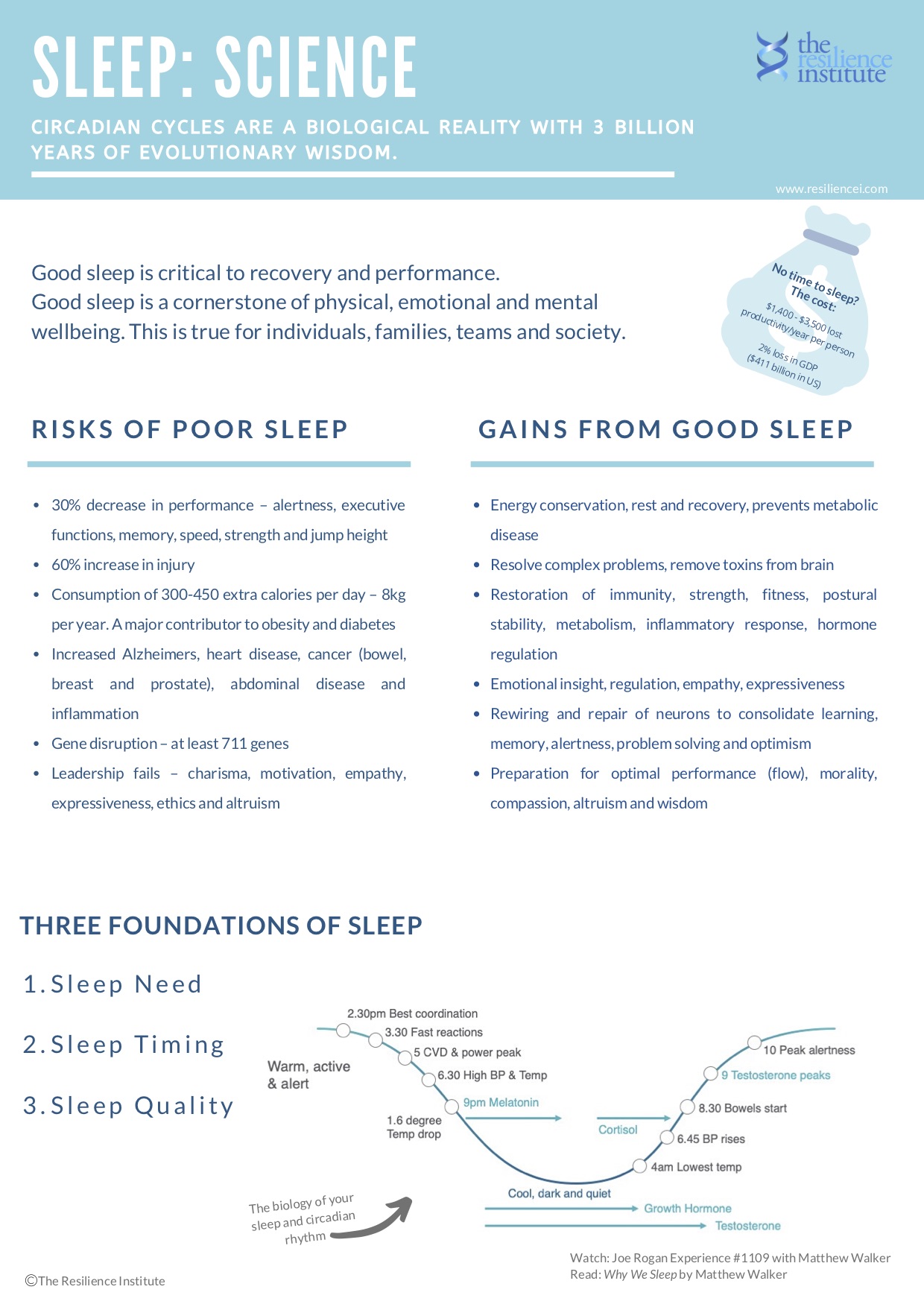
We are waking up to the importance of sleep. In our most recent research report on 23,990 resilience assessments, sleep quality ranked as the #1 most important factor in order to be in the top 10% of resilience scores. There is wide acknowledgement that human sleep is disrupted. The consequences are chilling. They undermine every aspect of a good life.
Adults get about an hour a night less than needed. Teenagers get almost two hours less than they require. We go to bed too late and are overstimulated. We sleep in to recover. We live perpetually jet-lagged. Our timing and quality of sleep are disrupted from natural rhythms.
Consequences include weight gain, diabetes, inflammation, heart disease, cancer, mental illness, dementia, and attention disorders. Not to mention crankiness. Along with alcohol, fatigue is a major cause of road accidents, safety violations, and conflict. Sleep causes a loss of productivity estimated at 2-4% of GDP. Walker quotes studies showing costs to businesses of $1,400 USD per person per year as a consequence of sleep disruption. If you don’t secure your sleep, your productivity is punished.
On the positive side, sleep is the ultimate performance and anti-ageing treatment. Get a good night’s sleep, and everything works better. You are a better version of yourself. You can jump higher, run faster, connect better, think smarter, and experience more joy.
Food and water often have been in short supply throughout our evolution. Hunger and thirst became powerful drives. Long, dark, cool nights and the danger of moving about in the dark meant that time for sleep was abundant through evolution. Compared with hunger and thirst, sleep is a weak drive.
When your sleep rhythms are broken, every rhythm of your body, emotion, and mind is disrupted.
There are three elements to lock in your sleep rhythm. Sleep timing, sleep need, and sleep quality. There is no prescription that will work for everyone. For genetic, environmental, work, and family reasons, you will have to experiment. Once you find what works for you, lock it into a non-negotiable routine.
Table of Contents
Why is Sleep Timing Important?
Sleep timing is the best time to fall asleep and wake up each day. The circadian rhythm establishes the period during which sleep is most effective. When you sleep during the right hours for your personal clock, the quality of your sleep is optimised.
In humans, the circadian clock ranges from 24 hours to 25 hours. Sleep lags behind the 24-hour day-night cycle. There are morning people and night people: larks and owls. A lark tends to have a short clock, thus gets tired early in the evening and is ready to get up early in the morning. The owl, with a longer circadian clock, gets tired later and prefers to sleep in through sunrise.
There is a dynamic relationship between the day-night rhythm and the circadian clock. The primary rhythm is set by pre-sunrise blue light. Blue light reboots the active and alert period of your circadian rhythm through the supra-chiasmatic nucleus behind the eyes.
The best way to stabilise your clock to the day-night rhythm is to get 20 minutes of pre-sunrise blue light. This becomes the foundational rhythm for all other biological rhythms. Physical activity, light, coffee or tea, social activity, refined carbohydrates, and mental habits can also adjust your circadian clock, for better or for worse.
Blue light in the evening will wake you up right when you need to prepare to sleep. We come home to blue LED lighting, TV screens, laptops, and mobile devices. In addition, we socialise, drink, and eat late. Your clock gets pushed toward later sleep onset.
Sleep Phase Delay is a common sleep disorder that pushes us to sleep too late. We are perpetually jet-lagged and pressed into behaving more like an owl. There are established physical and mental health risks for the owl pattern. Recent studies show that there may be benefits to behaving more like a lark. This is certainly true for a lark and looks hopeful for the owl.
Beware of the weekend sleep-in. Roughly 30% of our clients sleep in later through the weekend to catch up on sleep. This is exaggerated in males under 30. After a busy and sleep-deprived week, sleeping into the day allows your circadian clock to “free-run” a couple of hours into the next day. The quality of this “extra” sleep is poor. It leaves you jetlagged through the next week.
The single most effective action to start is to wake up with or before dawn. Ideally, be outside in dawn blue light. This is especially true on weekends. The best blue light is just before sunrise.
Tracey, a participant on a course some years back, argued vehemently against losing the pleasure of a weekend sleep-in. Six months later, she grabbed my shoulder on a flight. She said: “When you explained the importance of wake-up times, I hated you. However, my husband and I have followed your plan. Our energy and our weekends have improved dramatically. Thank you”.
Next, you must take care of the cool-down period. If you rise early and press into the night with blue-light stimulation, you will sleep-deprived. Sadly, many ask me what they can do if they cannot stare at and fidget on a screen.
Our needs are different. I suggest that for 90 minutes before sleep, you read a book, play a game (cards, jigsaws, board games), meditate, write (in a journal or notepad, not via a screen), talk, take a walk, stretch, take a bath, or make time for intimacy.
It is essential to avoid blue light from screens before sleep. Replace LED lighting with soft yellow lighting. Eat dinner early. Limit alcohol.
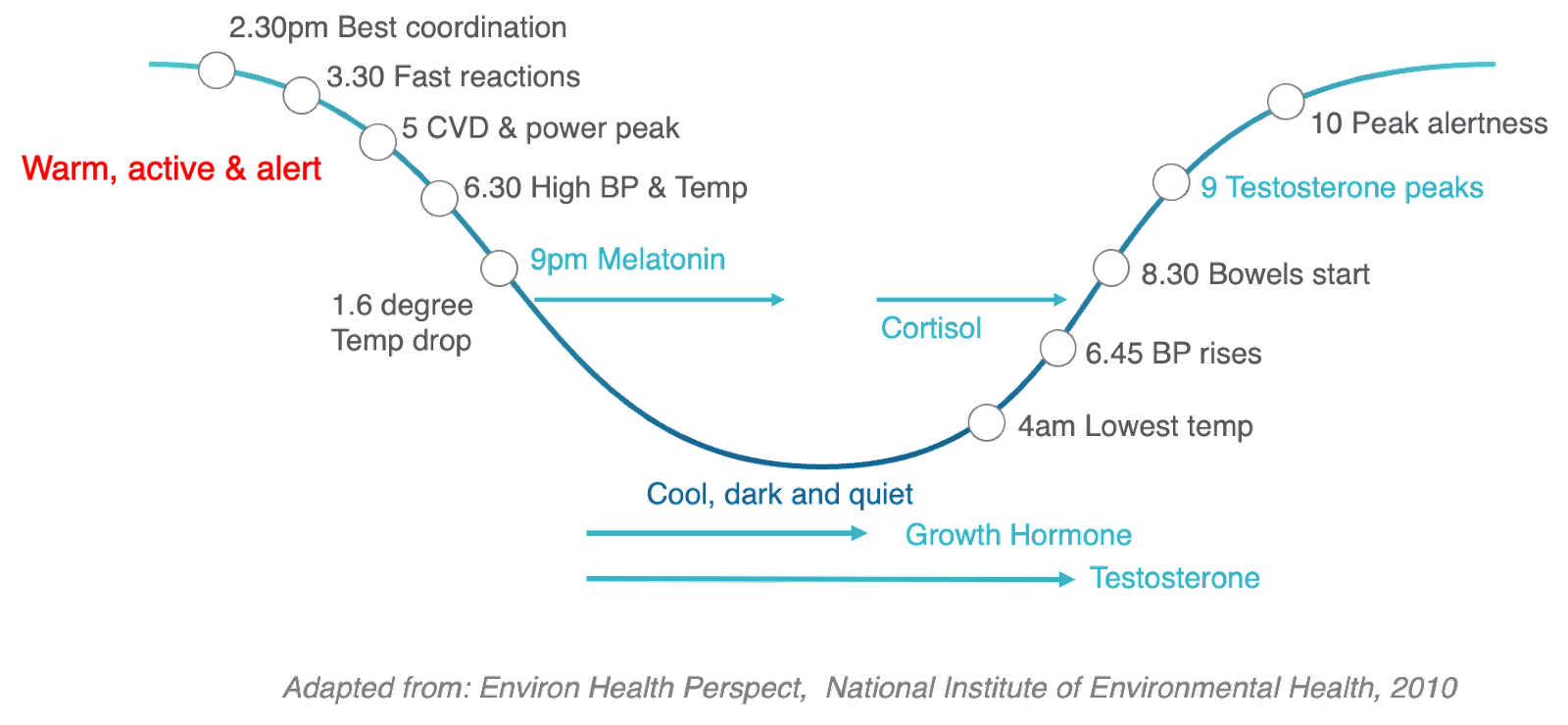
Figure 1: Schematic illustration of the circadian cycle
During this period, you want to shift heat from your core to your periphery. The body releases melatonin in the evening to help cool your core temperature slightly. When exposed to blue light, melatonin is compromised. An easy walk outside or a cool bedroom will help. Aim for 18 degrees Celsius (about 65 degrees Fahrenheit) or cooler if possible. Intense exercise in the four hours before sleep is not recommended as it increases your core temperature. A cold shower or ice bath is helpful to some.
The final key is to apply your Tactical Calm techniques as you relax into sleep. Lie relaxed and flat on your back. Soften your face and chest. Breathe slowly, with your attention resting peacefully on the rise and fall of your belly.
Sleep Quantity Varies Per Person
Sleep need is widely agreed to be somewhere between six and a half and eight hours. It is based on the S-phase, the requirement for the body to sleep for a period of each day. If we sleep too little or too much, the prospect of a good life declines fast. Every species has its own sleep need. We need more than most mammals our size. Our overdeveloped brain demands it.
Experiment and study your own requirement. The natural way is to go camping, live by natural light for three days and see what happens. Many people now use sleep trackers. Buy or borrow one and watch your sleep for a fortnight.
When you review the data on a sleep tracker, you will notice that your body keeps hunting for a consistent sleep period. Pay attention to how you feel when you get it and when you miss or exceed it. In my case, the magic number is seven hours and twenty-two minutes. When I get it right, I feel refreshed. Too little or too much, and I feel sleepy or lethargic.
The Science Behind Sleep Quality
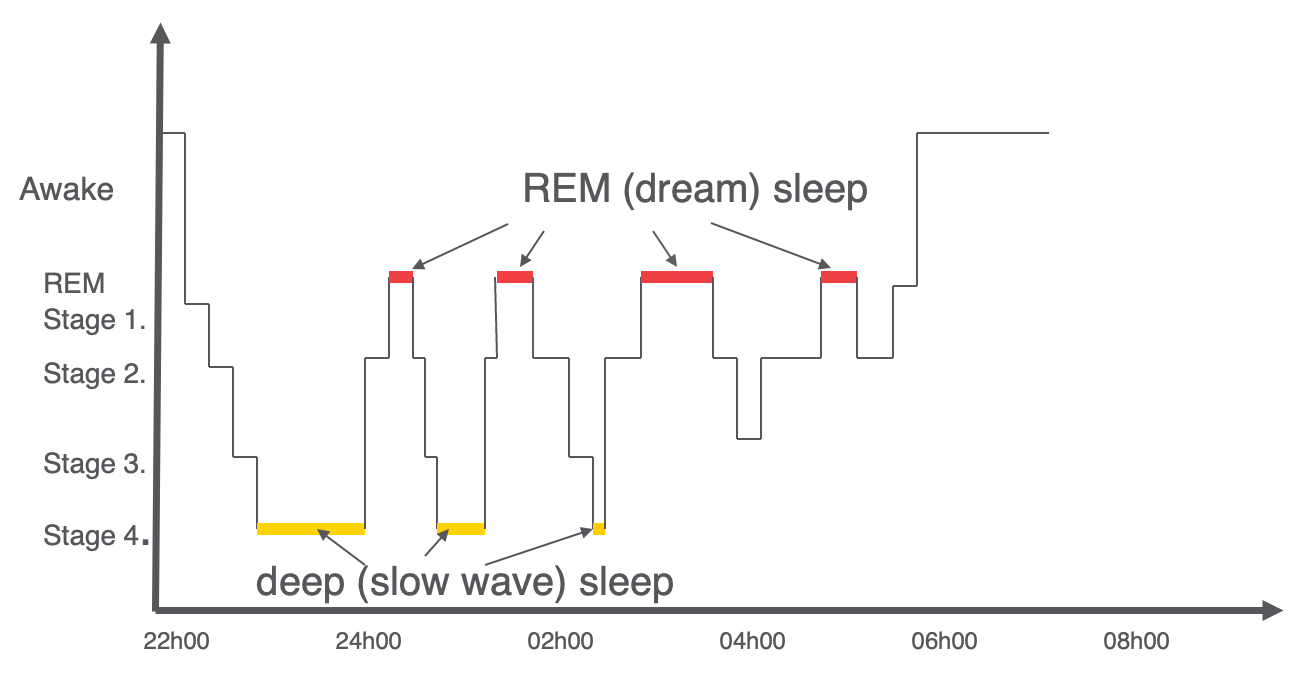
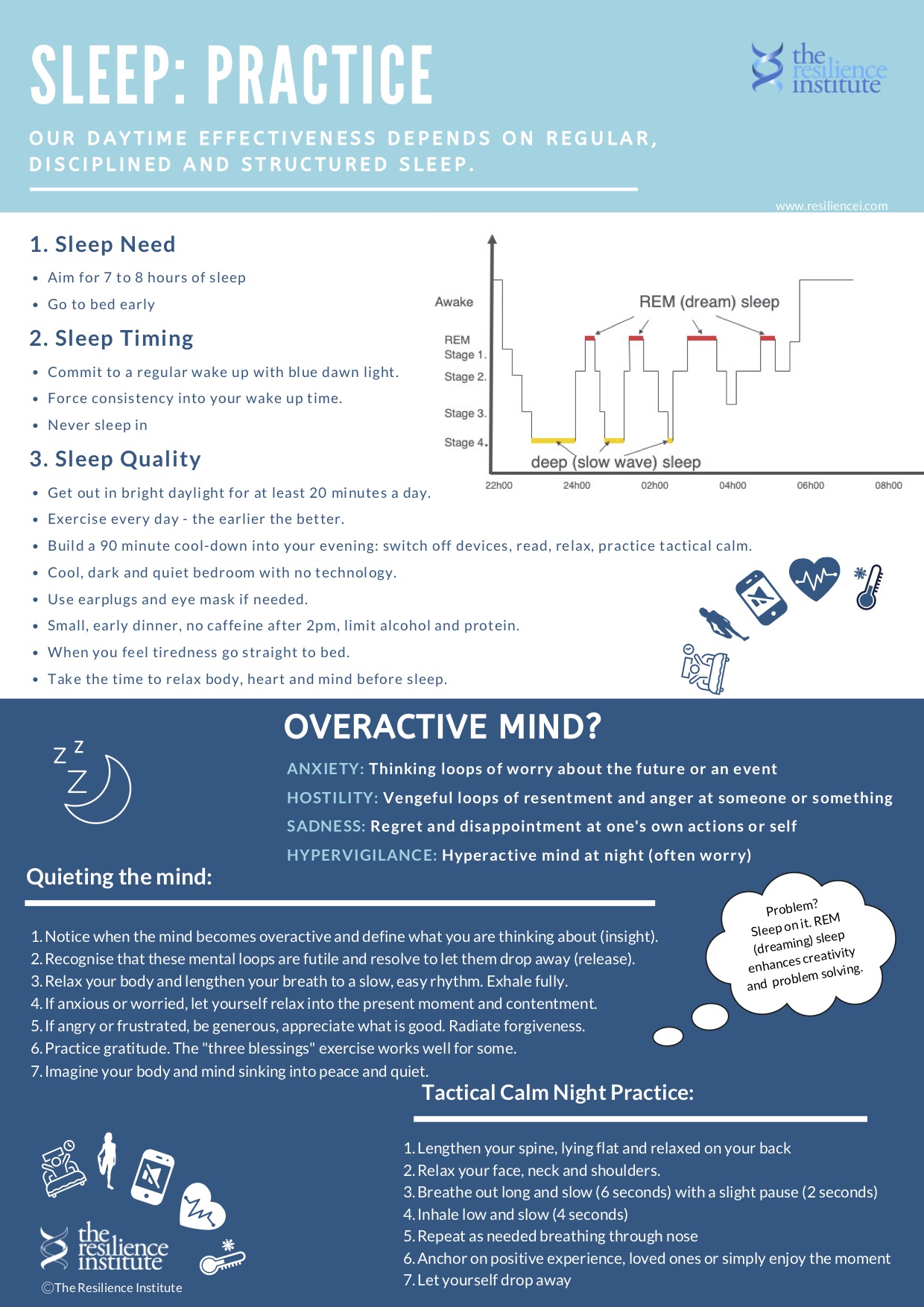
Once you have established the right timing and protected your sleep need, the next challenge is to get your ultradian rhythm working. Think of this as your sleep-depth rhythm. The ultradian rhythm is a 90-minute cycle that allows for roughly two cycles of deep sleep followed by two or three cycles of dream sleep. When you get this right, the rejuvenation effects of sleep are optimised.
Simple trackers will give you an immediate, rough indication of your deep, light, and dream sleep. For an adult, approximately 25% of sleep is in deep (slow-wave) sleep, 25% in dream or rapid eye movement (REM) sleep, and 50% in light sleep. Your teenager and child need more deep sleep as well as more sleep.
In the cycles of deep sleep that follow falling asleep, the brain and body are both quiet. Core body temperature drops. This is the time for the repair and rejuvenation of cells. Growth hormone and testosterone production activate. The cardiovascular system slows right down. Immunity improves.
In light sleep, the body is more active and in transition.
During the dream cycles through the early morning hours, the brain is active while the body is paralysed. If not, we might act out our dreams and sleepwalk. Dreaming sleep facilitates memory, learning, creativity, emotional intelligence, and recovery from traumatic experiences.
Figure 2: Schematic illustration of the sleep cycles and ultradian rhythm
Deep sleep is prioritised if you are deprived of sleep. The best deep sleep comes in the 10 p.m. to 2 a.m. period. As we get older, deep sleep is less effective. Deep sleep is an effective longevity tactic.
Late nights compromise your dream sleep cycles. To reduce mental illness and anxiety in young people, an obvious first step is to help them get to sleep earlier so that they complete their dream sleep. Quality sleep will reduce the suffering caused by attention disorders, anxiety, and depression. As parents, we have two key responsibilities to our children. First, get devices out of the bedrooms. Second, maintain a regular, blue-light-infused wake-up time.
There will be times when healthy sleep is disrupted. Accept this calmly and make it up quickly. The best solution, if you need to repay sleep debt, is to go to bed the next night an hour or so early. Eat early or eat less at night. Remove all devices, cool the room, and read a book. You may like to test a light surgical tape over the lips to prevent snoring and encourage nasal breathing.
Why You Should Stop Thinking in Bed
In my experience, about a third with sleep difficulty wreck sleep with unhelpful thinking. When you secure a good night’s sleep, there is no conscious thought. It is easy to let a storm of thoughts into your bed. Worry (repetitive thoughts about the future) will generate anxiety and destroy sleep. Rumination (repetitive thoughts about the past) will generate sadness or anger and destroy sleep.
Ban thinking from the bedroom. If thoughts arise, refocus on slow diaphragmatic breathing. Watch the rise and fall of your belly. Feel your body relax and dissolve on the exhalation. With a few weeks of practice, you will be amazed how your mind stops bothering you. Make it a habit and stay committed. Sleep can be very peaceful.
Finally, a short power nap of ninety seconds to fifteen minutes is another effective way to catch up on sleep. Ideally, the best time is just after lunch. Find a private, quiet, cool, and dark place. Set the alarm. Use your breathing to drop off more quickly. If sleep does not come, simply enjoy the rest.
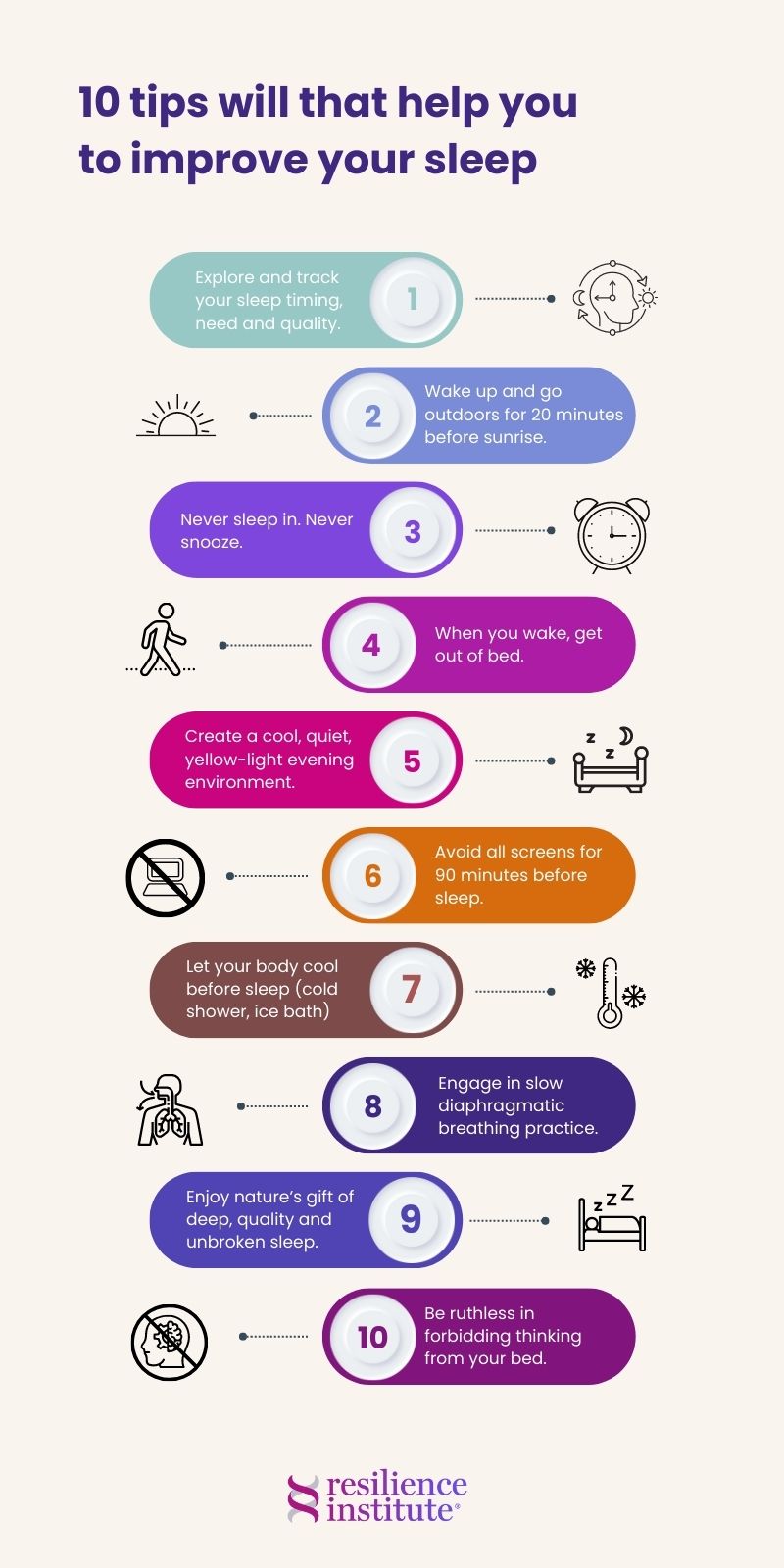
In summary, these 10 tips will help you to improve your sleep:
Explore and track your sleep timing, need and quality.
Wake up and go outdoors for 20 minutes before sunrise.
Never sleep in. Never snooze.
When you wake, get out of bed.
Create a cool, quiet, yellow-light evening environment.
Avoid all screens for 90 minutes before sleep.
Let your body cool before sleep (maybe a cold shower or ice bath?)
Engage in slow diaphragmatic breathing practice.
Enjoy nature’s gift of deep, quality and unbroken sleep.
Be ruthless in forbidding thinking from your bed.
Sources:
Walker, Matthew, Why We Sleep, Penguin, 2107. A very popular and helpful overview of sleep science.
Focus, mood, energy, metabolism, gut health, recovery, immune function, hormone regulation, memory retention, waste removal, problem solving…
Sleep is absolutely necessary for all of these critical functions. Without good sleep, you are compromised. See below for simple steps to improve your sleep.
Many people think resilience simply means enduring difficult times. In reality it is far more powerful.
Most organisations try to solve complex workplace challenges with isolated solutions. Stress programmes, productivity workshops, leadership courses and wellbeing initiatives often run separately. The result is fragmented effort and limited impact, unlike the resilience training.
Resilience offers a more integrated approach, bringing business impact.
Table of Contents
An Integral Approach to Resilience
Resilience connects the capabilities that support both wellbeing and performance. Instead of addressing problems in isolation, it strengthens the physical, emotional and cognitive skills people need to perform under pressure.
When these capabilities work together they create a strong foundation that protects people from distress and supports sustained productivity.
For organisations this integrated approach makes practical sense. Modern workplaces move fast and complexity is high. Multiple disconnected initiatives create cost, confusion and compliance fatigue.
A resilience framework simplifies this landscape. It aligns wellbeing, leadership and performance into one coherent system that strengthens people and culture at the same time.
The result is higher impact from every investment in people development.
Return on Resilience
Resilience training improves both human wellbeing and organisational performance. When people learn to regulate stress, protect focus and recover energy, the benefits spread across the entire organisation.
This approach is known as performance with care. It supports high performance while protecting the long term health of employees.
Research and programme outcomes show measurable improvements across several critical factors.
Mental Distress
For every dollar invested in mental health interventions, organisations see an estimated four dollar return. Resilience training has been shown to significantly reduce symptoms of stress and distress.
Our results show a 30 percent reduction in mental distress.
Flow
People achieve 5 times more productivity when operating in a state of flow (McKinsey, 2013).
Our programmes show a 33 percent improvement in flow states.
Focus
Improving attention and concentration increases workplace productivity and decision quality. 20% increase in focus could increase productivity by 10% in the workplace (Davidson, Goleman, 2017).
Our results show a 21 percent improvement in focus.
Well-being
Investment in employee wellbeing consistently produces strong financial returns. The ROI of well-being in the workplace is $3 for every $1 spent (Forbes, 2018).
Our programmes deliver a 47 percent improvement in overall wellbeing.
Overload
Where overload reduces productivity in the workplace by 50% (Bank of England, 2017), resilience delivers a significant improvement, and shortens the time it takes to enter a state of flow (deep focus) after a break.
Our results show a 26 percent reduction in overload.
Hostility & Conflict
Many workplace conflicts arise from unmanaged stress and poor emotional regulation. Where anger and failure of empathy sits behind most conflict and suffering in our world (J Attali, 2018).
Our programmes show a 22 percent reduction in hostility and conflict behaviours.
Anxiety
Anxiety affects millions of working adults and directly impacts performance. Anxiety affects 18% of adults (ADDA, 2017).
Resilience training leads to a 32 percent reduction in anxiety levels.
Sleep
Poor sleep reduces productivity and costs organisations significant economic loss each year. Poor sleep compromises productivity at the cost of $1,400 per person each year (Harvard, 2017).
Our results show a 25 percent improvement in sleep quality.
Emotional Intelligence
Leaders with strong emotional intelligence create more effective teams and stronger relationships. Adds $21,600 of value per executive. (IHHP, 2017).
Resilience training improves emotional intelligence by 25 percent.
Fitness
A healthier workforce improves productivity and reduces long term healthcare costs. The National Institute of Health projects that a fit workforce would save the economy US $51.5 billion and increase productivity gains by US $69 billion.
Our programmes deliver a 28 percent improvement in fitness related behaviours.
Relaxation & Recovery
Effective relaxation allows the nervous system to recover from stress and maintain clarity under pressure. The ROI of relaxation in the workplace is equivalent to one third of an executive salary.
Participants show a 26 percent improvement in relaxation practices.
Safety and Workplace accidents
Workplace accidents remain a major global challenge, costing trillions of dollars each year and affecting millions of workers. Cost $2.99 trillion (3.94% of GDP) and kill 2.4 million workers per year (Safety & Health, 2017).
Resilience training improves alertness, focus and decision making. These capabilities contribute to safer workplaces and better operational awareness.
Reducing Presenteeism
Presenteeism occurs when employees attend work but perform below their potential due to stress, fatigue or illness. Presenteeism costs the US economy $225 billion, the UK economy £15.1 billion and the Australian economy $6.1 billion per year (PwC workplace report 2014, Inc 2016, Centre for Mental Health 2011).
This hidden cost affects productivity across many organisations.
Resilient workplaces reduce presenteeism because employees are more engaged, motivated and able to communicate openly when challenges arise.
Reducing Absenteeism
Absenteeism costs the US economy $1,600 per person, the UK economy £8.4 billion and Australian economy $4.7 billion per year respectively (PwC workplace report 2014, Inc. 2016, Centre for Mental Health 2011).
Resilient workplaces experience lower levels of absenteeism on the whole, therefore helping to reduce this cost.
Leaders who invest in their own resilience are more focused, efficient, productive and less likely to experience distress and worry. They are confident and skilful in adversity.
A leader who models resilience paves the way for others in the organisation to follow suit. Creating a resilient organisation of safe, resilient and productive people takes focus and commitment from leaders.
The Leadership Multiplier
Resilience begins with leadership.
Leaders who invest in their own resilience demonstrate greater focus, emotional stability and decision clarity. They remain calm in adversity and guide others through uncertainty with confidence.
When leaders model resilience the behaviour spreads through the organisation. Teams learn to manage pressure, communicate openly and support one another during challenging periods.
Building a resilient organisation requires commitment from leadership. When leaders champion resilience the result is a workforce that is safer, healthier and more productive.