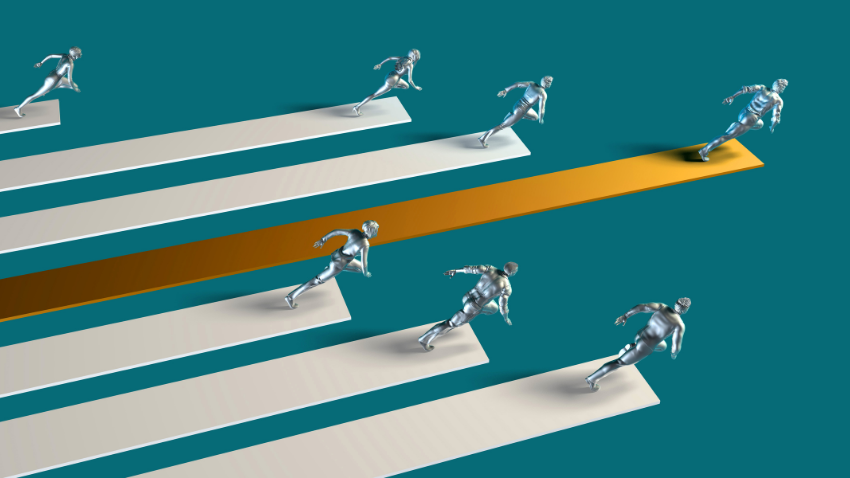
Psychologists Robert Yerkes and John Dodson identified it in 1908, and it has held up for over a century. It looks like an inverted U. On the left side, low pressure produces low output. As pressure increases, performance rises.
Before you can act on this, you need to see the number clearly. According to Microsoft’s 2025 Work Trend Index — one of the largest annual studies of workplace productivity, covering tens of thousands of workers across
A leadership team that cannot make decisions together. A cross-functional group where every project ends in the same tension. A restructure that completed six months ago, but whose reverb still runs through every meeting.
As International Women’s Day approaches, several developments this first quarter of the year point to a reality many organisations are only beginning to recognise.
The pressures women leaders face today are becoming more complex and more visible.
In Singapore, the government recently introduced subsidies for genetic testing that identifies hereditary breast and ovarian cancer risks. The move reflects a growing understanding that women often delay health screening while balancing work, caregiving and leadership responsibilities.
Conditions such as endometriosis, menopause and hormonal health are often under-diagnosed or poorly understood. Nearly 7 in 10 working women in Singapore say social stigma prevents them from discussing menopause at work, and over 40% feel completely uninformed about it
At the same time, new research on the women’s health gap highlights a striking statistic. Women in Singapore live to about 85 years on average, yet spend around 12% more of their lives in poor health compared with men. Much of this gap occurs during the working years between 20 and 50, when many women are building careers and stepping into leadership roles.
These health realities rarely surface in boardroom conversations, yet they shape daily performance.
Globally, the picture is evolving in other ways.
The United Nations reports that women are increasingly leading initiatives in climate resilience, conflict prevention and peacebuilding. In many communities, women are the first to organise solutions when climate disruptions threaten food security or livelihoods.
But leadership in these areas often comes with intense pressure. These women are making decisions that affect entire communities while navigating resource constraints and political complexity.
Closer to home, Singapore’s cultural institutions are also amplifying women’s voices. The National Gallery’s International Women’s Day programmes this year explore themes of identity, creativity and leadership through art, dialogue and community events.
Across sectors, a common thread is emerging.
Women are stepping into more visible leadership roles, yet many are doing so while carrying pressures that organisations still underestimate.
Health responsibilities. Caregiving roles. Expectations to perform consistently at senior levels.
Recently, one executive shared that during a regional leadership call she suddenly lost mobility in her arm due to a perimenopause-related condition. She continued working through months of rehabilitation while managing a high-stakes leadership role.
Stories like this are more common than many leaders realise.
This is where resilience becomes practical.
Resilience is not about pushing through pressure. It is the ability to regulate stress, maintain clarity and recover quickly during demanding periods of work and life.
Organisations that recognise these realities are beginning to respond differently. They are building cultures where leaders can speak openly about challenges, access support earlier and maintain sustainable performance.
As we mark International Women’s Day this year, the most meaningful progress may not come from symbolic gestures.
It may come from understanding the invisible pressures many women carry and strengthening the resilience that allows them to lead with clarity, confidence and care.
Because when leaders are supported to sustain their health and wellbeing, organisations benefit from stronger decisions, better collaboration and more resilient teams.