
Women Illustration
Overview of the personalised Resilience Assessment Report

See how we measure Resilience and the detailed insights into individual strengths and growth areas.

Download Report

Win the Morning, Win the Day: The Science Behind a Resilient Morning Routine

  • The first 30 to 45 minutes after waking triggers a real, measurable hormone surge, the cortisol awakening response, which prepares your body for the day ahead.
  • Hitting snooze isn’t the sleep sin it’s made out to be. A 2024 study found brief snoozing had no meaningful effect on mood, alertness, or cortisol for most people, though older research found it can prolong grogginess in others.
  • What matters more than any single ritual is structure. A consistent sequence, however short, gives your mind fewer decisions to make while it’s least equipped to make them.

The alarm goes off. For a moment, nothing makes sense. The mind is foggy, still tangled in whatever it was doing before waking. A hand reaches out and hits snooze, half out of habit, half out of hope that nine more minutes will fix something sleep alone couldn’t. It rarely does. Nine minutes later, the alarm returns, and so does the same fog.

Almost everyone knows this exact sequence. What’s less well known is what’s actually happening in the body during it, and why the structure of the first hour matters far more than the willpower required to get out of bed.

What Actually Happens When You Wake Up

In the first 30 to 45 minutes after waking, cortisol levels rise sharply, a well-documented phenomenon researchers call the cortisol awakening response. A 2025 review in Endocrine Reviews describes it as a distinct hormonal event layered on top of the body’s normal 24-hour rhythm, believed to help prepare the body and brain for the demands of the day ahead. It isn’t a stress response in the negative sense. It’s closer to an ignition sequence.

That grogginess in the first few minutes has a name too: sleep inertia, the transition period between sleep and full wakefulness, marked by temporarily impaired thinking and reaction time. Most people try to solve it with the snooze button, and for years, conventional wisdom treated that as a mistake. The research is more nuanced. A 2024 study out of Stockholm University and Monash University tracked habitual snoozers in a sleep lab and found that a brief snooze period caused no clear negative effects on cortisol, mood, or overnight sleep quality, and in some cases improved cognitive performance immediately after rising compared to an abrupt, jarring wake-up. Earlier research out of Japan had found the opposite: snooze alarms prolonged the drowsy, low-vigilance state compared to a single alarm.

Both are probably right, for different people. What the evidence agrees on is that abrupt, high-stress wake-ups are worse than a gentler transition, however that transition happens. The snooze button was never really the problem. What happens in the minutes after matters far more.

Where “Win the Morning” Actually Comes From

The idea of a structured morning ritual isn’t new, but its modern popularity owes a great deal to Hal Elrod’s book The Miracle Morning, which has sold more than two million copies and been translated into over 35 languages since it was first published. Elrod’s method, known by the acronym S.A.V.E.R.S., breaks the ritual into six elements: Silence, Affirmations, Visualization, Exercise, Reading, and Scribing (journaling). The specific combination matters less than the underlying idea: a short, repeatable sequence practised before the demands of the day take over.

The appeal isn’t mystical. It’s structural. A morning ritual, whatever form it takes, front-loads a handful of high-value habits into the part of the day when they’re most likely to actually happen, before meetings, notifications, and other people’s priorities start competing for the same window.

Why Morning Structure Works Better Than Morning Willpower

Psychologist Roy Baumeister’s research on self-regulation found that willpower behaves like a depletable resource. Every decision, every act of self-control, draws from the same limited pool across the day. That pool is at its fullest in the morning, before meetings, minor conflicts, and constant small decisions have worn it down. This is precisely why a morning routine tends to succeed where an evening one struggles: it asks for effort at the exact moment the body has the most to give.

There’s a second mechanism working in parallel. Early exposure to natural light helps anchor the body’s circadian rhythm, the internal clock that governs alertness, hormone release, and eventually, sleep quality that same night. A short period outdoors or near a bright window in the first hour after waking reinforces that rhythm far more effectively than the same light exposure later in the day.

Put together, the case for a morning routine isn’t about discipline or virtue. It’s about timing. The same five actions attempted at 6am and at 9pm draw on completely different biological resources, and the morning version has the advantage almost every time.

Building a Version That Actually Fits Your Life

There’s no single correct morning routine, and chasing someone else’s exactly is usually where these rituals fail. What the research points to instead is a small set of ingredients worth including in some form, adapted to fit an actual life rather than an idealised one.

1

Decide the Night Before, Not the Morning Of

Willpower is highest in the morning, so don’t spend any of it deciding what your routine even is. Set out clothes, decide the sequence, and remove every small decision you can the night before.

2

Get Light Before You Get a Screen

Natural light exposure in the first hour helps anchor your circadian rhythm for the whole day. A few minutes by a window or outside, before checking a phone, does more for your body clock than the same light later on.

3

Move, Even Briefly

It doesn’t need to be a workout. A short stretch, a walk, or a few minutes of movement signals wakefulness to the body faster than sitting still does, and it doesn’t require any special equipment or setting.

4

Sit With Stillness Before the Noise Starts

A few quiet minutes, whether that’s breathing, meditation, or simply sitting without a phone in hand, gives the nervous system a calm baseline before the day’s first demand arrives.

5

Name the Three That Matter Today

Before the inbox opens, write down the three things that would make the day genuinely worthwhile if nothing else got done. It takes under a minute and it changes what the rest of the day organises itself around.

None of this requires an hour, incense, or a specific app. The version that lasts is almost always the smallest one that still gets done, expanded slowly once it’s actually a habit rather than an aspiration.

You don’t win the morning by force. You win it by removing enough friction that showing up barely takes any willpower at all, right when your willpower is at its highest for the day.

The Biology of Executive Presence: Why the Vagus Nerve Matters

Picture this.
You are called on stage unexpectedly.
Your body reacts before your mind does.

With a trained vagus nerve, you feel the surge, steady your breath, soften your voice, and connect with the moment.
With an untrained vagus nerve, panic takes over. Your heart races. Your mind blanks. Your body freezes.

The difference is not confidence.
It is nervous system regulation.


What the Vagus Nerve Is

The vagus nerve is the main communication pathway between your brain and body.
It runs from the brainstem through the neck into the heart, lungs, and gut.
It regulates heart rate, breathing, digestion, inflammation, voice, facial expression, and social connection.

It determines how quickly you recover from stress.
It shapes how safe or threatened your body feels.
It underpins resilience.


Why It Matters

When the vagus nerve is strong, the body returns to calm faster after pressure.
Thinking clears. Emotions stabilise. Connection becomes possible.
When it is weak, stress lingers. Anxiety rises. Recovery slows.

This is not mindset.
This is biology.


Polyvagal Theory in Simple Terms

Introduced by Stephen Porges, Polyvagal Theory explains how the nervous system responds to threat and safety.

We have three primary responses.

Freeze
The body shuts down under overwhelming threat. Energy drops. Thinking fades. This is protective, not failure.

Fight
The body mobilises through anger. Blood pressure rises. Focus narrows. Damage follows if sustained.

Flight
The body escapes through fear. Anxiety persists. Rest becomes difficult. This is the most common modern stress response.

These reactions are automatic.
They are not character flaws.


The Trainable Pathway

The ventral vagus nerve can be strengthened through practice.
This changes how quickly the body exits stress and re-enters safety and how we can regain presence during critical situations, presentations of tough conversations.

Firstly, we learn how to fire the ventral fibres. These relax and rejuvenate us restoring peace after freeze, fight and flight.

Second, with repeated practice such as with rehearsal practices, breath training or meditation, the vagal nerve becomes myelinated. A fatty sheath enfolds the ventral fibres accelerating their action on the body – specifically heart, lungs, inflammation and gut.

Once we calm and control the primal reactions, now the vagus connections to the face, ears and voice become active. Heart rate variability increases. We actively seek connection. Myelination of the vagus is more advanced.

Finally, feeling safe and connected we have a strong platform for play, curiosity and performance. Now we have high functioning vagus nerve which is well myelinated and we have rehearsed and practiced tricky situations so much we actually look forward to challenges.

In short, training follows three stages.

Calm and Control
Breathing slows. Heart rate variability improves. Inflammation reduces. Thinking becomes clearer.

Control and Connect
Eye contact softens. Voice steadies. Empathy increases. Trust forms.

Connect and Flow
Play, creativity, and focus emerge. Time passes quickly. Performance feels effortless.

This is the biological foundation of flow, presence, and leadership under pressure.


How strengthening the Vagus Nerve Improves leadership presence?

Leadership presence isn’t just about words or communication tools — it’s rooted in what’s happening inside: leaders with higher vagal tone are calmer, think more clearly under pressure, and regulate their emotions more effectively.

These outcomes are well supported by neuroscience and psychophysiology research.


Practical Ways to Build Vagal Tone

  • Slow extended exhalations
  • Diaphragmatic breathing for 8 minutes daily
  • Gentle cold exposure (splash cold water on your face, swim, few seconds of cold shower)
  • Whole body, foot or neck massage
  • Safe face to face connection
  • Singing or humming
  • Laughter and play (structured and unstructured)

Small practices done regularly change the nervous system over time.


The Real Insight

In short, leadership presence starts from the body as much as the mind: cultivating vagal tone—through simple practices like slow diaphragmatic breathing, brief humming, posture resets, cold exposure, and regular movement—gives leaders faster recovery from stress, clearer thinking under pressure, and steadier emotional control. These small, repeatable habits create a reliable internal baseline that shows up as calm voice, steady gaze, and confident decision-making.

Quick Tip:  Make a 60‑second pre‑meeting ritual and a few daily practices part of your routine, and you’ll build the physiological foundation for consistently stronger presence.


To Learn More:

  • Stephen Porges, Polyvagal Theory, 2012
  • Stephen Porges, The Pocketguide to Polyvagal Theory, 2018
  • Elizabeth Williams, Daily Vagus Nerve Exercise, 2019
  • Robert Bright, The Polyvagal Theory, 2019

Self-Compassion and Self-Love: A Science-Backed Guide

  • Self-compassion isn’t self-indulgence. A 2026 study of healthcare professionals found it was the single strongest factor protecting against burnout and stress, ahead of every other resilience factor measured.
  • Negative self-talk is self-reinforcing once it starts. Research on rumination shows each repetition tends to spike stress and deepen the spiral, which is why interrupting it early works better than trying to eliminate it entirely.
  • Self-compassion is trainable. Randomized controlled trials consistently show measurable drops in depression, anxiety, and stress within six to eight weeks of consistent practice.

You make a mistake in a meeting. For the rest of the afternoon, a voice in your head keeps replaying it, sharper and less forgiving each time. Most people know this voice well. What fewer people know is that the way you respond to that voice, not whether you can silence it, is one of the more reliable predictors of how well you handle pressure over the long run.

That’s the terrain self-love and self-compassion research actually covers. Not affirmations in a mirror, but a specific, trainable relationship with yourself that shows up in your resilience, your sleep, and your ability to recover from setbacks.

Is Self-Love Selfish?

It’s a fair worry. Self-love can sound like a conceited or self-absorbed pursuit if you picture it as building a grandiose sense of self. In practice, it’s closer to the opposite: a state of mind built through specific mindsets, actions, and habits, most of which involve honesty rather than flattery.

Before you can genuinely love and accept yourself, you have to know yourself, which is harder than it sounds. Self-knowledge centres on your true identity: the beliefs, traits, and qualities that make you who you are. But a large part of who you are is shaped by other people, whether you notice it or not.

You don’t exist in a vacuum. Humans are social creatures, and identity forms through a loop: how you see yourself, how others see you, and how you act based on those perceptions. Notice how differently you might behave with close friends on a Friday night versus in a Monday morning meeting with your boss. Same person, genuinely different presentation.

The Science of Self-Compassion and Identity

UCLA neuroscientist Matthew Lieberman ran a functional MRI study that found people consistently use different regions of the prefrontal cortex when thinking about themselves compared to when thinking about others. Identity, in other words, isn’t fixed. It’s dynamic, and it shifts depending on whether your attention is turned inward or outward.

When you engage with others, a different set of social rules governs the exchange, which is part of why people so often look outward for affirmation instead of generating it internally. Wharton professor Sigal Barsade’s research on emotional contagion, published in Harvard Business Review, demonstrated how the emotions of people around you measurably influence your own mood and behaviour. If the people near you are calm and warm, that tends to rub off. The same is true of negative emotional states.

#1
Self-compassion ranked as the single most important protective factor against burnout and stress in a 2026 network analysis of 212 healthcare professionals, ahead of every other resilience factor measured. Scientific Reports, 2026.

Putting your entire sense of well-being into the hands of other people’s opinions is a fragile strategy. A 2026 repeated-measures study published in PLOS Mental Health tracked participants over time and confirmed that self-compassion functions as a genuine mechanism for improving mental health, not just a symptom of already being well, by strengthening emotion regulation and resilience directly.

What Is Self-Love, Really?

A useful way to define self-love is to look at three things: how you act towards yourself, how you feel about yourself, and how you think about yourself. People who practice it well don’t just feel and think kindly about themselves. They also take actions that actively support their own growth and health.

Research consistently finds that people who genuinely love themselves hold an overall positive view of themselves, without it being unconditional. There will still be setbacks and hard days. The difference is where attention lands afterward.

Take the meeting mistake from the opening. You can still feel upset about it and offer yourself something kinder by the end of the day instead of continuing to replay it. That’s the second key feature of self-love: it isn’t only the absence of negative thoughts. It’s the active work of building a perspective that aligns with your actual goals and wellbeing, alongside them.

Self-love also includes being honest with yourself so you can actually reach your goals, rewarding real progress, setting boundaries and protecting them, placing your own wellbeing near the top of your priorities, and gradually releasing overly critical judgments about perceived flaws. None of that requires abandoning accountability. You can still look honestly in the mirror and hold yourself to your own standards. Self-love is about doing what’s genuinely good for you, not about excusing behaviour that isn’t.

Self-Compassion vs Self-Love: Is There a Difference?

The two terms are often used interchangeably, and for good reason: the overlap is substantial. The American Psychological Association defines self-compassion as not being excessively self-critical about personal failures or inadequacies, a stance that promotes wellbeing. Self-love, by the APA’s definition, is a broader regard for one’s own wellbeing overall.

In practice, self-compassion is closer to the in-the-moment skill: how you treat yourself immediately after a mistake or setback. Self-love is the wider architecture of habits, boundaries, and choices that support you over time. Most people who build one end up building the other, since they reinforce each other directly. If you need a simple distinction to hold onto: self-compassion is largely about forgiving yourself, while self-love is the broader set of habits that protect your wellbeing.

The Benefits, Backed by Recent Research

People who don’t practice self-compassion tend to default to harsh self-criticism, and that pattern carries real costs. Chronic self-criticism and perfectionism are associated with a range of negative health outcomes, including elevated risk for both physical and mental health conditions.

The research on the other side of the ledger has grown substantially in the past two years. A 2025 randomized controlled trial of a six-week self-compassion group counselling programme for young adults found significant reductions in depression, anxiety, and stress compared to a waitlist control group. A 2026 randomized controlled trial in Japan tested a self-compassion and mindfulness smartphone intervention with working adults and found measurable improvements in mental health and work-related outcomes. And the German healthcare worker study cited above found self-compassion was more strongly linked to protection against burnout than any other resilience factor tested, including social support and self-care behaviours on their own.

The mechanism appears to run largely through stress reduction. Self-compassion is consistently associated with better emotion regulation, and lower baseline stress tends to bring better sleep, steadier mood, and reduced anxiety along with it. It also supports the kind of honest self-assessment that makes it easier to notice your own progress and stay motivated toward genuine goals, rather than deflecting every setback with denial or every success with dismissal.

Breaking the Negative Self-Talk Cycle

Loving yourself isn’t always straightforward, largely because modern life rewards a certain amount of self-neglect. You take on extra work hoping it leads to a promotion. You cover for a colleague again, even though you’re already stretched thin and know you’ll lose sleep over it. Eventually, the inner voice turns critical, precisely because you’ve been running on empty and the results are starting to show.

On the surface, this can look like exactly what success requires. But research on burnout and rumination tells a more complicated story. A 2025 workplace study found that negative rumination consistently mediates the relationship between workplace stressors, incivility, and negative outcomes like burnout, reduced job satisfaction, and spillover into life outside work. Spreading yourself thin enough to damage your own sleep and mental health doesn’t sustainably help the people you’re trying to support. Past a certain point, it means you have less capacity to give them.

The trickier trap is negative self-talk itself, since it’s unrealistic to expect anyone to eliminate it completely. Research on rumination, including a 2026 book-length treatment by science journalist Donna Jackson Nakazawa on the neuroscience of rumination, describes how negative self-talk tends to become self-reinforcing once it starts: the thought triggers anxiety, the anxiety fuels more negative self-talk, and the resulting spiral often produces the exact poorer performance the original thought was worried about.

fMRI research on self-talk backs this up at the neural level. A widely cited neuroimaging study found that self-critical and self-respecting self-talk activate distinct brain networks tied to motivation and reward, with measurably different effects on subsequent cognitive performance. The goal isn’t a mind empty of negative thoughts. It’s catching the cycle early and interrupting it with something more accurate and kinder, rather than letting the loop run.

Five Evidence-Based Ways to Practice Self-Love

1

Set a Firm Boundary Between Work and Home

One of the most common places people lack boundaries is exactly here. Instead of checking work email once you’re home, turn off notifications and protect time for something that genuinely restores you, a hobby, a walk, a conversation that has nothing to do with your inbox.

2

Practice Mindfulness, Even Briefly

Mindfulness is a state of awareness centred on the present moment, letting perceptions arise and pass without judgment. You can build it through breathing exercises, short meditation, or a body scan, simply noticing what you’re sensing and feeling without trying to fix it immediately.

3

Interrupt Rumination Early

Since negative self-talk is self-reinforcing, the highest-leverage moment to intervene is at the start of the loop, not after it’s spiralled. Naming what’s happening (“this is rumination, not fact”) is a simple, evidence-backed way to create distance from the thought.

4

Reward Genuine Progress, Not Just Outcomes

Self-love includes honest accountability. Track progress toward goals that actually matter to you, and acknowledge it when it happens, rather than only registering the moments you fall short.

5

Protect Recovery Like Any Other Priority

Self-compassion research consistently ties back to stress reduction and recovery. Treating rest as optional undermines the very capacity you’re trying to build. Protect it the way you’d protect any other commitment that matters.

How Self-Compassion Builds Resilience

Resilience is a learnable capability, not a fixed trait, and it shows up as the ability to adapt to difficulty with flexibility rather than rigidity. People with strong resilience don’t just recover better from setbacks. They tend to feel more engaged, more inspired, and they perform better through sustained focus and flow.

Self-compassion strengthens resilience largely by changing how setbacks get reframed. Imagine making a mistake, at work or in a relationship. The internal dialogue that follows either compounds the damage or starts building resilience, depending almost entirely on its tone.

Everyone makes mistakes. What defines the outcome is the recovery. Avoiding harsh self-talk and offering yourself genuine forgiveness is the foundation. Layering in some active, specific positive self-talk on top of that is what turns the moment into resilience-building rather than just damage control: noticing real progress made, and recognising that a setback can sometimes be exactly what’s needed to move past a plateau.

Reflect on This

  • What does my internal voice actually sound like after a mistake, and would I speak to a colleague that way?
  • Where in my week am I sacrificing rest or boundaries in ways that quietly cost me more than they give?
  • When negative self-talk starts, what’s my current way of interrupting it, if I have one at all?
  • What would change if I treated self-compassion as a skill to train, rather than a trait I either have or don’t?

A little self-compassion goes a long way toward sustaining both wellbeing and resilience. Being kind to yourself, setting real boundaries, and still holding yourself accountable for your own goals aren’t in tension. Together, they’re what makes it possible to keep showing up.

Science-based Tips to Improve Your Sleep

We are waking up to the importance of sleep. In our most recent research report on 23,990 resilience assessments, sleep quality ranked as the #1 most important factor in order to be in the top 10% of resilience scores. There is wide acknowledgement that human sleep is disrupted. The consequences are chilling. They undermine every aspect of a good life.

Adults get about an hour a night less than needed. Teenagers get almost two hours less than they require. We go to bed too late and are overstimulated. We sleep in to recover. We live perpetually jet-lagged. Our timing and quality of sleep are disrupted from natural rhythms.

Consequences include weight gain, diabetes, inflammation, heart disease, cancer, mental illness, dementia, and attention disorders. Not to mention crankiness. Along with alcohol, fatigue is a major cause of road accidents, safety violations, and conflict. Sleep causes a loss of productivity estimated at 2-4% of GDP. Walker quotes studies showing costs to businesses of $1,400 USD per person per year as a consequence of sleep disruption. If you don’t secure your sleep, your productivity is punished.

On the positive side, sleep is the ultimate performance and anti-ageing treatment. Get a good night’s sleep, and everything works better. You are a better version of yourself. You can jump higher, run faster, connect better, think smarter, and experience more joy.

Food and water often have been in short supply throughout our evolution. Hunger and thirst became powerful drives. Long, dark, cool nights and the danger of moving about in the dark meant that time for sleep was abundant through evolution. Compared with hunger and thirst, sleep is a weak drive.

When your sleep rhythms are broken, every rhythm of your body, emotion, and mind is disrupted.

There are three elements to lock in your sleep rhythm. Sleep timing, sleep need, and sleep quality. There is no prescription that will work for everyone. For genetic, environmental, work, and family reasons, you will have to experiment. Once you find what works for you, lock it into a non-negotiable routine.

Why is Sleep Timing Important?

Sleep timing is the best time to fall asleep and wake up each day. The circadian rhythm establishes the period during which sleep is most effective. When you sleep during the right hours for your personal clock, the quality of your sleep is optimised.

In humans, the circadian clock ranges from 24 hours to 25 hours. Sleep lags behind the 24-hour day-night cycle. There are morning people and night people: larks and owls. A lark tends to have a short clock, thus gets tired early in the evening and is ready to get up early in the morning. The owl, with a longer circadian clock, gets tired later and prefers to sleep in through sunrise.

There is a dynamic relationship between the day-night rhythm and the circadian clock. The primary rhythm is set by pre-sunrise blue light. Blue light reboots the active and alert period of your circadian rhythm through the supra-chiasmatic nucleus behind the eyes.

The best way to stabilise your clock to the day-night rhythm is to get 20 minutes of pre-sunrise blue light. This becomes the foundational rhythm for all other biological rhythms. Physical activity, light, coffee or tea, social activity, refined carbohydrates, and mental habits can also adjust your circadian clock, for better or for worse.

Blue light in the evening will wake you up right when you need to prepare to sleep. We come home to blue LED lighting, TV screens, laptops, and mobile devices. In addition, we socialise, drink, and eat late. Your clock gets pushed toward later sleep onset.

Sleep Phase Delay is a common sleep disorder that pushes us to sleep too late. We are perpetually jet-lagged and pressed into behaving more like an owl. There are established physical and mental health risks for the owl pattern. Recent studies show that there may be benefits to behaving more like a lark. This is certainly true for a lark and looks hopeful for the owl.

Beware of the weekend sleep-in. Roughly 30% of our clients sleep in later through the weekend to catch up on sleep. This is exaggerated in males under 30. After a busy and sleep-deprived week, sleeping into the day allows your circadian clock to “free-run” a couple of hours into the next day. The quality of this “extra” sleep is poor. It leaves you jetlagged through the next week.

The single most effective action to start is to wake up with or before dawn. Ideally, be outside in dawn blue light. This is especially true on weekends. The best blue light is just before sunrise.

Tracey, a participant on a course some years back, argued vehemently against losing the pleasure of a weekend sleep-in. Six months later, she grabbed my shoulder on a flight. She said: “When you explained the importance of wake-up times, I hated you. However, my husband and I have followed your plan. Our energy and our weekends have improved dramatically. Thank you”.

Next, you must take care of the cool-down period. If you rise early and press into the night with blue-light stimulation, you will sleep-deprived. Sadly, many ask me what they can do if they cannot stare at and fidget on a screen.

Our needs are different. I suggest that for 90 minutes before sleep, you read a book, play a game (cards, jigsaws, board games), meditate, write (in a journal or notepad, not via a screen), talk, take a walk, stretch, take a bath, or make time for intimacy.

It is essential to avoid blue light from screens before sleep. Replace LED lighting with soft yellow lighting. Eat dinner early. Limit alcohol.

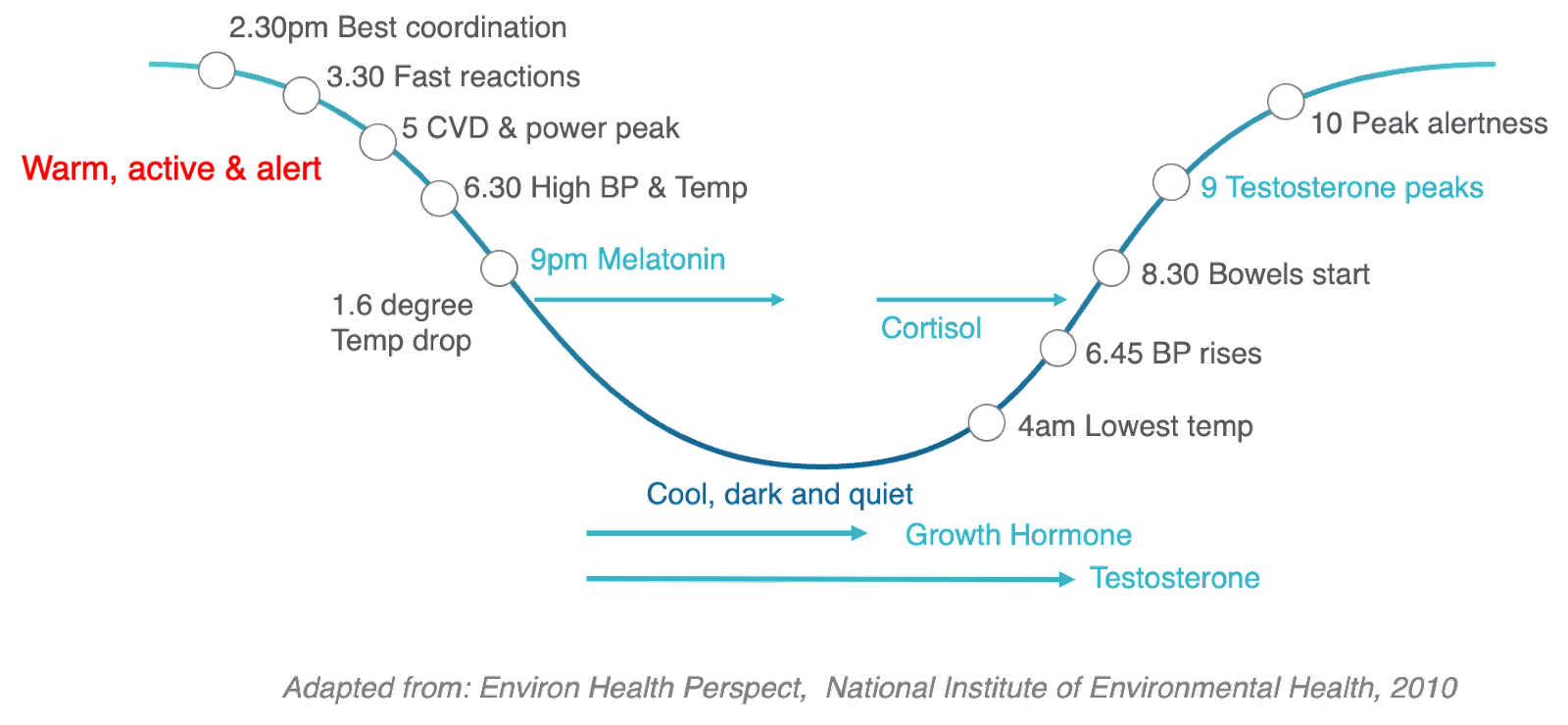
DiagramDescription automatically generated

Figure 1: Schematic illustration of the circadian cycle

During this period, you want to shift heat from your core to your periphery. The body releases melatonin in the evening to help cool your core temperature slightly. When exposed to blue light, melatonin is compromised. An easy walk outside or a cool bedroom will help. Aim for 18 degrees Celsius (about 65 degrees Fahrenheit) or cooler if possible. Intense exercise in the four hours before sleep is not recommended as it increases your core temperature. A cold shower or ice bath is helpful to some.

The final key is to apply your Tactical Calm techniques as you relax into sleep. Lie relaxed and flat on your back. Soften your face and chest. Breathe slowly, with your attention resting peacefully on the rise and fall of your belly.

Sleep Quantity Varies Per Person

Sleep need is widely agreed to be somewhere between six and a half and eight hours. It is based on the S-phase, the requirement for the body to sleep for a period of each day. If we sleep too little or too much, the prospect of a good life declines fast. Every species has its own sleep need. We need more than most mammals our size. Our overdeveloped brain demands it.

Experiment and study your own requirement. The natural way is to go camping, live by natural light for three days and see what happens. Many people now use sleep trackers. Buy or borrow one and watch your sleep for a fortnight.

When you review the data on a sleep tracker, you will notice that your body keeps hunting for a consistent sleep period. Pay attention to how you feel when you get it and when you miss or exceed it. In my case, the magic number is seven hours and twenty-two minutes. When I get it right, I feel refreshed. Too little or too much, and I feel sleepy or lethargic.

The Science Behind Sleep Quality

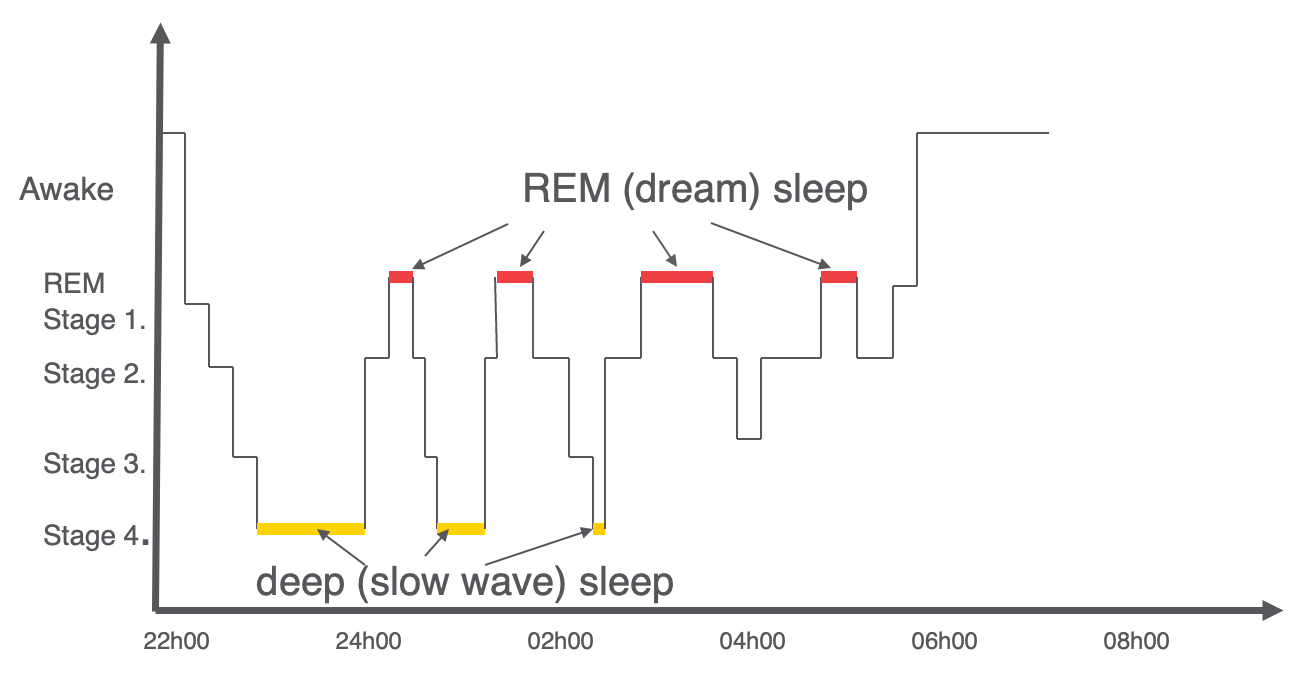
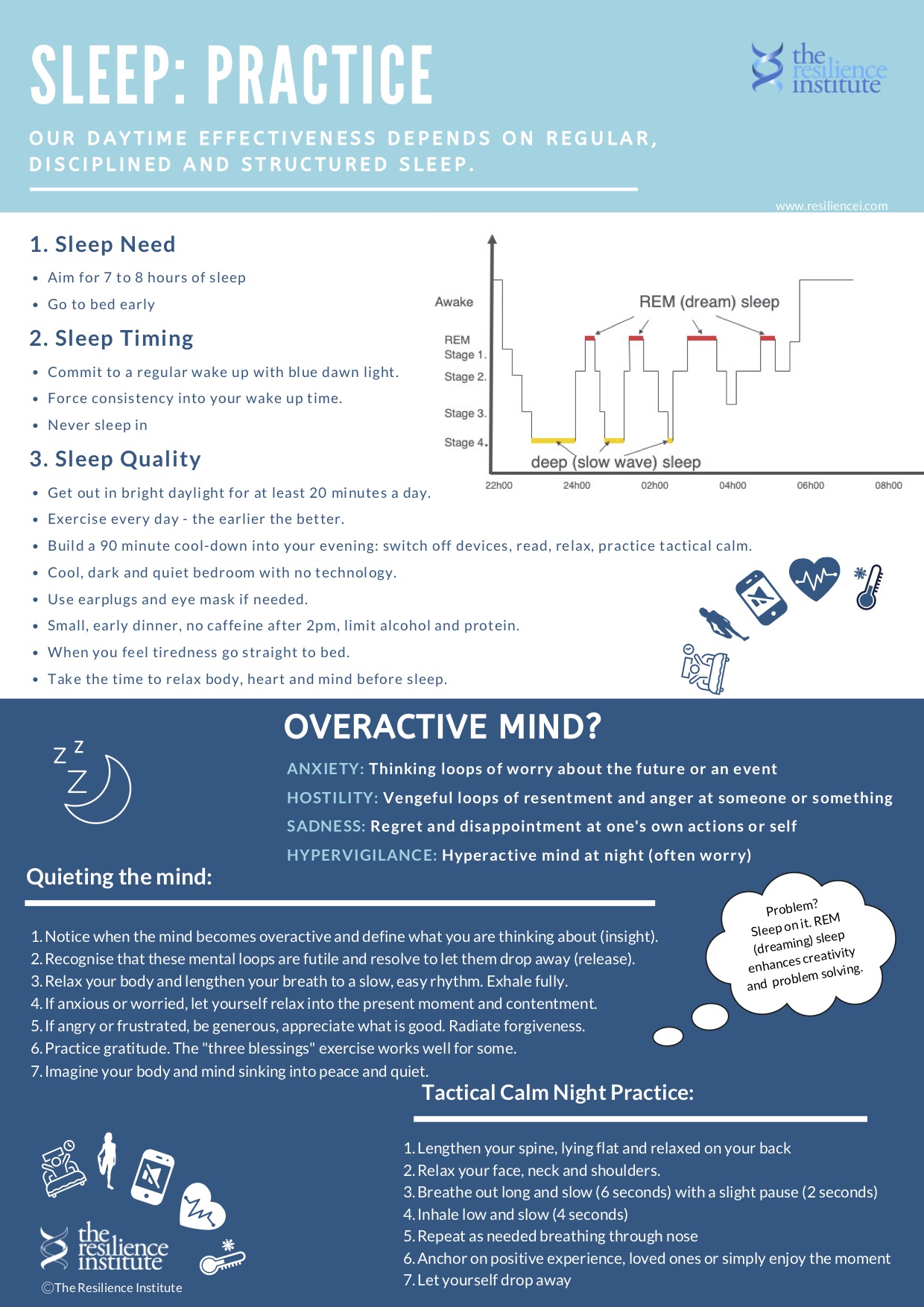
Once you have established the right timing and protected your sleep need, the next challenge is to get your ultradian rhythm working. Think of this as your sleep-depth rhythm. The ultradian rhythm is a 90-minute cycle that allows for roughly two cycles of deep sleep followed by two or three cycles of dream sleep. When you get this right, the rejuvenation effects of sleep are optimised.

Simple trackers will give you an immediate, rough indication of your deep, light, and dream sleep. For an adult, approximately 25% of sleep is in deep (slow-wave) sleep, 25% in dream or rapid eye movement (REM) sleep, and 50% in light sleep. Your teenager and child need more deep sleep as well as more sleep.

In the cycles of deep sleep that follow falling asleep, the brain and body are both quiet. Core body temperature drops. This is the time for the repair and rejuvenation of cells. Growth hormone and testosterone production activate. The cardiovascular system slows right down. Immunity improves.

In light sleep, the body is more active and in transition.

During the dream cycles through the early morning hours, the brain is active while the body is paralysed. If not, we might act out our dreams and sleepwalk. Dreaming sleep facilitates memory, learning, creativity, emotional intelligence, and recovery from traumatic experiences.

Figure 2: Schematic illustration of the sleep cycles and ultradian rhythm

Deep sleep is prioritised if you are deprived of sleep. The best deep sleep comes in the 10 p.m. to 2 a.m. period. As we get older, deep sleep is less effective. Deep sleep is an effective longevity tactic.

Late nights compromise your dream sleep cycles. To reduce mental illness and anxiety in young people, an obvious first step is to help them get to sleep earlier so that they complete their dream sleep. Quality sleep will reduce the suffering caused by attention disorders, anxiety, and depression. As parents, we have two key responsibilities to our children. First, get devices out of the bedrooms. Second, maintain a regular, blue-light-infused wake-up time.

There will be times when healthy sleep is disrupted. Accept this calmly and make it up quickly. The best solution, if you need to repay sleep debt, is to go to bed the next night an hour or so early. Eat early or eat less at night. Remove all devices, cool the room, and read a book. You may like to test a light surgical tape over the lips to prevent snoring and encourage nasal breathing.

Why You Should Stop Thinking in Bed

In my experience, about a third with sleep difficulty wreck sleep with unhelpful thinking. When you secure a good night’s sleep, there is no conscious thought. It is easy to let a storm of thoughts into your bed. Worry (repetitive thoughts about the future) will generate anxiety and destroy sleep. Rumination (repetitive thoughts about the past) will generate sadness or anger and destroy sleep.

Ban thinking from the bedroom. If thoughts arise, refocus on slow diaphragmatic breathing. Watch the rise and fall of your belly. Feel your body relax and dissolve on the exhalation. With a few weeks of practice, you will be amazed how your mind stops bothering you. Make it a habit and stay committed. Sleep can be very peaceful.

Finally, a short power nap of ninety seconds to fifteen minutes is another effective way to catch up on sleep. Ideally, the best time is just after lunch. Find a private, quiet, cool, and dark place. Set the alarm. Use your breathing to drop off more quickly. If sleep does not come, simply enjoy the rest.

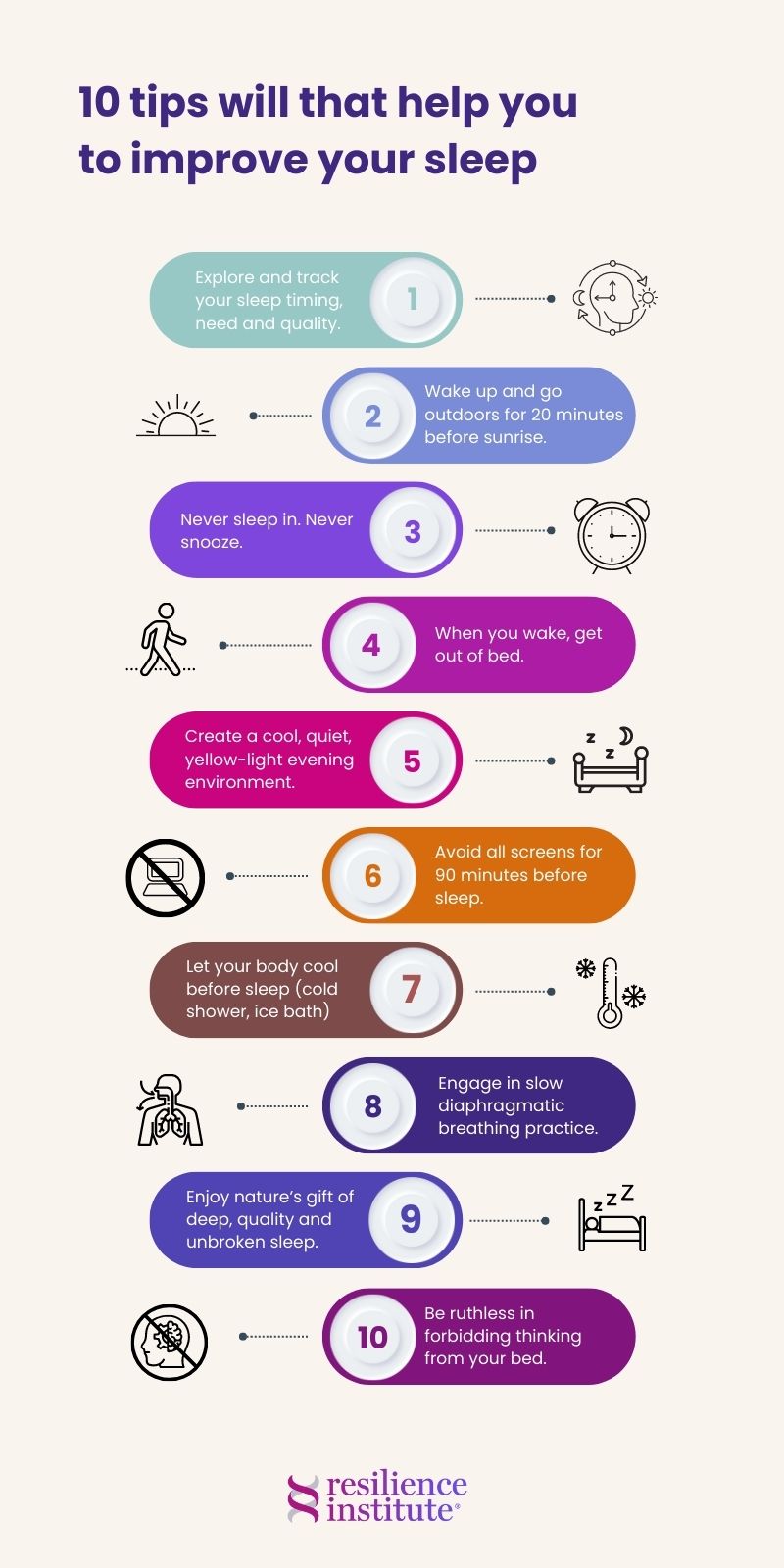
In summary, these 10 tips will help you to improve your sleep:

  • Explore and track your sleep timing, need and quality.
  • Wake up and go outdoors for 20 minutes before sunrise.
  • Never sleep in. Never snooze.
  • When you wake, get out of bed.
  • Create a cool, quiet, yellow-light evening environment.
  • Avoid all screens for 90 minutes before sleep.
  • Let your body cool before sleep (maybe a cold shower or ice bath?)
  • Engage in slow diaphragmatic breathing practice.
  • Enjoy nature’s gift of deep, quality and unbroken sleep.
  • Be ruthless in forbidding thinking from your bed.

‍

Sources:

Walker, Matthew, Why We Sleep, Penguin, 2107. A very popular and helpful overview of sleep science.

Nestor, James, Breath, Penguin Books, 2020.

Original Source: https://resiliencei.com/blog/science-based-tips-to-improve-your-sleep/

Where Does Stress Come From? Catching Stress Before It Catches You

In today’s hyperconnected, hyperproductive workplace, stress has become a silent companion for many professionals. Particularly across Southeast Asia, where long working hours, back-to-back meetings, and a strong culture of high performance often blur the boundaries between ambition and burnout.

But where exactly does stress come from? Can we catch it before it catches us?


The Corporate Pressure Cooker

According to a 2024 Channel News Asia report, Singapore remains among the most overworked countries in the world, with 60% of employees reporting stress-related symptoms. In Malaysia, a 2023 study by JobStreet found that 42% of professionals felt emotionally exhausted due to work-related pressures. Similar trends are emerging in Indonesia, Thailand, and the Philippines, where rapid urbanisation and digital acceleration have made “busy” the default state.

At first, stress may feel like just another deadline to power through. But beneath the surface, unmanaged stress can lead to chronic fatigue, reduced creativity, absenteeism, and even physical illness. The World Health Organization (WHO) has gone as far as to classify burnout as an occupational phenomenon, not just a personal failing.


Mental Health and Work Are Closely Linked

A healthy work environment can be one of the greatest protectors of our mental well-being. It offers routine, purpose, social contact, and financial security. But when the environment turns toxic due to poor leadership, overwork, unclear expectations, or lack of support; it does the opposite.

Poor working conditions not only reduce productivity but directly damage mental health. According to WHO, 15% of working-age adults live with a mental disorder, and more than 12 billion working days are lost annually due to depression and anxiety.


Story from the Ground: Anita’s Wake-Up Call

Take Anita, a 38-year-old marketing lead in Manila. She loved her job but found herself waking up at 3 a.m. with racing thoughts. “I thought I was just being efficient,” she said. But when she started missing family dinners and crying after meetings, she realised something was off.

Her manager, trained in resilience and psychological safety; noticed the shift. Through a team check-in and a 1-on-1 conversation, Anita was encouraged to use her company’s mental health support programme and eventually took a resilience assessment. Within weeks, she began small shifts: mindfulness breaks, clearer task boundaries, and better sleep. Today, she leads with empathy, not urgency.


Three Signals of Workplace Stress to Watch

  1. Physical Exhaustion: Frequent headaches, insomnia, or muscle tension.
  2. Emotional Agitation: Irritability, detachment, or loss of joy in tasks.
  3. Mental Fog: Struggling with focus, memory, or decision-making.


Catching Stress Early

Stress doesn’t have to break us. It can be an early-warning system if we’re willing to listen. Employers play a crucial role by fostering cultures of psychological safety, offering support systems, and building resilience at every level of the organisation.

If you’re a leader, ask yourself:
🟢 When was the last time I checked in; not on performance, but on the person?
🟢 Does my team feel safe to say, “I’m not okay” without fear of judgment?

As we approach World Mental Health Day on 10 October, let’s reflect on how we work; not just how much we work.

Let’s catch stress before it catches us.


A Practical Guide to Personal and Organisational Agility

  • Only 16% of employers currently invest in adaptability and continuous-learning programmes, yet 26% of employees say adaptability is the top skill they need. That gap is where most organisational agility problems actually start.
  • Physical and mental agility share a biological root in the cerebellum, and both improve the same way: through deliberate, repeated practice, not talent alone.
  • Agile methodology’s most cited practice, the Scrum sprint, has quietly shifted toward much shorter cycles than most people assume, a genuinely useful lesson in how the field itself keeps adapting.

Through play, the lion cubs develop agility.

— David Attenborough, Dynasties

Agility used to describe physical dexterity alone: the footballer dodging a defender, the boxer ducking before a counterpunch, the gymnast sticking a landing after a full rotation. Move quickly, freely, and with coordination, and you’re agile. But the term applies just as directly to cognitive processing. Mental agility is the ability to think and understand new concepts quickly, and it’s every bit as trainable as its physical counterpart.

In a rapidly changing world, particularly around technology, both individuals and teams need this capacity in equal measure. The gap between how much organisations invest in it and how much employees say they need it is worth taking seriously in its own right.

The Investment Gap

McKinsey’s Talent Trends survey found that only 16% of employers currently invest in adaptability and continuous-learning programmes for their workforce, while 26% of employees identify adaptability as one of the skills they most need to develop. That’s not a small mismatch. It suggests a meaningful share of organisations are underprepared for exactly the kind of change their own people already sense is coming, and that the demand for genuine agility training is running well ahead of the supply most companies currently provide.

The Science of Agility

The cerebellum is responsible for physical coordination and complex movement, the part of the brain behind everything from running and dancing to typing and playing a video game. Mental agility draws on a related but distinct set of processes: primarily, the ability to synthesise new information into an existing knowledge framework efficiently. Staying mentally agile over a lifetime takes deliberate, ongoing practice, intentional curiosity, continued learning, and a habit of connecting new ideas to what you already know rather than treating them as isolated facts.

What Sport Teaches About Agility

An agile athlete reacts to obstacles and changing conditions in a genuinely unpredictable environment: a surfer adjusting stance mid-wave, a goalkeeper reacting to a shot that seems to appear from nowhere, a gymnast recovering balance mid-routine. None of this is just fitness and speed. Visual processing, perception, and accurate anticipation all matter as much as raw physical capability, brain and body working in sync rather than either one operating alone. The same underlying principles, reacting to change rather than resisting it, apply directly to anyone navigating a shifting professional environment, athlete or not.

Where Agile Methodology Actually Came From

The version of “agile” now common in business language originated in software development. In February 2001, seventeen software developers met in Snowbird, Utah, to discuss better ways of building software, solutions-focused collaboration designed to reduce wasted effort, boost productivity, and deliver results faster than existing methods allowed. Their conclusions became the Agile Manifesto, built around four core values: prioritising individuals and interactions over rigid processes and tools, working software over exhaustive documentation, customer collaboration over strict contract negotiation, and responding to change over following a fixed plan.

Scrum, one of the most widely adopted agile frameworks that emerged from this movement, operates on its own five core values: commitment, courage, focus, openness, and respect. In Scrum, teams work in fixed periods called sprints to deliver a defined slice of functionality, with brief daily check-ins to track progress and clear blockers along the way. Sprint length is a good example of the field’s own ongoing evolution: the Scrum Guide sets one month as the maximum allowed sprint length, but in current practice, most teams run considerably shorter cycles, commonly one to two weeks, since shorter sprints surface problems faster and shorten the feedback loop considerably. Even the methodology built around adaptability keeps adapting its own defaults over time.

This history originated in software, but the underlying approach transfers well beyond it. No business needs to copy Scrum exactly to benefit from the same core instinct: stay genuinely open-minded, and treat that openness as a practice for both individuals and teams, not a one-time mindset shift.

Agility in the Workplace: Real Benefits, Real Trade-offs

An agile team works at pace, collaborates fluidly, and produces quality results across varied conditions, whether some members work remotely while others sit in an office, without that variation becoming a genuine obstacle. Organisations that prioritise this tend to attract younger, skilled talent more easily, since flexibility and work-life balance rank highly for people currently entering the workforce, and an agile team tends to report higher morale and productivity as a direct result.

There are genuine trade-offs worth naming honestly. Moving too fast, prioritising agility over actual results, can produce lacklustre outcomes despite the appearance of speed. Teams sometimes attempt to adapt without the training or support structures that would make real adaptation possible. And learning new systems and practices, even genuinely better ones, tends to cost real productivity in the short term while the learning curve plays out. None of this argues against building agility. It argues for building it deliberately, with the training and support to back it, rather than assuming speed alone gets you there. Copying another company’s exact playbook rarely works either; the right approach tends to be specific to a given team’s actual constraints and goals.

How to Actually Build More Agility

1

Align on Basics First

Get everyone genuinely aligned on standard operating procedures and communication tools before attempting anything more ambitious. Streamlined collaboration depends on this groundwork being solid first.

2

Practise Patience, Not Just Speed

Rushing forward without reflection isn’t agility, it’s just haste. Genuine workplace agility develops the way any skill does, through sustained practice over real time, not overnight.

3

Stay Focused on Real Results

Agility sometimes means trading perfection for pace, and that’s a legitimate trade when the result is still genuinely good. Actively seek and act on feedback, and recognise that raw speed isn’t always the right response to a given situation.

4

Build Genuine Trust

Moving fast and adapting in real time requires trusting that colleagues are making sound calls without endless deliberation, and trusting your own judgement enough to act on it. Agility, at its core, requires faith in your own decisions and a genuine willingness to learn from the ones that don’t work out.

Agility isn’t a talent some people are simply born with. It’s a practice, physical and mental, built the same way any other skill compounds: through deliberate, repeated attempts, not a single decisive leap.

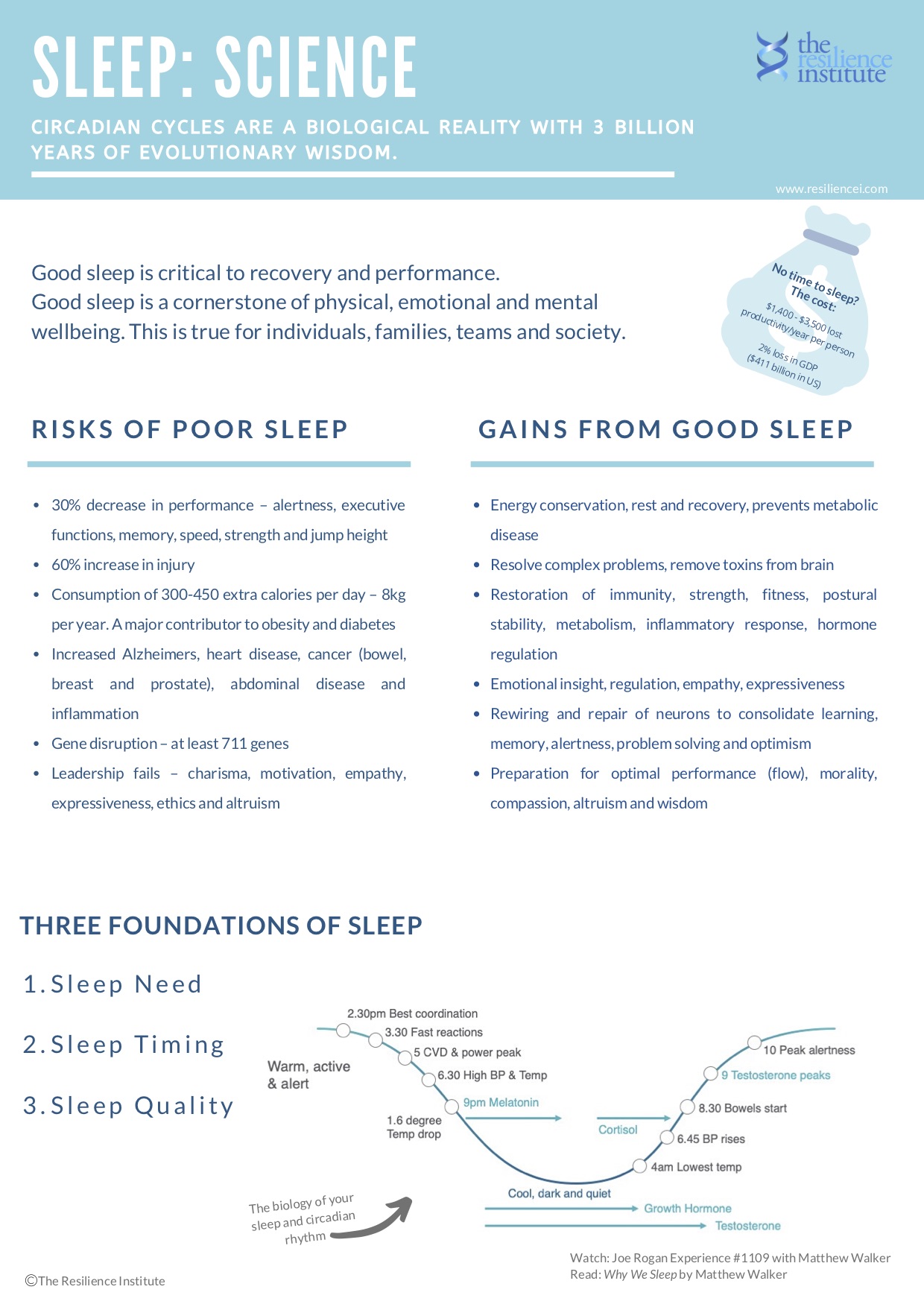
Infographics to Improve Your Sleep to Perform Better

Sleep is important – act like it.

Focus, mood, energy, metabolism, gut health, recovery, immune function, hormone regulation,  memory retention, waste removal, problem solving…

Sleep is absolutely necessary for all of these critical functions. Without good sleep, you are compromised. See below for simple steps to improve your sleep.

Share what works well for you.

Original Source: https://resiliencei.com/blog/sleep-better-do-better/

The Challenge of Promoting Wellbeing

A study in Nature Human Behaviour published this week shows promise for mindfulness and positive psychology to improve mental states of wellbeing. (https://www.nature.com/articles/s41562-021-01093-w).

I was invited to discuss the findings on the Morning Show today with TV3 in New Zealand. We asked viewers if they practiced mindfulness. While 30% answered YES, 50% NO, another 20% answered “what the heck is mindfulness?”

Thus, 70% disengaged.

The host, Duncan Gardner, dismissed the interview with “See you next year.” Viewers really learned nothing about this important, yet flawed study. The interview is available at 46 minutes into episode on 20 April 2020.

In a nutshell, a systematic review and meta-analysis of 419 randomised and controlled studies involving 53,288 people showed low to moderate impact. Mindfulness-based and multi-component positive psychological interventions showed some efficacy in clinical and non-clinical populations.

Singular positive psychological interventions, cognitive and behavioural therapy-based, acceptance and commitment therapy-based and reminiscence interventions were impactful.

Read those last two paragraphs again. Do they make sense to you?

Table of Contents

The Promise

The suffering caused by physical, emotional and mental distress in our modern time is enormous and increasing. Thus far, the impact of psychology, psychiatry, medicine and pharmacology has been limited and confusing. The incidence of common conditions such as depression, anxiety, attention disorders and Autism continue to increase alarmingly.

As humans confront the changing environments we have created, we are failing to adapt. Despite massive investments, preventable physical, emotion and mental conditions continue to accelerate. We are not solving the challenge of wellbeing.

We desperately need effective interventions. All work done to define and test solutions must be celebrated. This is certainly the case in this meta-anaylsis but, in my opinion, we have a long way to go.

The Problems

Reading through the abstract of this paper is agonising. The vague terms used, and lack of clear definitions leave the average person confused or disengaged. Wellbeing – physical, emotional, mental, social and spiritual – are not defined.

How does the average person engage with ‘Mindfulness-based and multi-component positive psychological intervention’? No wonder, people prefer a pill or a glamorously promoted supplement such as the vitamin C promoted in the commercial preceding the interview.

Good science must define and simplify the terms so that they can be tested and, if proven successful, effectively promoted in practical ways.  For example: slow, diaphragmatic breathing through the nose at six breaths per minute reduces anxiety symptoms by xx%.

Psychologists have a long road to travel to bring clear, effective solutions to solve for wellbeing. Their claim: ‘researchers drill down to the core of wellbeing worldwide’, is false.

Solutions

Define the Goal

To live a good life inspired by love and guided by knowledge was Bertrand Russell’s recommendation. It is hard to beat. ‘To live’ is action based and physical. ‘Inspired by love’ is the domain of emotional and social intelligence. Guided by knowledge is mental awareness, agility and meaning.

If we are to use the term wellbeing, let’s agree that it includes physical vitality, mastery of emotion, agility of thought, social connection and meaning (spiritual).

When we use the term resilience, we mean the learned set of skills to:

  • Bounce forward in adversity
  • Grow physical, emotional and mental resources
  • Connect with self, others and nature
  • Discover flow in your life and work

We must define the terms clearly, embracing the integration of different components and expressing it in a way people can understand.

Define the Components

The most challenging component of an effective wellbeing and resilience strategy will be to define the human factors that we want to impact.

For example, a clinical diagnosis of depression is description of a prolonged state of sadness. It has physical aspects in fatigue and sleep disturbance. The emotion of sadness is persistent and overwhelming. The mind becomes confused, pessimistic and indecisive. A range of solutions exist. 

Physical activity, sunshine, sleep and good nutrition can reduce the symptoms. Emotion regulation including impulse control, gratitude, appreciation and kindness help. Mental skills such as CBT and ACT can work. All of these can work better than antidepressants if applied consistently.

The challenge of a therapist, coach, trainer or digital tool is to identify the right intervention for the person and secure consistent, disciplined application. Anyone can learn how to improve mental agility (CBT). Consistent application is a huge challenge.

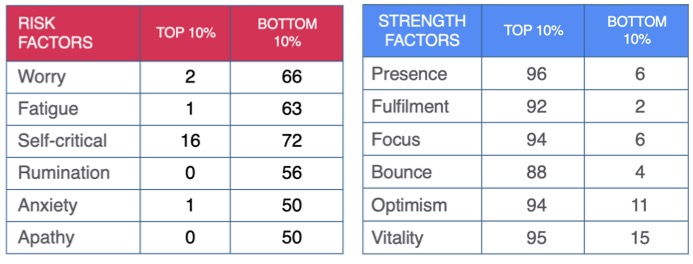
Human factors describe the physical, emotional, social and mental attitudes and behaviours that can be learned and mastered. Annually, we search our assessments for the key factors that determine a good life. In 2020, these were the key factors that drive integral wellbeing and resilience:

Key Factors that Drive Wellbeing through 2020 (n=7,000)

Note that the lead strength factor is Presence which we discussed on TV today. Presence, for some, is more tangible and less threatening than mindfulness. You are in the moment and fully focused. Focus requires attention control. You are non-judgemental meaning that you are not self-critical and drop your worry and rumination.

To be present also means being fully alert, physically well, refreshed, nourished, calm and positive. One can be fully present in any moment of choice – breathing, enjoying, connecting, problem-solving or simply resting.

Interactions and High Leverage, Practical Interventions

In our experience, this is a huge opportunity to turn the tide of suffering. Taking depression and anxiety, the two most common mental illnesses, we throw billions at therapy, medications and vague techniques. What if we were to simply secure a good night of sleep? Then, perhaps a slow diaphragmatic breathing practice?

If we sleep and breathe well, we have a profound preventive and curative solution for mental illness and physical illness. In addition, we would be stronger, better connected and much more functional in daily tasks.

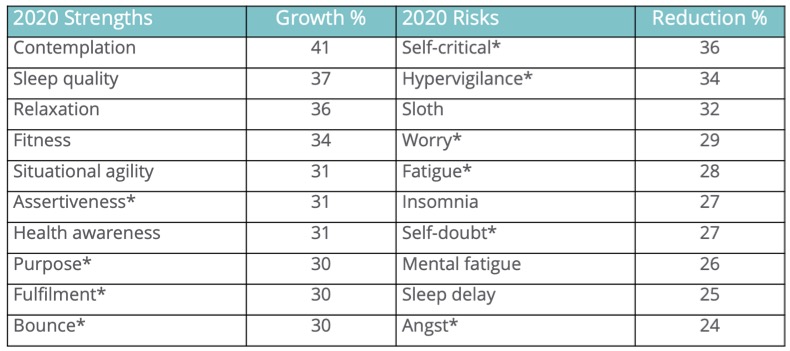
By tracking the development of these human factors, we are able to identify the ones that respond to assessment, training and support. In a sample of 1,788 people during 2020 we were able to show the following changes:

These gains are shown as a Growth Ratio (Sharpe Ratio: average improvement divided by the standard deviation). * indicates lead factors for high resilience (left) and low resilience (right)

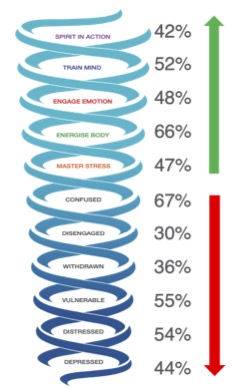
By integrating these factors in categories of wellbeing and resilience, we can show how each category changes through a six-month training intervention:

This group of entrepreneurs (n = 115) achieved significant positive change in every category measured. For example, the depression category includes the factor related to a diagnosis of depression (sadness, confusion, insomnia, self-critical, self-doubt). We see a 44% reduction in this category and a 54% reduction in distress symptoms. In addition, they are better able to master stress, be physical well, emotionally intelligent, mentally agile and connected with greater meaning (purpose, integrity, fulfilment, altruism, trust and flow)

Match the Actions to the Person

Finally, while some will respond positively to mindfulness, others may respond better to worry control, fitness, sleep or positivity. In a globally integrated world, we need to offer a range of clear, well defined skills that can be effectively interpreted by people in different circumstances.

Original Source: https://resiliencei.com/blog/mindfulness-dismissed/

A Guide to Positivity at Work

What is positivity?

Positivity at work is more than a personal mindset or attitude. It is part of a bigger movement that influences the individual worker, how the workforce interacts with one another, and how workers align with the organisational goals and culture at large.

Positive workplace cultures ensure beneficial change that ripples from leaders all the way down to individual employees and vice versa. These types of cultures build empathy, optimism, and resilience —  all keys to success. Building a positive workplace culture demands an understanding of the dynamics of the workplace from the top and bottom and the people within it.

From the top, leaders create values, experiences, and rules of engagement that trickle down the organisation to the employees. Employees also hold their own attitudes, beliefs, and perceptions that provide feedback to leadership and influence the overall workplace culture.

Positive vs negative workplace cultures

Do you feel listened to, supported, and included at work? Or do you feel unheard, neglected, and boxed in? The quality of the culture in the workplace plays a significant role not only in overall wellness but also in performance.

In broad terms, workplace cultures fall somewhere between positive and negative. A 2022 report on Workplace Mental Health and Well-Being by the United States Surgeon General reveals that workplace culture has a significant impact on employee well-being, productivity, and organisational performance.

Negative or toxic workplaces can result in a loss of worker productivity, performance, and overall quality of work. On the other side of the coin, a positive work culture can boost engagement and innovation.

Put simply, work is no longer just work. The cultures that form in the workplace have just as much to say about a company’s bottom line as the numbers.

Modern workplace culture

Today, the workplace is more than a space where people gather — either in person, online, or both — to perform their jobs. During the pandemic and the return to the office, I spent time reporting on the work-life. Amid the many interviews of academic experts, industry leaders, and workers, a pattern emerged.

The rapidly changing landscape, from hybrid work to the Great Resignation, caused employers to shift their views on workplace culture radically. While employers strived to meet goals, employees sought a more balanced work-home life.

For example, 2022 research by Ernst & Young found that 54% of workers in the United States left a job due to their boss’ lack of empathy when it came to issues at work. The research also found that 49% of workers left their job because of inadequate sensitivity to home life stress.

While some innovative leaders were onto this approach long before, the idea that the workplace should equally focus on employee expectations came to the forefront. The results have created a more dynamic workplace culture predicated on creating positive workplace cultures and mitigating negative influences.

Toxic positivity

Taken at face value, positivity is simply maintaining a positive perspective on life — the good, the bad, the ugly, and the beautiful. At its extreme, positivity can seem out of touch with reality. Simply putting on the don’t worry, be happy blinders can neglect the challenges and uncertainties that people face in everyday life.

Tabitha Kirkland, a psychologist and associate teaching professor at the University of Washington’s Department of Psychology, says that toxic positivity is devoid of empathy and neglects to recognize the negative things in life. This approach can make people feel invalidated and not listened to, which is critical to employee engagement, performance, and the financial success of the company.

A 2021 survey by the Workforce Institute found that nearly 3 out of 4 employees say that they feel more engaged and perform better at work when they feel heard. This also impacts the overall financial performance of the company, as the survey also found that employees in companies that financially outperform others in their industry feel heard more by a margin of 26%.

Taking an extreme approach to positivity can actually backfire.

Positive leadership and optimism

Positivity starts with a form of leadership approach that plays to people’s skills, gives recognition and encouragement to others, and maintains an optimistic outlook. Positive leadership has been correlated with better employee engagement, optimism, and performance.

Sticking to strengths

Renowned Austrian-American management consultant Peter Drucker believed that individuals could create more impact at work by focusing on developing the skills they excel at. Instead of spending time trying to make a well-rounded skill set, Drucker believed that sharpening the tip of the spear and strategically cultivating one’s strengths and learning styles would serve an individual the best.

Leaders and managers can take a page from Drucker’s book by identifying team members’ skills and enabling them to work within that range. This does not have to be an entirely individual pursuit.

For example, if a project requires data analysis, but must ultimately be presented at a higher level meeting, assemble a team of analysts and designers to work together to find the trends and then present them in a digestible form. The push and pull dynamics can create something more powerful than numbers or graphics would alone.

Recognition and encouragement

Encouragement and recognition are two key spices in the recipe of healthy conversations. Gallup notes that simply recognizing employees not only positively impact engagement and productivity, it also can help keep employees around for longer. The study found that employees who do not feel recognized at work are twice as likely to quit.

Beyond the individual, recognition also impacts teams by painting a transparent picture of what leadership thinks success should look like. But sometimes conversations have to steer towards more difficult subjects, like when things need improvement.

When it comes to difficult conversations, delivering feedback requires a delicate approach. Instead of using harsh criticism, reframing the conversation to focus on what went well and how to pursue future success can go a long way in making a positive impact on the team.

Research on team conversations indicates that high-performing teams have 6 positive interactions for every negative one, while low-performing teams only have 1 positive interaction for every 20 negative ones. While these numbers may seem extreme, there is a potential explanation for why positive interactions dominate better-performing teams.

Optimism and emotional contagion

If positivity is part of the larger cultural framework of an organisation, then optimism certainly plays a role. The American Psychological Association defines optimism as “hopefulness: the attitude that good things will happen and that people’s wishes or aims will ultimately be fulfilled.”

Optimistic leaders provide a necessary positive emotional contribution to the team. They find solutions to problems, help create a vision for the future, and inspire others to reach that goal by reinforcing the positives. Sound familiar? A leader who practices recognition and encouragement is already building an optimistic culture.

This optimism can positively impact teams through emotional contagion. Coined by Sigal Barsade, Professor of Management at Wharton School of the University of Pennsylvania, emotional contagion is the ripple effect that occurs as emotions spread among individuals and groups. Barsade’s innovative research found that positive emotional contagion helped people work together, limited conflict, and boosted performance.

So when optimism becomes the attitude and outlook in the workplace, positive emotions can flow. This is critical because if the team is optimistic, then individuals can begin to harbour a personal sense of optimism — which may be even more valuable.

A 2022 study by Leadership IQ of over 11,000 employees found that while managers that give recognition have a positive impact, employees with a personal sense of optimism are more engaged. In fact, employees higher in self-optimism are more than twice as likely to feel inspired to try their best at work.

The ripple effect of optimism starts at the top but has the potential to create the biggest impact on employees when it is felt at a personal level. The Leadership IQ study also identified another major component of an employee’s inspiration and engagement at work: resilience.

Resilience training, tools, and techniques

Resilience is the use of flexibility to adapt to change and challenges, says the American Psychological Association. Even more critical, resilience skills can be trained. This is important because resilience not only factors into worker engagement, but it can also account for 25% of an employee’s inspiration at work.

Measuring Resilience

The Resilience Institute conducted a global study on resilience levels that spanned from 2018-2021. When the pandemic hit, resilience levels dropped globally. However, people began to bounce back as they adapted to the rapidly changing world. This bounce factor enables people to adapt in the face of change and challenges.

During the pandemic, people have bounced back by learning to connect in new ways during lockdowns, learning to cope with their mental health, and learning how to get better sleep. In fact, the Resilience Insitute’s 2022 Global Report found that sleep is the most important factor for developing resilience.

We measure resilience through the Resilience Diagnostics assessment. Using key psychometrics, the Resilience Diagnostic assessment uses 60 questions that measure specific factors that support or undermine resilience. Individuals and the entire organisation can use the tool via the web or mobile app to view the factors that promote your resilience or hinder it. This is known as the Resilience Ratio.

The Resilience Spiral

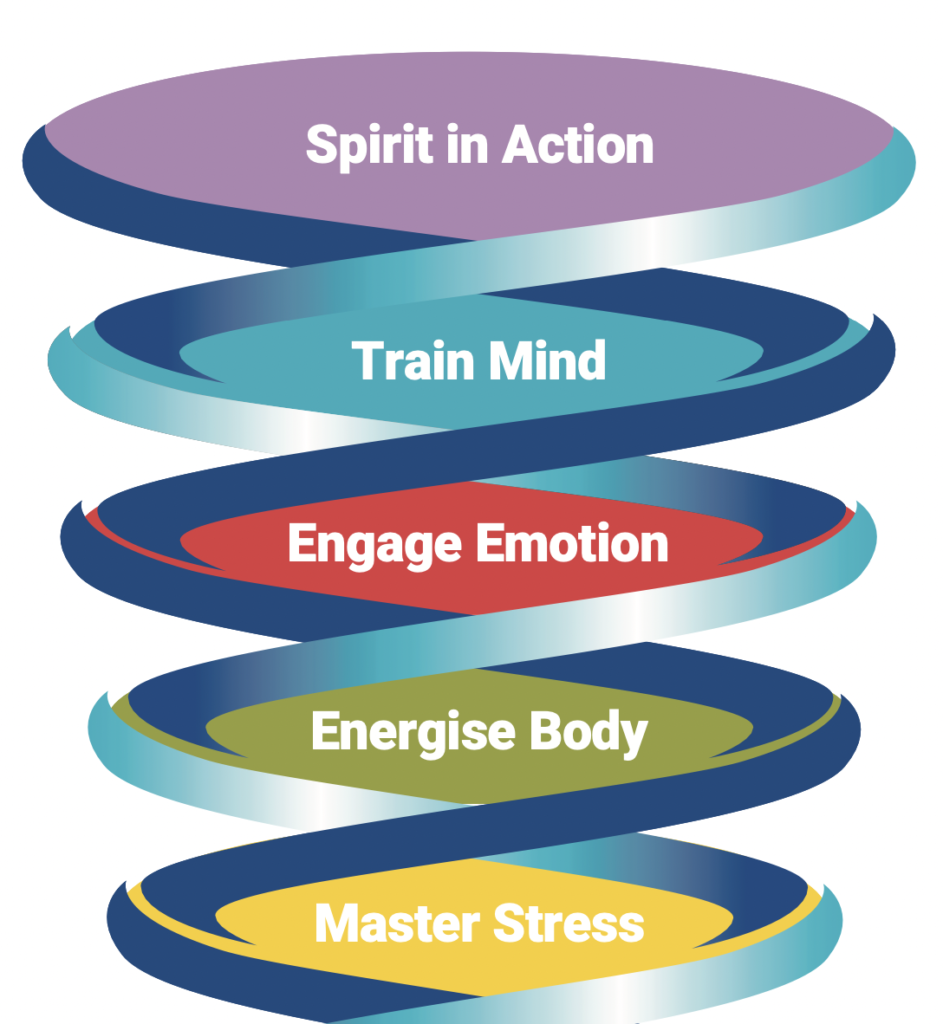
This visual tool represents the 11 main categories that make up different parts of the 60 questions in the Resilience Diagnostics assessment. Completing the questionnaire provides the user with a map of strengths and risks and practical recommendations to move up the spiral.

The top half of the Resilience Spiral includes the following categories:

  • Spirit in Action
  • Train Mind
  • Engage Emotion
  • Energise Body
  • Master Stress

The upper half helps develop resilience and enables growth, connection, and flow. At the top of the spiral sits Spirit in Action, which represents peak performance. Next sits Train Mind, which relies on the fact that training the brain can combat the effects of ageing and performance.

Engage Emotion uses awareness to harshness the passion and creativity of emotions. The mind and body are intimately connected — energising the body sets the tone for the rest of the spiral. At the base sits Master Stress. Stress is the teetering point between the top and the bottom of the spiral because stress can rule your world when left unmanaged.

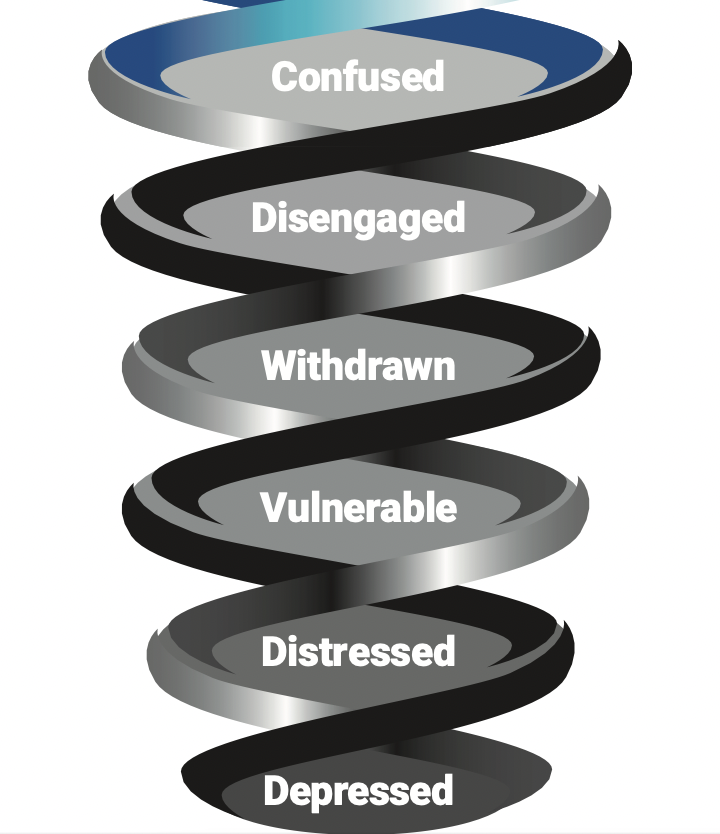
On the other side of the coin, the lower half of the Resilience Spiral includes the categories:

  • Confused
  • Disengaged
  • Withdrawn
  • Vulnerable
  • Distressed
  • Depressed

The lower half represents a lack of resilience. The first step down the spiral is Confused, which leads to a lack of focus. Next is Disengaged, which creates boredom and, eventually, loss of productivity. Progression down the spiral leads to Withdrawn — where the body loses energy and engagement.

Fatigue kicks in at the Vulnerable, as people feel indifferent. Distressed can lead to loss of staff and unhealthy organisational culture. Finally, Depressed signals the end of an organisation.

Resilient people and organisations work at higher levels. When resilience fails, people and organisations drop into the lower levels.

Training Resilience

The Resilience Institute offers resilience training — ranging from the Resilience app to webinars, workshops, and comms support — that can increase performance by 41%, decrease risk by 34%, and boost growth in capability by 38%.

Gain access to a library of information to help you learn more about the resilience factors and your own Resilience ratio, and learn skills for how to bounce back, access flow states,  and increase emotional intelligence. The app also includes goal tracking, over 50 resilience training videos by Dr Sven Hansen, daily meditations, and a support chatbot.

The app is available in English, French, Spanish, Dutch, German and Mandarin. Thousands of organisations use The Resilience Institute to measure and improve individual and organisational resilience. Are you ready for resilience?

Original Source: https://resiliencei.com/blog/positivity-at-work/

What Our 2020 Data Got Right (and Wrong) About Crisis Resilience

  • In March to June 2020, RI’s own diagnostic data found average resilience had risen roughly 7% compared to the same period in 2019, a genuinely counterintuitive early-pandemic finding.
  • That finding makes complete sense in light of the well-established Phases of Disaster framework: the sample was captured during the heroic and honeymoon phases of the crisis, the period of mobilisation and community bonding that reliably comes before a longer, harder decline.
  • The transferable lesson matters more than the specific 2020 numbers: early positive resilience signals during any crisis, a downturn, a restructure, a market shock, often reflect a temporary mobilisation phase, not a resolved trend. Reading them as the final word is a real risk.

In the middle of 2020, a few months into the pandemic, we looked at our own diagnostic data and found something that surprised us. Resilience hadn’t fallen. On average, across a sample of over 1,600 professionals and executives, it had gone up. Six years on, that finding is still worth revisiting, not as current data, but as a genuinely useful case study in how resilience actually behaves during the early phase of a major disruption, and why reading that phase correctly matters.

What the 2020 Data Actually Showed

We compared Resilience Diagnostic results from March to June 2019 (1,599 participants) against the same window in 2020 (1,659 participants), drawn from a similar pool of professionals and executives across comparable organisations. The average resilience ratio rose from 1.51 to 1.61, a roughly 7% increase during the acute early phase of a global crisis, not the decline anyone would have predicted going in.

The pattern wasn’t uniform. Male participants improved more clearly, from an average of 1.57 to 1.70, with the proportion at risk actually falling slightly. Female participants showed no change in the average ratio, but the proportion at risk rose by 15%, with increases specifically in anhedonia, self-doubt, and depressive symptoms. This tracks with separately well-documented research from the same period on the disproportionate caregiving and domestic burden many women carried during pandemic-era lockdowns and school closures, a genuine and important asymmetry inside an otherwise positive headline number.

At a category level, mental strength, physical energy, stress mastery, and related risk categories were slightly better during the crisis window. Emotional engagement, disengagement, and depressive symptoms were slightly worse. Specific strength factors that improved included purpose, integrity, fulfilment, compassion, situational agility, optimism, and sleep quality. Factors that declined included trust, flow, decisiveness, emotional agility, and empathy.

Why This Isn’t as Strange as It Sounds

Psychologists Leonard Zunin and Diane Myers developed a framework, widely used in disaster psychology, describing the emotional phases most communities move through during a prolonged crisis: warning, impact, heroic, honeymoon, disillusionment, and reconstruction. The heroic phase is marked by altruism and mobilisation, first responders, healthcare workers, and communities pulling together with real intensity. The honeymoon phase that often follows brings a genuine, if short-lived, sense of optimism and community bonding, along with a belief that things will return to normal reasonably quickly.

March to June 2020 sits squarely inside that window for most of the world. Our data wasn’t capturing a crisis that had resolved well. It was capturing a population still inside the heroic and honeymoon phases, genuinely mobilised, purposeful, and pulling together, before the far longer disillusionment phase that followed. That later phase, well documented separately across 2020 to 2022, brought the more severe and prolonged mental health decline most people actually associate with the pandemic: rising burnout, anxiety, and depression as the crisis stretched on far longer than the initial mobilisation could sustain.

Seen through that lens, the 2020 finding isn’t really a story about resilience being immune to crisis. It’s a story about which phase of a crisis a snapshot happens to catch, and how easy it is to mistake a heroic-phase mobilisation for a resolved, stable new normal.

The Transferable Lesson

This matters well beyond one pandemic. Any organisation moving through a major disruption, a restructuring, a market downturn, a leadership change, a merger, will likely see something similar in its early resilience or engagement data: a genuine, real mobilisation effect in the first weeks or months, purpose and cohesion measurably up, as people pull together around the immediate challenge. Reading that early signal as evidence the disruption has been successfully absorbed is a real risk. The honest interpretation is closer to: the team is currently in its heroic or honeymoon phase, and the real test comes later, when the mobilisation naturally fades and the underlying, unresolved strain has had time to surface.

Two practical implications follow. First, treat early positive signals during any crisis with appropriate caution rather than as confirmation the hard part is over. Second, plan deliberately for the later phase, the point where disillusionment risk peaks, rather than being caught off guard by a decline that the Phases of Disaster framework would have predicted from the outset.

A crisis rarely announces which phase it’s in. Knowing the shape of the curve in advance is what turns a surprising early number into a useful one.